
What Do You Call Someone Who Makes Pottery?
By Linda · · 8 min read
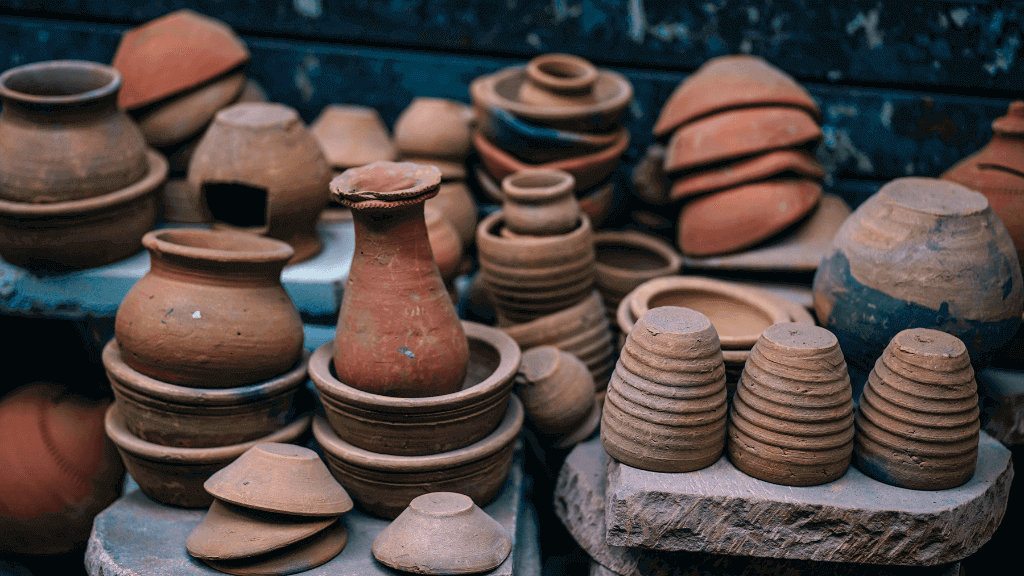
A person who makes pottery is called a potter. That’s the everyday word, and it’s the one most potters use for themselves. You’ll also hear ceramist (or ceramicist) and ceramic artist. Both are correct, but each carries a slightly different shade of meaning.
The short version: if someone shapes clay into bowls, mugs, vases, or planters and fires them in a kiln, “potter” is the right word. If their work leans toward sculpture or gallery art, “ceramic artist” usually fits better.
Potter vs. Ceramist vs. Ceramic Artist
These three terms overlap, and in casual conversation people use them interchangeably. Here’s how they get used inside the craft:
| Term | What it usually means | Typical work |
|---|---|---|
| Potter | Someone who makes pottery, especially functional ware | Mugs, bowls, plates, vases, planters |
| Ceramist / Ceramicist | Anyone who works with ceramic materials, broader than pottery | Tiles, sculpture, functional ware, industrial ceramics |
| Ceramic artist | Someone whose clay work is primarily artistic expression | Sculptural pieces, gallery and exhibition work |
A potter is always a ceramist, but a ceramist isn’t always a potter. Someone who sculpts figurative pieces in clay and never throws a bowl would call themselves a ceramic artist or ceramist, not a potter.
In my experience, working potters rarely fuss over the distinction. I call myself a potter because most of what I make is meant to be used. Friends who show in galleries tend to say “ceramic artist,” partly because it describes the work and partly because the art world takes the term more seriously.
What Do You Call Someone Who Makes Ceramics?
Someone who makes ceramics is called a ceramist or ceramicist. Both spellings are accepted; “ceramicist” is more common in American English, while “ceramist” shows up more in academic and industry writing.
“Ceramics” is the umbrella category. It covers pottery, tiles, sculpture, and even technical products like insulators. So “ceramist” is the broader term, and “potter” is the specific one for people making vessels and functional ware.
What Do You Call Someone Who Works With Clay?
There’s no single word that covers everyone who works with clay, because the answer depends on what they make:
- Potter: makes pottery (functional vessels, fired in a kiln)
- Ceramist / ceramic artist: works in clay more broadly, often artistically
- Clay sculptor: sculpts in clay, sometimes without firing (for bronze casting, say)
- Thrower: an older trade term for someone who shapes pots on the wheel; you still hear it in production potteries
- Hand-builder: a potter who works without a wheel, using pinch, coil, and slab techniques
If you just need a general word and don’t know what the person makes, “ceramic artist” is the safest catch-all.
What Do Potters Do All Day?
A potter’s work runs well beyond sitting at the wheel. A typical piece goes through this sequence:
- Preparing the clay: wedging it to remove air bubbles and even out moisture
- Forming: throwing on the wheel, or hand-building with coils, slabs, or pinching
- Trimming and refining: cleaning up the form once it’s leather-hard
- Drying: slowly, all the way to bone dry. Rushing this stage causes cracks, and I’ve lost pots to impatience here (drying usually takes one to two weeks)
- Bisque firing: a first kiln firing, typically to cone 06–04, around 1,830–1,945°F (999–1,063°C)
- Glazing: applying glaze by dipping, pouring, or brushing
- Glaze firing: a second, usually hotter firing that melts the glaze into a glassy surface
Stoneware glaze firings commonly reach cone 5–6, around 2,167–2,232°F (1,186–1,222°C); porcelain and high-fire stoneware go to cone 10, about 2,345°F (1,285°C).
Most potters also spend real time on unglamorous tasks: mixing glazes, recycling scrap clay, loading kilns, and (if they sell their work) photographing, pricing, and shipping pots.
How Does Someone Become a Potter?
There’s no license or required credential. People become potters through several routes:
- Community studio classes: the most common starting point; expect roughly $150–$400 for a multi-week beginner course with clay and firing included
- Art school or a ceramics degree: common for ceramic artists aiming at galleries or teaching
- Apprenticeships: working under an established potter, still common in traditional pottery centers
- Self-teaching: very doable for hand-building; you can learn pottery at home and pay a local studio to fire your work
My advice: take a wheel class before buying anything. The wheel looks effortless in videos and is genuinely frustrating for the first several sessions. Centering clay takes most people weeks to get consistent. A class tells you whether you love it before you’ve spent money on equipment.
For a full roadmap, see my guide on how to get into pottery.
What Are the Main Types of Pottery?
Potters generally work in one of three clay bodies, defined by firing temperature:
- Earthenware: fired low (cone 06–04, about 1,830–1,945°F / 999–1,063°C). Porous unless glazed; think terracotta planters and colorful folk pottery.
- Stoneware: fired to cone 5–10. Dense and durable, the workhorse for mugs and dinnerware.
- Porcelain: fine white kaolin clay fired high (usually cone 10, about 2,345°F / 1,285°C), often translucent when thin.
Specialized Forms Within Each Category
Earthenware traditions:
- Terracotta: the familiar orange-brown unglazed ware used for plant pots
- Majolica: opaque white glaze painted with colorful designs
- Faience: tin-glazed ware with intricate painted decoration
- Redware: red-bodied earthenware colored by iron in the clay
- Delft: Dutch tin-glazed ware, classically blue and white
- Talavera: Mexican and Spanish tradition with bold, colorful patterns
- Slipware: decorated with liquid clay (“slip”) before firing
Stoneware traditions:
- Ironstone: exceptionally durable, common in dinnerware
- Salt-glaze: a glassy, orange-peel surface created by throwing salt into a hot kiln
Porcelain traditions:
- Bone china: contains bone ash, making it strong and translucent
- Lusterware: metallic glazes with a shimmering finish
- Celadon: the famous jade-green glaze of Korean and Chinese ceramics
- Satsuma: Japanese ware often embellished with gold
Distinct firing styles:
- Raku: pots pulled glowing-hot from the kiln, producing crackled, unpredictable surfaces
- Blackware: fired in a reduced-oxygen atmosphere for a deep black sheen, famously revived by Maria Martinez
What Techniques Do Potters Use to Shape Clay?
- Wheel throwing: shaping clay on a spinning wheel; the technique most people picture
- Pinching: forming a pot from a single ball of clay with thumb and fingers; the oldest technique there is
- Coiling: stacking and blending ropes of clay to build walls, well suited to large forms
- Slab building: rolling flat sheets of clay and joining them; ideal for boxes, trays, and angular forms
- Molding / slip casting: pouring liquid clay into plaster molds, used for repeatable forms
Decoration techniques layer on top of these: sgraffito (scratching designs through colored slip), carving, stamping, and slip trailing. You don’t need a wheel to be a potter. You can make pottery without one using hand-building alone.
What Tools Does a Potter Use?
The big-ticket items are the kiln (the one tool you can’t skip, since clay must be fired to become ceramic) and, for wheel work, the pottery wheel. Beyond those, a basic kit is cheap, usually $15–$40 for a starter set:
- Ribs: for smoothing and shaping walls
- Needle tool: for trimming rims and scoring joins
- Wire cutter: for slicing clay and releasing pots from the wheel
- Loop and ribbon tools: for trimming and carving
- Sponges and brushes: for water control and applying slip or glaze
- Calipers: for matching lids to pots
If you’re curious what a home setup looks like, I cover the realistic options in how to make pottery at home.
A Brief History of the Potter’s Craft
Pottery is one of humanity’s oldest crafts. The earliest known vessels are Jomon pottery from Japan, cord-marked pots dating back more than 10,000 years. Nearly every culture developed its own tradition: ancient Greek painted amphorae, Chinese porcelain, the life-sized earthenware figures of the Terracotta Army, Mesopotamian glazed brickwork like the Ishtar Gate, and Pueblo blackware in the American Southwest.
Archaeologists lean on pottery heavily because fired clay survives where almost nothing else does. Pot styles and shards help date sites and trace ancient trade routes.
Famous Potters Worth Knowing
- Bernard Leach: bridged Western and Japanese traditions and shaped 20th-century studio pottery
- Shoji Hamada: central figure in Japan’s Mingei (folk art) movement
- Lucie Rie: modernist forms with extraordinary glaze surfaces
- Maria Martinez: revived Pueblo blackware pottery in San Ildefonso, New Mexico
- Beatrice Wood: the “Mama of Dada,” known for lustrous, whimsical ceramics
Can Pottery Making Be a Career?
Yes. Potters earn a living through some mix of selling work (craft fairs, galleries, Etsy, their own websites), teaching classes, and production work. It’s rarely lucrative at the start: kiln costs, studio rent, and slow sales mean most new potters keep another income source for the first few years.
Pricing matters more than beginners expect. A handmade mug typically sells for $25–$60, and that price has to cover clay, glaze, two firings, studio overhead, and your time. I’ve written more about the realities in can you make money selling pottery.
FAQ
What is someone who makes pottery called?
A potter. Pottery maker, ceramist, and ceramic artist are also correct, but “potter” is the most common and most specific term for someone who makes fired clay vessels.
What do you call someone who makes ceramics?
A ceramist or ceramicist. Ceramics is a broader category than pottery, so this term covers tile makers and clay sculptors as well as potters.
What do you call someone who works with clay?
It depends on the work: a potter makes vessels, a ceramic artist makes sculptural or gallery work, and a clay sculptor models forms that may never be fired. “Ceramic artist” is the safest general term.
Is a pottery maker the same as a ceramic artist?
They overlap but aren’t identical. A pottery maker (potter) focuses on functional ware like mugs and bowls; a ceramic artist emphasizes artistic expression, and their work may not be functional at all.
What do you call a female potter?
A potter. The word has no gendered form, and the same goes for ceramist and ceramic artist.
Do you have to use a wheel to be called a potter?
No. Hand-builders who work with pinch, coil, and slab techniques are every bit as much potters as wheel throwers. The wheel is one tool, not the definition of the craft.