
Can You Make Pottery Without A Wheel?
By Linda · · 8 min read
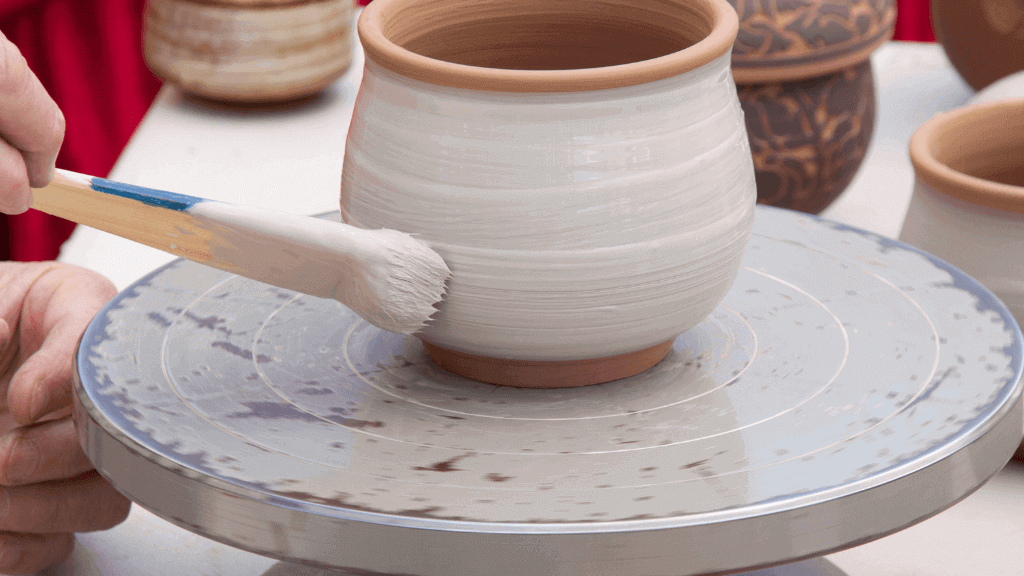
Yes, you can absolutely make pottery without a wheel. Hand-building (pinch pots, coil pots, slab construction, and press molds) predates the wheel by thousands of years, and many professional ceramic artists work entirely by hand. All you need is clay, a flat work surface, and a few simple tools.
The wheel is one way to shape clay, not the only way. I usually start beginners with hand-building because it teaches you how clay behaves before you ever fight with a spinning lump on a wheel head. How wet it should be, when it cracks, how thick the walls need to be.
The Four Main Hand-Building Techniques
Every piece of wheel-free pottery comes down to one of four methods (or a combination of them).
1. Pinch Pots
The simplest place to start. Roll a ball of clay about the size of your fist, press your thumb into the center, and pinch the walls outward between your thumb and fingers while rotating the ball in your palm.
- Aim for walls about 1/4 inch (6 mm) thick. Even thickness matters more than thinness.
- Work slowly; pinching too fast creates thin spots that crack in the kiln.
- A pinch pot takes 15 to 30 minutes and makes a nice small bowl, trinket dish, or planter.
2. Coil Pots
Roll clay into long ropes about as thick as your finger, then stack the coils on top of a flat clay base, blending each coil into the one below it with your thumb or a wooden rib.
Coiling is how you build tall forms without a wheel: vases, large planters, even sculptural vessels two feet high. The key is to score (scratch) and slip (add watery clay) between coils so they bond, then compress the seams inside and out. Skipped seams split apart during drying or firing.
3. Slab Building
Roll clay flat with a rolling pin to an even 1/4 inch (6 mm), let it stiffen slightly to “leather hard,” then cut shapes and join them like cardboard. Use two wooden dowels or rulers as thickness guides on either side of the clay so the slab comes out even.
Slabs are ideal for mugs, boxes, trays, plates, and anything with flat sides. This is the technique that surprises people most — a well-made slab mug looks every bit as clean as a thrown one.
4. Press Molds and Slump Molds
Drape a slab of clay over (or into) a form and let it take the shape. The form can be a plaster mold, a bowl lined with newspaper, even a smooth rock. Once the clay stiffens, lift it off and refine the edges.
Molds give you repeatable, symmetrical shapes without any throwing skill, which is why production potters have used them for centuries.
How to Make Pottery at Home Without a Wheel: Step by Step
Here’s the basic process I’d give any beginner working at the kitchen table:
- Get the right clay. Buy a low-fire earthenware or a stoneware with grog (added sand-like particles) from a pottery supplier. A 25 lb bag typically runs $15 to $40. See my breakdown of how much pottery clay costs before you buy.
- Wedge the clay. Knead it like bread dough for a couple of minutes to remove air bubbles, which can crack a piece in the kiln.
- Build your form using pinching, coils, slabs, or a mold. Keep walls an even 1/4–1/2 inch (6–13 mm).
- Score and slip every joint. Any two pieces of clay you attach must be scratched up and glued with slip, or they will separate as the piece dries.
- Dry slowly. Cover the piece loosely with plastic and let it dry over 3 to 7 days. Fast, uneven drying is the number one cause of cracks, and I’ve lost more pieces to rushed drying than to anything else.
- Fire it. Bone-dry clay gets bisque fired, typically to cone 04 (about 1,945°F / 1,063°C) for earthenware. No kiln at home? Many studios and ceramic shops fire pieces for a small per-piece or per-pound fee, or read my guide on how to fire pottery without a kiln.
- Glaze and fire again if you want a sealed, food-safe surface.
What Tools Do You Need? (Very Few)
You don’t need a studio. A starter hand-building kit costs $10 to $30, and half of it can come from your kitchen:
- A rolling pin and two flat dowels or rulers (slab thickness guides)
- A wooden or rubber rib for smoothing and compressing
- A needle tool or fork for scoring
- A wire or fishing line for cutting clay off the block
- A sponge, a cup of water, and a canvas or cloth-covered board to work on
Compare that to a wheel setup. Entry-level wheels start around $400 to $600, and good studio wheels run well over $1,000. I cover the numbers in detail in how much pottery wheels cost, and there’s a used pottery wheel market if you decide to upgrade later.
Hand-Building vs. Wheel Throwing
| Hand-Building | Wheel Throwing | |
|---|---|---|
| Startup cost | $25–$75 (clay + basic tools) | $400+ for a wheel, plus tools |
| Learning curve | Gentle. First usable piece on day one | Steep. Centering alone takes weeks |
| Speed per piece | Slower (30 min to several hours) | Fast once skilled (a mug in minutes) |
| Best shapes | Boxes, trays, sculpture, organic forms, tiles | Round, symmetrical vessels |
| Identical multiples | Hard without molds | Easier with practice |
| Space needed | A table | Dedicated wheel space, splash cleanup |
The honest trade-off: a wheel is faster for round, matched sets once you’ve put in the practice hours, and centering clay is a real hurdle. Hand-building is slower per piece but lets you make shapes a wheel simply can’t: square dishes, flat tiles, lidded boxes, figurative sculpture.
What About Firing? Do You Still Need a Kiln?
The wheel and the kiln are separate questions. You can shape pottery entirely by hand, but real clay still has to be fired to become hard and permanent. Bisque firing happens around cone 04 (1,945°F / 1,063°C) and stoneware glaze firings reach cone 6 (about 2,232°F / 1,222°C). Your home oven maxes out around 500°F (260°C) and cannot fire clay.
Your realistic options:
- Pay for firing. Local studios, art centers, and some pottery supply shops fire greenware for a fee. This is what I recommend for beginners.
- Community classes. A hand-building class usually includes clay and firing in the price.
- Air-dry clay. No firing needed, but pieces stay porous, are not food-safe, and can’t hold water without sealing. Fine for decorative work. (And no, it doesn’t behave well on a wheel either. Here’s why air dry clay and pottery wheels don’t mix.)
- Primitive firing. Pit firing and barrel firing work for low-fire clay if you have outdoor space. My post on whether you need a kiln for pottery walks through all of these.
Best Clay for Hand-Building
Not every clay forgives handling. What I recommend:
- Earthenware. Plastic, cooperative, and it fires low (cone 06 to 04). The classic beginner hand-building clay.
- Stoneware with grog. The grog gives slabs and coils structural strength and reduces cracking and warping. My pick for functional ware.
- Avoid porcelain at first. It’s beautiful but unforgiving. It slumps, cracks, and dries out fast in your hands.
If you’re tempted to dig your own, it can work with processing (see using clay from the ground for pottery), but bagged clay removes a lot of variables while you’re learning.
Common Mistakes That Crack Hand-Built Pots
I see the same failures over and over:
- Uneven wall thickness. Thick and thin areas dry and shrink at different rates, so the piece cracks. Aim for consistent 1/4 inch (6 mm) walls.
- Skipping score-and-slip. Handles, coils, and slab seams pop off in the kiln if they weren’t scored and slipped.
- Trapped air. Wedge your clay, and never leave a fully enclosed hollow space. Pierce a small hole so air can escape.
- Drying too fast. A pot left in the sun or near a heater will crack. Slow, covered drying over several days is cheap insurance.
- Attaching wet to dry. Join pieces at the same moisture stage, ideally leather hard to leather hard.
FAQ
Can you make pottery at home without a wheel or a kiln?
You can shape it at home, yes. Pinch, coil, and slab techniques need nothing but a table. For firing, either pay a local studio to fire your pieces, try pit firing outdoors with low-fire clay, or use air-dry clay for decorative (non-food) items.
How do you make clay pots without a wheel?
Coil building is the traditional method: roll a flat base, stack finger-thick ropes of clay on top, and blend each coil into the last with score-and-slip at every joint. Smooth the walls with a rib, dry slowly under plastic for several days, then fire.
Is hand-built pottery as good as wheel-thrown pottery?
Yes. Fired to the same temperature with the same clay, hand-built pottery is just as strong and just as food-safe. The differences are aesthetic and practical. Wheels excel at fast, round, matched sets; hand-building excels at everything else.
What’s the easiest pottery technique for a complete beginner?
A pinch pot. You can make one in under 30 minutes with no tools at all, and it teaches you wall thickness and moisture control, the two skills every other technique depends on.
Can you make a mug without a pottery wheel?
Yes. Roll a slab, wrap it around a cardboard tube or bottle to form the cylinder, attach a slab base and a coil handle (score and slip both joints), and you have a slab mug that rivals anything thrown on a wheel.