
What Is Slipware Pottery?
By Linda · · 8 min read
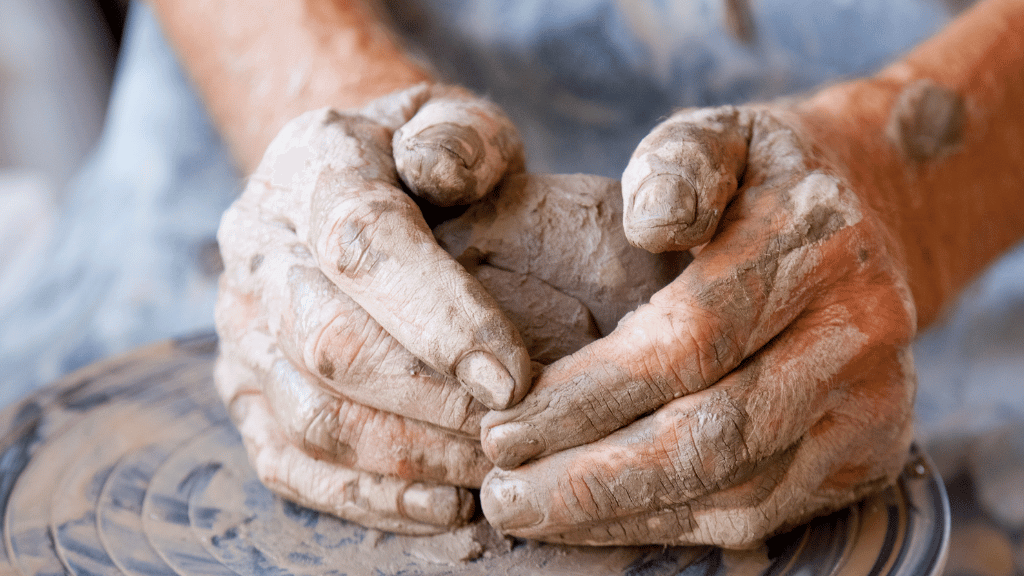
Slipware is pottery decorated with slip, a liquid mixture of clay and water that’s usually colored with oxides or stains. The slip goes on before firing. It can be trailed, brushed, dipped, or carved through to create lines, dots, marbled swirls, and pictorial designs, and the piece is typically finished with a clear glaze that seals the decoration.
The term covers everything from 17th-century English harvest dishes to the slip-trailed mugs you’ll see at craft fairs today. If you’ve seen a plate with creamy piped lines that look like icing on a cake, that’s almost certainly slipware.
What Makes Pottery “Slipware”
The defining feature is that the decoration comes from colored clay, not from paint or colored glaze. Slip is applied while the pot is still damp (leather-hard or slightly softer), so the decoration bonds with the clay body and becomes part of the pot itself.
Most traditional slipware is earthenware: a red or buff clay body decorated with contrasting white, cream, brown, or black slips, then covered with a transparent lead- or borax-based glaze. That clear coat gives the classic warm, honey-toned finish.
That’s the quickest way to tell slipware apart from styles like Delft or majolica, where the decoration is painted on top of an opaque glaze rather than worked in clay.
What Slip Is Made Of
Slip is simply clay blended with water to a smooth, creamy consistency, about like heavy cream or pourable yogurt. A basic decorating slip is often the same clay as the pot body (or a compatible white clay) with colorants added.
Common colorants and the shades they produce:
- Iron oxide: reds, rusts, and warm browns
- Cobalt oxide or carbonate: blues (a little goes a long way)
- Copper oxide or carbonate: greens and turquoise
- Manganese dioxide: purples, browns, and near-blacks
- Commercial stains: reliable pinks, yellows, and almost any color you can’t get from raw oxides
If you’d rather not mix your own, premixed decorating slips are cheap and easy to find. I cover typical prices in my guide to how much pottery slips cost. A pint of commercial colored slip generally runs $10 to $20 and decorates a lot of pots.
One rule matters more than any recipe: the slip and the clay body must shrink at compatible rates. Slip applied to bone-dry or mismatched clay tends to flake or peel off during drying or firing. Apply slip at the leather-hard stage and test on scrap pieces first.
Slip Application Techniques
Most slipware decoration comes down to a handful of techniques, often combined on the same pot.
Slip Trailing
Trailing is the signature slipware technique: slip is squeezed from a bottle or bulb with a fine nozzle, piping lines and dots across the surface exactly like decorating a cake. Traditional English slipware dishes were built almost entirely from trailed lines.
Brushing
Slip can be brushed on in washes, stripes, or painted motifs. Japanese hakeme decoration, where white slip is applied with a coarse brush so the strokes stay visible, is a classic example.
Dipping and Pouring
Dipping a pot partway into a bucket of slip, or pouring slip over it, gives a solid coat of color that becomes the canvas for further decoration. Many slipware pots start with a full coat of white slip over red clay.
Marbling and Feathering
Two or more wet slips are swirled together (marbling) or dragged with a bristle or feather tip (feathering) to pull trailed lines into delicate chevrons. Feathered combing is one of the most recognizable looks in antique English slipware.
Sgraffito
Coat the pot in a contrasting slip, let it firm up, then scratch the design through the slip to reveal the clay color underneath. It’s such a rich technique that I wrote a separate post on sgraffito pottery. It’s my favorite way to decorate with slip because the carved line never smudges.
Inlay (Mishima)
Lines are carved into leather-hard clay, filled with colored slip, and scraped back flush once dry. The result is a crisp inlaid line. This is the technique behind Korean buncheong ware.
How Slipware Is Fired and Glazed
A typical slipware piece goes through this sequence:
- Form the pot and let it firm to leather-hard.
- Apply slip decoration and let the piece dry slowly until it’s bone dry.
- Bisque fire, usually to cone 06 to 04, about 1828 to 1945°F (998 to 1063°C).
- Apply a transparent or honey-colored glaze over the decoration.
- Glaze fire. Traditional earthenware slipware goes to roughly cone 04 to 03, about 1945 to 2014°F (1063 to 1101°C); stoneware slipware fires to cone 5 to 6, about 2167 to 2232°F (1186 to 1222°C).
The clear glaze coat is what makes the colors glow and makes the surface practical for food and washing. Fired earthenware stays porous on its own, so the glaze is doing real work, not just looking pretty. See my overview of glazed pottery for how that final layer works.
The kiln atmosphere changes the result, too. Oxidation firing (an electric kiln) keeps slip colors bright and predictable. Reduction firing in a gas kiln starves the kiln of oxygen and shifts the same oxides toward darker, richer tones. Iron slips go from rust-red toward deep brown. Some potters even decorate with slip before raku firing, where the rapid cooling and smoke produce unpredictable, one-of-a-kind effects.
A Short History of Slipware
Slip decoration is one of the oldest tricks in ceramics. Potters were coating and painting pots with colored clay thousands of years before glaze existed. Ancient Greek black-figure vases and Roman terra sigillata (that glossy red tableware found across the old empire) are both essentially refined slip surfaces.
The word “slipware” itself is most associated with English country pottery of the 17th and 18th centuries. Staffordshire potters (Thomas Toft is the famous name) made large press-molded dishes covered in trailed and jeweled slip decoration, and pieces from Staffordshire, Yorkshire, and Devon (think harvest jugs) are prized by collectors today.
The tradition crossed the Atlantic with European settlers: Pennsylvania German potters produced sgraffito and slip-trailed redware plates through the 18th and 19th centuries, and American redware remains a strong collecting category.
In the 20th century, Bernard Leach and Shoji Hamada revived slipware as a studio pottery movement, drawing on both English country pottery and Japanese and Korean slip traditions. That revival is why slip trailing and sgraffito are everywhere in handmade pottery now.
Slipware vs. Similar Decorated Pottery
These styles get confused constantly, so here’s how they differ:
| Style | How it’s decorated | Typical body | Look |
|---|---|---|---|
| Slipware | Colored liquid clay applied before glazing | Earthenware (sometimes stoneware) | Raised trailed lines, marbling, carved sgraffito; warm honey glaze |
| Majolica | Colors painted onto an opaque white tin glaze | Earthenware | Smooth painted surface, bright colors on white |
| Delftware | Blue (usually) painted on white tin glaze | Earthenware | Painted scenes, no raised slip texture |
| Underglaze painting | Commercial underglaze colors brushed on bisque | Any | Flat, paint-like color with fine detail |
The practical test: run a finger over the decoration. Trailed slipware usually has a slightly raised, tactile line you can feel under the glaze; tin-glazed and underglaze-painted wares are flat.
How to Identify Slipware
If you’re looking at a piece in an antique shop, check for:
- A red or buff clay body showing on the unglazed foot ring. Most traditional slipware is red earthenware.
- Raised or combed decoration: trailed dots and lines you can feel, or feathered chevron patterns.
- A honey or amber clear glaze that warms the colors underneath, typical of old lead-glazed wares.
- Earthy palette: cream, brown, black, rust, and green dominate. Brilliant pinks and purples suggest modern stains.
Genuine antique English or American slipware in good condition can sell for hundreds to many thousands of dollars depending on age, maker, and condition, while contemporary handmade slipware mugs and plates typically run $30 to $100. Reproductions are common, so for valuable pieces get a dealer or auction-house opinion rather than relying on a quick look.
Caring for Slipware
- Handwash with a soft sponge and mild detergent, and skip the dishwasher for antique or low-fired pieces. Repeated heat and detergent dull old glazes.
- Avoid thermal shock: don’t take a piece from the fridge to a hot oven, and don’t pour boiling water into a cold pot.
- Don’t use scouring pads or abrasive cleaners on the glaze.
- Display antique slipware away from direct sunlight and dramatic humidity swings, and use plate stands that don’t stress the rim.
One caution worth repeating: antique slipware was almost always finished with lead glaze. Treat old pieces as display only. Don’t serve food from them, especially acidic foods like tomato sauce or citrus, which pull lead out of the glaze.
FAQ
What is slipware in simple terms?
Slipware is pottery decorated with slip (liquid colored clay) applied in lines, coats, or carved layers before the pot is glazed and fired. The decoration is made of clay, not paint, which is what separates slipware from painted styles like Delft or majolica.
What clay is best for slipware pottery?
Earthenware is the traditional choice: it’s porous, takes slip well, and fires at the lower temperatures classic slipware glazes need. Stoneware works too and gives a tougher, fully vitrified pot. Just make sure your slips are formulated for the higher firing temperature.
Is slipware pottery food safe?
Modern slipware made with food-safe slips and glazes and fired correctly is food safe. Buy from potters who state their work is, and check that the glaze surface is smooth and uncrazed. Antique slipware should be treated as decorative only because of lead glazes.
What’s the difference between slip and glaze?
Slip is liquid clay and stays matte and clay-like after firing; glaze is ground glass that melts into a hard, glossy, waterproof coating. On most slipware they work together: slip provides the color and pattern, and a clear glaze over the top seals it.
Can you combine slipware techniques with other methods?
Yes, and most potters do. Slip trailing pairs naturally with sgraffito, carving, stamping, and inlay, and you can layer translucent glazes over slip decoration for depth. The only real constraint is keeping slip, body, and glaze compatible through drying and firing.
Why does slip crack or flake off my pots?
Almost always a shrinkage mismatch: the slip was applied too late (to clay that was too dry), applied too thickly, or made from a clay that shrinks at a different rate than the body. Apply slip at leather-hard, build up thin layers, and test every new slip-and-body combination before committing a finished piece.