
What Is Satsuma Pottery?
By Linda · · 8 min read
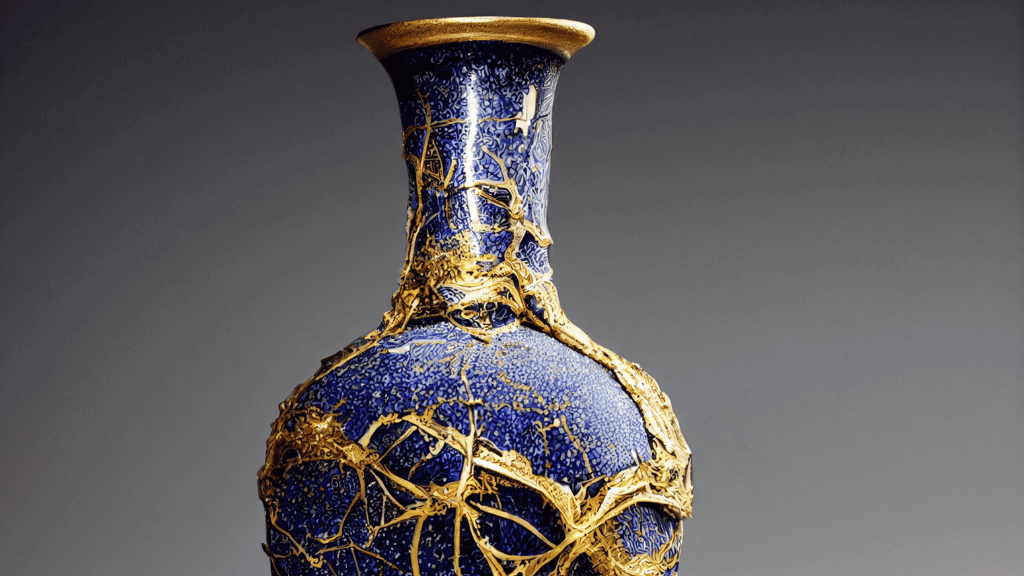
Satsuma pottery (also called Satsuma ware) is a type of Japanese earthenware with a cream or ivory body, a finely crackled clear glaze, and hand-painted decoration in colored enamels and gold.
It originated in the Satsuma province of southern Japan in the late 16th century. The ornate, gilded style most people recognize today was produced in huge quantities for export to the West from the 1860s onward.
A Short History of Satsuma Ware
Satsuma ware began in the late 1500s, when Korean potters were brought to Japan after the invasions of Korea and settled in the Satsuma domain, in present-day Kagoshima Prefecture.
Those early potters built kilns and worked with local clays, producing relatively plain, practical wares. The famous ivory-bodied, crackle-glazed style developed later, and the elaborate enamel-and-gold decoration came later still.
The turning point was the 1867 Paris International Exposition, where Satsuma pieces were exhibited and caused a sensation in Europe. Demand exploded. For the next several decades, workshops across Japan (not just in Satsuma itself) produced richly decorated “Satsuma-style” ceramics for the export market.
That export boom is why so much Satsuma ware survives in Western homes today. If a piece has been in your family for generations, there’s a good chance it dates from the Meiji era (1868–1912), the peak of Satsuma production.
How Satsuma Pottery Is Made
Satsuma ware is earthenware, not porcelain. That single fact explains most of its look and feel.
The body is a pale, fine-grained clay fired at a relatively low temperature. Earthenware typically matures around cone 06–04, roughly 1,830–1,945°F (1,000–1,060°C). Because it never vitrifies the way porcelain does, the body stays slightly porous and warm ivory in tone rather than glassy white.
The process works in stages:
- The piece is formed, dried until bone dry, and bisque fired.
- A translucent glaze is applied and fired. Because the glaze and the clay body shrink at slightly different rates as they cool, the glaze develops a network of fine cracks. That network is the signature Satsuma crackle, called kannyu.
- Decoration is painted on top of the fired glaze in colored overglaze enamels and gold, then the piece is fired again at a much lower temperature, around 1,200–1,400°F (650–760°C). That’s just hot enough to fuse the enamels without disturbing the glaze underneath.
That overglaze decoration is why the painting on Satsuma ware sits slightly raised on the surface. Run a fingertip over a genuine piece and you can usually feel the enamel and the gold.
What Satsuma Ceramics Look Like
A few features show up again and again, and together they make Satsuma ceramics easy to recognize:
- Ivory or cream ground with a fine, all-over crackle in the glaze.
- Dense, miniature painting: figures, landscapes, animals, immortals, and scholars, often in panels.
- Floral motifs such as chrysanthemums, peonies, wisteria, and cherry blossoms.
- Heavy gilding: gold outlines, gold borders, and sometimes raised gold beadwork (moriage).
- Common forms: vases, koro (incense burners), tea sets, plates, buttons, and small boxes.
The finest pieces are astonishingly detailed. Under a loupe, a two-inch panel by a top Meiji-era painter can contain dozens of distinct faces, each with individual expressions. Cruder export pieces, by contrast, show quick, repetitive brushwork. That difference in painting quality drives most of the difference in value.
Types of Satsuma Pottery
Several distinct styles fall under the Satsuma umbrella:
Ko-Satsuma (Early Satsuma)
The original wares made in the Satsuma domain before the export era: simpler, sturdier pieces, often dark-bodied, made for everyday and tea use. These look nothing like the gilded export style and are rare outside Japan.
Shiro Satsuma and Kuro Satsuma
Traditional Satsuma production split into two streams: shiro (white) Satsuma, the ivory crackle-glazed ware reserved historically for the ruling class, and kuro (black) Satsuma, a dark, iron-rich ware used for everyday vessels and shochu flasks. Both are still made in Kagoshima today.
Kyo-Satsuma (Kyoto Satsuma)
When export demand took off, decorators in Kyoto began painting Satsuma-style blanks with exceptionally lavish overglaze work. The best-known Kyoto name is the Kinkozan workshop. The most celebrated potter and decorator of the whole export era, Yabu Meizan, worked in the same fine style from his studio in Osaka, and his minutely detailed pieces are among the most prized by collectors.
Gosu Blue Satsuma
A scarcer 19th-century variation that uses a deep cobalt pigment called gosu as the dominant color, set against the ivory ground with gold and white details. Genuine gosu blue pieces are considered rarer than standard polychrome Satsuma and command a premium.
| Type | Era | Look | Rarity |
|---|---|---|---|
| Ko-Satsuma | 1600s–early 1800s | Plain, sturdy, often dark | Rare outside Japan |
| Shiro Satsuma | 1700s–present | Ivory body, crackle glaze | Moderate |
| Kuro Satsuma | 1600s–present | Dark/black utilitarian ware | Mostly found in Japan |
| Kyo-Satsuma | Mid-1800s–early 1900s | Extremely fine gilded painting | Top pieces are scarce and valuable |
| Gosu Blue | Late 1800s | Deep cobalt blue with gold | Rare |
| Export Satsuma | 1870s–1920s | Heavily gilded, variable quality | Very common |
Satsuma Ware vs. Other Decorated Ceramics
Collectors often confuse Satsuma with other ornate wares. The body and the crackle are the giveaways.
Satsuma is low-fired earthenware with a crackled ivory glaze and raised overglaze enamel. Bone china and porcelain are high-fired, white, and translucent when held to the light. Satsuma never is. Celadon relies on a single jade-green glaze rather than painted enamel decoration. Japanese Kutani ware can look superficially similar, but Kutani is porcelain with a smooth (uncrackled) surface and typically bolder reds and greens.
Quick test: check an unglazed area like the foot ring. Satsuma shows a soft, buff or cream earthenware body. A bright white, glassy body means you’re looking at porcelain, not Satsuma.
How to Identify Authentic Satsuma Pottery
Marks and Signatures
Turn the piece over. Many genuine pieces carry hand-painted gold or iron-red marks on the base: the artist’s or workshop’s name in Japanese characters, sometimes with “Satsuma” or “Dai Nippon” (Great Japan), and often the Shimazu family crest, a simple cross inside a circle. That crest belonged to the clan that ruled the Satsuma domain.
Two cautions I always give people:
- The Shimazu crest was widely copied, so the crest alone proves nothing.
- Plenty of authentic pieces have no mark at all, so an unmarked base does not mean fake.
Quality of the Painting
Quality is the most reliable indicator. Genuine Meiji-era Satsuma shows controlled, confident brushwork, faces with individual character, and gold applied with precision. Hasty outlines, smudged enamel, garish colors, and identical stamped-looking faces point to later mass-produced or imitation ware.
Common Red Flags
- Marks reading “Royal Satsuma” or “Satsuma” in English lettering. Genuine Japanese pieces were not marked this way, and these usually indicate 20th-century reproductions.
- A crackle pattern that is printed or painted on instead of fired into the glaze. Real crackle sits in the glaze, not on it, and a fingertip can tell the difference.
- A pure white, translucent porcelain body.
- Decal (transfer-printed) decoration instead of hand painting. Under magnification, decals show a dot pattern like a printed photo.
What Satsuma Pottery Is Worth
Values span an enormous range, and condition and painting quality matter far more than age alone.
- Mass-produced 20th-century export pieces and reproductions: often under $50–$100.
- Decent Meiji-era export vases and koro with attractive hand painting: commonly a few hundred dollars.
- Fine, signed work by recognized artists such as Yabu Meizan or Kinkozan: thousands of dollars, with the best examples reaching well beyond that at auction.
Damage hurts Satsuma badly. Because the decoration sits on the surface, worn gilding, rubbed enamel, hairlines, and chips all knock value down sharply. For any piece you suspect is significant, get an in-person opinion from an appraiser who handles Japanese ceramics. Photos alone miss restoration and gilding wear.
Caring for Satsuma Pottery
The enamels and gold sit on top of the glaze, so they’re the most vulnerable part of the piece.
- Dust with a soft, dry brush or microfiber cloth. If you must, use a barely damp cloth, but never soak a piece. The porous earthenware body can absorb water through the crackle and stain.
- Skip all abrasive cleaners, dishwashers, and household chemicals; they will strip gilding.
- Keep pieces out of direct sunlight and away from heat sources and big temperature swings.
- Display valuable pieces in a cabinet, and lift them with two hands by the body, never by a handle or rim.
Treat Satsuma as display ware. The low-fired body and surface gilding were never meant for daily food use.
Frequently Asked Questions on Satsuma Pottery
What is Satsuma ware?
Satsuma ware is the traditional name for Japanese ceramics from the Satsuma region: an ivory-colored earthenware with a finely crackled glaze, hand-decorated in colored enamels and gold. The term covers everything from plain 17th-century domestic pots to the lavishly gilded export pieces of the Meiji era.
Is Satsuma pottery porcelain or earthenware?
Earthenware. Satsuma is fired at low temperatures, has a soft cream-colored body, and is opaque. If a piece is bright white and translucent when held to a light, it’s porcelain and not true Satsuma.
How can I tell if my Satsuma pottery is real?
Check for a genuine crackle in the glaze (felt within the surface, not printed on it), raised hand-painted enamel and gold, a buff earthenware foot, and fine, individual brushwork. English-language marks like “Royal Satsuma,” decal decoration, and a white porcelain body all point to reproductions. When in doubt, consult a Japanese ceramics appraiser.
How much is Satsuma pottery worth?
Anywhere from under $50 for common reproductions to several thousand dollars for fine signed Meiji-era work. Painting quality, artist signature, condition, and intact gilding are the main value drivers — a small, exquisitely painted piece can be worth far more than a large, crudely decorated one.
What does the gold decoration on Satsuma ceramics signify?
The gold outlines and borders are a defining feature of the export style, used to frame panels and highlight detail. Gilding quality is also a useful dating and quality clue: precise, well-preserved gold suggests better workshops, while thick, sloppy gilding is typical of cheaper late-export ware.
Can I use Satsuma pottery for food or drinks?
I don’t recommend it. The low-fired body, crackled glaze, and surface gilding are easily damaged by food acids, washing, and heat. Old overglaze enamels and gilding can also contain lead, and none of it was made to modern food-safety standards. Keep antique Satsuma for display only.