
What Is Porcelain Pottery?
By Linda · · 9 min read
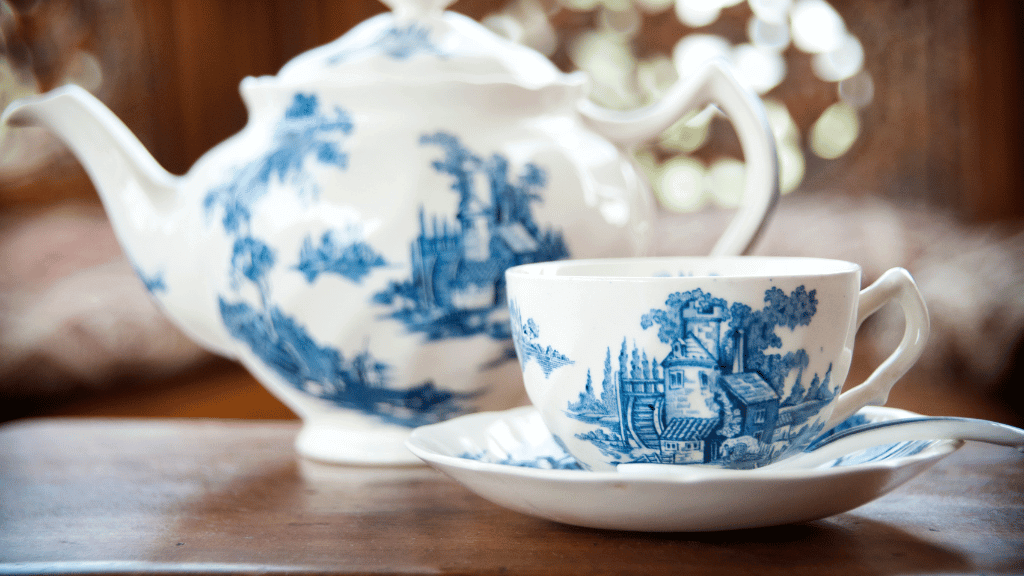
Porcelain pottery is a high-fired ceramic made primarily from kaolin clay, fired between roughly 2,200-2,550°F (1,200-1,400°C). At those temperatures the clay vitrifies all the way through. You get a white, glassy body that holds no water, stays strong even when thin, and glows when you hold it up to the light.
That translucency, paired with real toughness, is what separates porcelain from earthenware and stoneware. It is the fussiest of the three main clay bodies on the wheel. It is also the most prized.
What Makes Porcelain Different from Other Ceramics
All pottery starts as clay, but the clay body and firing temperature determine what you end up with. Porcelain sits at the top of the firing range.
| Property | Earthenware | Stoneware | Porcelain |
|---|---|---|---|
| Typical firing temp | 1,828-1,945°F (998-1,063°C) | 2,167-2,381°F (1,186-1,305°C) | 2,200-2,550°F (1,200-1,400°C) |
| Common cone range | Cone 06-04 | Cone 5-10 | Cone 6-12 |
| Color | Red, buff, or white | Gray, buff, brown | Bright white |
| Porosity | Porous (needs glaze to hold water) | Nearly non-porous | Fully vitrified, non-porous |
| Translucent? | No | No | Yes, when thin |
If you want a side-by-side look at the lower-fired bodies, I cover them in what is earthenware pottery and what is stoneware pottery.
The practical test I use at flea markets: hold the piece up to a strong light. If light glows through the rim or wall, you are almost certainly looking at porcelain or bone china. Stoneware and earthenware stay opaque no matter how thin they are.
Composition and Firing Process
A classic hard-paste porcelain body is roughly:
- Kaolin (china clay): about 50%. A pure white primary clay that gives porcelain its color and high firing tolerance, but very little plasticity.
- Feldspar: about 25%. The flux that melts during firing and glues everything into a glassy matrix.
- Silica (quartz): about 25%. Adds structure and hardness.
Porcelain is usually fired twice. The first bisque firing, around 1,828-1,945°F (cone 06-04), hardens the piece so it can be glazed. I describe that stage in what is bisque pottery. The glaze firing then takes it to maturity, commonly cone 10 (about 2,345°F / 1,285°C) for traditional porcelain, though many studio potters now use cone 6 porcelain bodies that mature around 2,232°F (1,222°C).
Types of Porcelain
- Hard-paste porcelain: The original Chinese formula of kaolin and feldspathic rock, fired at the highest temperatures. This is “true” porcelain.
- Soft-paste porcelain: A European workaround developed before kaolin deposits were found in the West. It blends white clay with frit (a fusible glass) and fires lower. It is softer and scratches more easily.
- Bone china: Contains 30-50% calcined bone ash, which gives a warm white color, exceptional translucency, and surprising chip resistance. I cover it fully in what is bone china pottery.
History and Origin
Porcelain originated in China. True porcelain was being made by the Tang Dynasty (7th to 9th century), and the material reached its peak refinement during the Song Dynasty. For centuries the formula was a closely guarded secret, which is why Europeans simply called the material “china.”
Europe did not crack the recipe until 1708-1710 at Meissen, Germany. Today Jingdezhen in China and Meissen remain the two most famous porcelain centers, alongside Limoges in France and Sèvres outside Paris.
Japanese porcelain developed its own traditions (Arita, Imari, Kutani), which collectors often encounter alongside Satsuma ware. One point that trips up a lot of collectors: despite being sold as “Satsuma porcelain,” classic Satsuma is a finely crackled cream-colored earthenware, not true porcelain. It does not have porcelain’s translucency or bright white body, and its deliberate crackle glaze is part of the style rather than a flaw.
How Porcelain Is Made: Forming Techniques
- Wheel throwing: Porcelain throws beautifully thin, but it is unforgiving. It has little plasticity, collapses if you overwork it, and hates being rewetted. Most potters learn on stoneware first.
- Slip casting: Liquid porcelain slip is poured into plaster molds. This is how most commercial dinnerware and figurines are made, and how factories achieve identical, paper-thin walls.
- Hand-building: Pinching, coiling, and slab work all work with porcelain, though the body cracks more readily at the drying stage than groggier clays.
Glazing and Decoration
- Underglaze painting: Designs (classically cobalt blue) are painted on bisque ware, then covered with clear glaze and fired. Blue-and-white porcelain is the most famous example.
- Overglaze enamels: Colors are applied on top of the fired glaze and fixed in a third, lower-temperature firing around 1,300-1,500°F (700-820°C). Gold accents are applied the same way.
- Transfer printing: Pre-printed designs are transferred onto the ware, which is how patterned dinnerware sets stay perfectly consistent.
Glaze chemistry matters more on porcelain than on any other body because the glaze and clay must shrink at compatible rates (more on that below). If glaze terminology is new to you, start with what is pottery glaze.
Porcelain Shrinkage Rate
Porcelain shrinks more than any other common clay body, and this is the single biggest thing to plan for if you work with it.
- Wet to bone dry: about 5-8% shrinkage as water leaves the clay.
- Total wet to glaze-fired: typically 12-15%, with some cone 10 porcelain bodies hitting 16%.
- By comparison, most stoneware bodies shrink 10-12% total, and earthenware less still.
In practice that means a mug you throw at 4.5 inches tall comes out of the glaze firing at under 4 inches. If you need a finished piece to hit a specific size (lids, tiles, dinnerware sets), throw a test piece first, measure it fired, and calculate your body’s exact shrinkage rate. Every porcelain body is different, so check the manufacturer’s spec sheet and verify it yourself.
High shrinkage is also why porcelain warps. Uneven wall thickness or fast, uneven drying causes one side to shrink faster than the other, and the piece pulls itself out of round in the kiln.
Porcelain Crazing and Cracking
These two problems generate more questions than anything else I get about porcelain, and they are different issues with different causes.
Crazing is the fine spiderweb of hairlines in the glaze surface, not the clay itself. It happens when the glaze shrinks more than the porcelain body as the piece cools, putting the glaze under tension until it cracks. On old porcelain, crazing develops slowly over decades of heating and cooling cycles. On antiques it is expected and usually only modestly affects price. I break that down in does crazing affect the value of pottery. On new functional ware it is a defect: crazed glaze can harbor bacteria and lets liquid reach the body. If you make pots, the fix is adjusting glaze fit, which I walk through in how to fix crazing in pottery.
Cracking goes through the clay body itself. The usual causes:
- Thermal shock: Pouring boiling water into a cold piece, or moving porcelain from freezer to oven. Vitrified porcelain handles heat well but not sudden swings.
- Drying cracks (for makers): Porcelain dries fast and unevenly. S-cracks in the bottoms of thrown pieces come from poorly compressed bases; rim cracks come from drafts. Dry porcelain slowly under plastic.
- Stress cracks: Hairlines radiating from a chip or from a too-tight stack in the cupboard that finally let go in the dishwasher.
A crack that goes through the body cannot be invisibly repaired on functional ware. Decorative pieces can be mended with epoxy or, beautifully, with kintsugi-style gold repair. Either way, the piece should retire from food use.
Caring for Porcelain
- Hand wash older, hand-painted, or gilded pieces in warm soapy water. Modern undecorated porcelain dinnerware is generally dishwasher safe.
- Never microwave or machine-wash anything with gold or silver accents. The metal sparks in the microwave and dulls in the dishwasher.
- Warm pieces gradually. Rinse a teapot with warm water before adding boiling water.
- Store plates with felt or paper pads between them; chips at the rim are the most common storage damage.
- One more caution: glazes on some older or imported decorated ware can contain lead. If you are not sure about a piece, keep it for display rather than food.
Identifying and Valuing Porcelain
When I evaluate a piece, I check these in order:
- Translucency test: Hold it to a bright light. True porcelain glows; pretenders do not.
- Maker’s marks: Check the base for stamps, painted marks, or impressed signatures. Marks identify the factory and often narrow the production period.
- Ring test: Flick the rim gently with a fingernail. Good porcelain rings with a clear, bell-like tone; a dull thud often means a hidden crack.
- Weight and wall thickness: Fine porcelain is lighter and thinner than it looks. Heavy, thick “porcelain” is often stoneware or ironstone.
- Condition: Chips, body cracks, and amateur repairs cut value hard. Light, age-appropriate crazing on antiques is more forgivable.
Realistic price context: mass-produced modern porcelain mugs and plates run a few dollars apiece, quality studio porcelain typically sells for $30 to $150 per piece, and antique marked pieces from major factories range from under a hundred dollars into the thousands depending on maker, age, rarity, and condition.
FAQ: Porcelain Pottery
What is porcelain in simple terms?
Porcelain is white ceramic made from kaolin clay and fired hot enough (2,200°F / 1,200°C and above) that the clay turns glassy all the way through. The result is non-porous, very strong for its thinness, and translucent when held to light.
Is Satsuma porcelain real porcelain?
No. Traditional Japanese Satsuma ware is a cream-colored earthenware with a fine crackle glaze and elaborate hand-painted decoration. It is often labeled “Satsuma porcelain” by sellers, but it lacks porcelain’s white vitrified body and translucency. The crackle on Satsuma is intentional and part of its identity, not damage.
Can you bring porcelain on a plane?
Yes. Porcelain is allowed in both carry-on and checked baggage, with no restriction on ceramics themselves. The real risk is breakage, so I always carry valuable pieces on rather than checking them. Wrap each piece in bubble wrap or clothing, cushion it in the center of the bag, and expect security to occasionally ask to inspect dense, wrapped objects. For irreplaceable antiques, double-box and carry on, or ship insured with a specialist.
What causes crazing on porcelain?
Crazing is a glaze-fit problem: the glaze shrinks more than the porcelain body during cooling and cracks under the tension. Age, repeated heating cycles, and thermal shock accelerate it. On antiques it is normal wear; on new functional ware it is a manufacturing defect worth returning.
What is the shrinkage rate of porcelain?
Most porcelain bodies shrink 12-15% from wet clay to final glaze firing, roughly 5-8% during drying and the rest in the kiln. That is several points more than typical stoneware, so always test-fire and measure your specific clay body before making anything that has to fit a fixed dimension.
Why does porcelain crack?
The most common culprits are thermal shock (sudden temperature swings), impact stress from chips or tight stacking, and, for potters, uneven drying or uncompressed bases that produce S-cracks. Heat porcelain gradually and dry greenware slowly under plastic to prevent most of it.