
What Is Talavera Pottery?
By Linda · · 8 min read
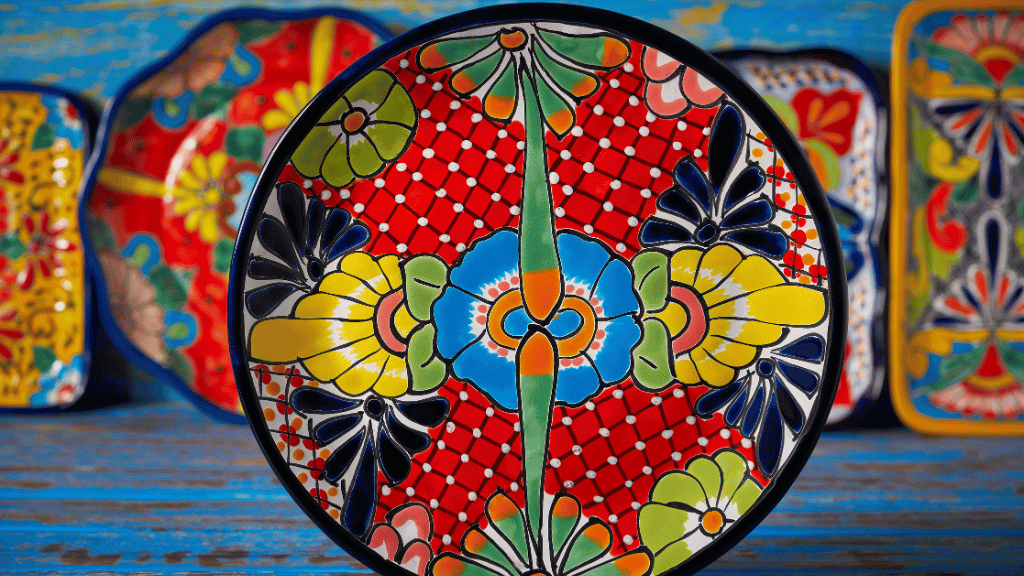
Talavera pottery is a tin-glazed earthenware from the Puebla region of Mexico, hand-formed from local clay, painted with mineral pigments, and fired twice. The classic look is a milky white glazed background decorated with cobalt blue, often joined by yellow, green, orange, mauve, and black.
What sets Talavera apart from most pottery is that the name is legally protected. Only certified workshops in a defined area around Puebla can sell their work as authentic Talavera, and every genuine piece carries identifying marks on the bottom. Everything else, including most of what you see in garden centers and souvenir shops, is “Talavera-style.”
What Does “Talavera” Mean?
The word Talavera comes from Talavera de la Reina, a town in central Spain that was famous for tin-glazed ceramics long before the style crossed the Atlantic. The pottery is literally named after its Spanish hometown.
In Mexico, the full traditional name is “Talavera Poblana” (Talavera of Puebla), which distinguishes the Mexican craft from its Spanish ancestor. When people say “Talavera” today, they almost always mean the Mexican pottery.
You’ll also hear the word used loosely for the whole decorative style: blue-and-white floral tiles, painted sinks, garden pots. Strictly speaking, though, Talavera refers only to certified pottery made in the Puebla region by traditional methods.
History of Talavera Pottery
Spanish artisans brought tin-glazing techniques to Mexico in the 16th century, settling in Puebla where the local clay was well suited to the craft. The technique itself goes back further still, through Spain to the Moorish potters of North Africa and ultimately to the Middle East.
Over the following centuries the craft absorbed Mexican, Chinese, and Indigenous influences. Chinese porcelain arriving on Spanish trade ships inspired much of the blue-and-white decoration, while local artisans added the bolder colors and folk motifs the pottery is known for today.
Talavera belongs to the same family as majolica pottery. Both are earthenware coated in an opaque tin glaze and painted before the final firing. The artisanal Talavera tradition of Puebla and Tlaxcala is recognized by UNESCO as Intangible Cultural Heritage.
How Authentic Talavera Pottery Is Made
Genuine Talavera is entirely handmade, and the certification rules dictate nearly every step. A single piece can take three to four months from raw clay to finished pot.
Clay Selection and Preparation
Artisans blend a dark clay and a light clay, both dug in the Puebla region, then wash, soak, and filter the mixture to remove impurities. The preparation alone can take weeks, and the clay is kneaded by foot or hand to drive out air bubbles.
Forming and Drying
Pieces are shaped on a potter’s wheel or pressed into molds, then air-dried slowly for days or weeks depending on size. Slow drying matters. Earthenware clay that dries unevenly will crack in the kiln, and I’ve lost enough pots to rushed drying to respect this step.
First Firing
The dried pottery gets a bisque firing at around 1,560°F (850°C), which hardens the clay into a porous body ready to accept glaze. This is the same principle behind any bisque pottery: fired once, unglazed, and absorbent.
Glazing and Painting
The bisque-fired piece is dipped in an opaque white tin glaze, which dries to a powdery surface. Artisans then paint directly onto the unfired glaze with mineral pigments. The powdery glaze drinks in the pigment instantly — there is no wiping away a mistake.
Certified Talavera uses six traditional colors derived from minerals: cobalt blue, yellow, green, orange, mauve, and black. The blue is applied thickly enough that you can often feel it slightly raised under your fingertip on a finished piece.
Final Firing
A second firing at roughly 1,900°F (1,040°C) melts the glaze into a glossy, durable surface and fuses the painted decoration permanently into it. Because the pigment sinks slightly into the molten glaze, authentic Talavera designs have a soft, gently blurred edge rather than crisp printed lines.
How to Identify Authentic Talavera Pottery
This is where most buyers get burned. The majority of “Talavera” sold online and in border-town markets is uncertified Talavera-style ware. Here’s what I check, in order:
- The DO4 mark. Authentic pieces carry the Denominación de Origen certification mark on the base, along with the workshop’s logo or name, the artist’s signature or initials, and “Puebla” or the workshop location. A bare bottom is a red flag.
- The region. The protected designation covers a small zone in the states of Puebla and Tlaxcala, including Puebla City, Atlixco, Cholula, and Tecali. Pieces made anywhere else cannot legally be called Talavera.
- The clay color. Flip the piece over. The unglazed foot ring of authentic Talavera shows a light terracotta or cream-colored clay body, not bright white or gray.
- Hand-painted evidence. Look for slightly raised cobalt blue, minor irregularities between repeated motifs, and softly blurred pattern edges. Perfectly uniform, crisp patterns usually mean decals or stamps.
- The colors. Only the six traditional mineral colors appear on certified ware. Hot pink, purple, or neon shades signal a Talavera-style imitation.
- The price. Authentic Talavera is slow, skilled handwork and is priced accordingly. A genuine dinner plate typically runs $40 to $100 or more, and large vases or jars can reach several hundred dollars. A $12 “Talavera” mug is almost certainly an imitation.
None of these checks alone is conclusive, but a piece that passes all six is very likely the real thing. Certified workshops are also inspected and their glazes tested, so authentic Talavera sold as tableware meets lead-release safety standards. You can’t assume that with uncertified glazed pottery from unknown sources.
Talavera vs. Other Tin-Glazed Pottery
Talavera is one branch of a family tree of tin-glazed earthenware that spread across Europe and the Americas. If you collect one, you’ll likely run into the others:
| Type | Origin | Signature look | Body |
|---|---|---|---|
| Talavera | Puebla, Mexico | White ground, cobalt blue plus yellow, green, orange, mauve, black | Blended terracotta earthenware |
| Majolica | Italy/Spain | Richly colored Renaissance scenes and patterns | Earthenware |
| Delft | Netherlands | Almost exclusively blue and white, fine detail | Earthenware |
| Faience | France/broader Europe | Pastel florals, delicate linework | Earthenware |
All four use the same core technique: opaque white tin glaze over earthenware, painted before the glaze firing. What differs is the clay, the palette, and the decorative tradition. Talavera is the boldest and most saturated of the group, and unlike true porcelain, all of them are fired at relatively low temperatures and remain slightly porous under the glaze.
What Authentic Talavera Costs
Because every certified piece passes through months of handwork, prices reflect labor, not just material:
- Small items (mugs, small bowls, tiles): roughly $20 to $60
- Dinner plates and serving bowls: roughly $40 to $120
- Mid-size vases and planters: roughly $80 to $250
- Large showpiece jars, sinks, and urns: $300 to well over $1,000
Talavera-style imitations cost a fraction of this, and that’s fine if you just want the look for a garden pot. Pay certified prices only when the piece carries certified markings.
Caring for Talavera Pottery
Talavera is durable for earthenware, but it’s still earthenware. Treat it accordingly:
- Hand-wash with mild detergent, warm water, and a soft cloth or sponge. Skip abrasive scrubbers, which dull the glaze over time.
- Keep it out of the dishwasher, microwave, and oven. Thermal shock from rapid temperature swings is the most common way these pieces crack.
- Serve cold or room-temperature foods. Talavera was never designed as cookware.
- For outdoor planters in cold climates, bring pieces inside before hard freezes. Water absorbed through the porous clay expands when it freezes and can split the pot.
- Display valuable pieces away from edges and high-traffic spots. Chips on a tin-glazed rim are hard to repair invisibly.
Where to Buy Authentic Talavera
The best hunting ground is Puebla itself, where certified workshops sell directly and you can often watch pieces being painted. Atlixco and Cholula have workshops as well.
If you can’t travel, buy from retailers that name the certified workshop a piece comes from and show photos of the base markings. Reputable sellers are happy to photograph the DO4 mark and signature before you commit. Be skeptical of marketplace listings that use “Talavera” generically with no workshop attribution. Apply the same scrutiny you would when checking whether Delft pottery is real.
Frequently Asked Questions about Talavera Pottery
What does Talavera mean?
Talavera is named after Talavera de la Reina, the Spanish town where the tin-glazed style flourished before Spanish artisans brought it to Mexico in the 16th century. The Mexican pottery’s full traditional name is Talavera Poblana, meaning “Talavera of Puebla.”
What makes Talavera pottery different from other types of pottery?
Talavera combines a protected origin, a regulated handmade process, and a distinctive look: opaque white tin glaze painted in cobalt blue and a small palette of mineral colors. Only workshops certified in the Puebla and Tlaxcala region of Mexico can legally sell their work as Talavera.
How can I tell if my Talavera pottery is authentic?
Check the base for the DO4 (Denominación de Origen) mark, the workshop name or logo, and the artist’s signature. Then look for hand-painted clues: slightly raised cobalt blue, soft pattern edges, a terracotta-colored unglazed foot ring, and only the six traditional colors. Authentic pieces are also priced like handmade art, not souvenirs.
Is Talavera pottery food safe?
Certified Talavera from licensed Puebla workshops must meet lead-release standards, so it’s safe for serving food. Uncertified Talavera-style pottery is a different story. Without testing, treat brightly glazed imitation pieces as decorative only.
Can I use Talavera pottery in the dishwasher or microwave?
No. Hand-wash with mild soap and a soft cloth instead. Dishwasher detergents and high heat dull the glaze, and the rapid temperature changes in a microwave or oven can crack the earthenware body.
Why is cobalt blue so prominent in Talavera designs?
Cobalt blue was historically the most prized and expensive pigment, so blue-heavy pieces signaled quality. Chinese blue-and-white porcelain arriving in Mexico on Spanish trade ships reinforced the tradition. The thick, slightly raised cobalt blue remains a hallmark of authentic Talavera today.