
What Is Stoneware Pottery?
By Linda · · 8 min read
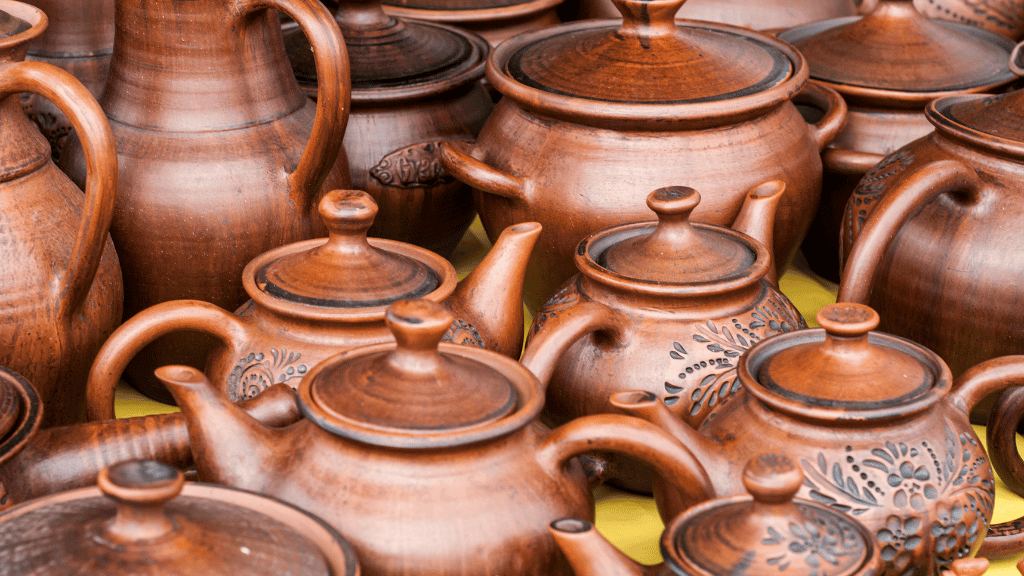
Stoneware is a type of ceramic made from clay fired at high temperatures, typically 2167°F to 2381°F (1186°C to 1305°C), or cone 5 to cone 10 in potter’s terms. At those temperatures the clay vitrifies: the particles fuse into a dense, stone-like body that holds water even without glaze.
That density is the whole definition in one word. Earthenware stays porous and porcelain becomes glassy and translucent. Stoneware sits in the sweet spot between them. It’s tough and watertight, and it’s forgiving enough that most working potters (myself included) use it for everyday dishes, mugs, and bakeware.
Stoneware Definition: What “Stoneware” Means
The name is literal. Fired stoneware looks and behaves like stone, dense and opaque, hard enough to resist chipping in daily use.
A piece qualifies as stoneware when it meets two conditions: it’s made from a stoneware clay body, and it’s fired hot enough to vitrify, which brings water absorption down to roughly 1–3%. Compare that to earthenware at 10% or more. That gap is why an unglazed earthenware pot weeps water and an unglazed stoneware crock doesn’t.
When you see “stoneware ceramics” on a dinnerware box, it means the same thing: high-fired, vitrified clay, usually glazed, built for daily handling, the dishwasher, and the oven.
What Is Stoneware Made Of?
Stoneware clay is a natural secondary clay, meaning it has traveled from its parent rock and picked up minerals along the way. A typical stoneware body blends:
- Fire clay or stoneware clay for high-temperature strength
- Ball clay for plasticity, so it throws and hand-builds well
- Silica (flint) for hardness and glaze fit
- Feldspar as a flux that melts and glues the particles together during firing
- Grog (ground-up fired clay) in many bodies, to reduce shrinkage and warping
Iron and other trace minerals give stoneware its characteristic colors (buff, tan, gray, speckled, or deep brown) instead of the pure white of porcelain. That iron content is also what creates the warm, rustic look people associate with handmade pottery.
If you buy clay from a supplier, a 25 lb bag of mid-fire stoneware typically runs about $15 to $30, which makes it one of the cheapest clay bodies to work with.
Stoneware vs. Earthenware vs. Porcelain
These three are the main families of pottery clay, and the differences come down to firing temperature and density.
| Earthenware | Stoneware | Porcelain | |
|---|---|---|---|
| Firing range | 1828–2052°F (998–1122°C), cone 06–02 | 2167–2381°F (1186–1305°C), cone 5–10 | 2280–2419°F (1249–1326°C), cone 8–12 |
| Water absorption | 10%+ (porous) | 1–3% (vitrified) | Near 0% (fully vitrified) |
| Body color | Red, orange, buff | Buff, gray, tan, speckled | White, translucent when thin |
| Durability | Chips easily | Very durable | Hard but can be delicate when thin |
| Typical cost | Lowest | Moderate | Highest |
| Best for | Flowerpots, decorative ware | Everyday dishes, bakeware, mugs | Fine dinnerware, art pieces |
Earthenware is the oldest and softest of the three; it stays porous even after firing, so it must be glazed to hold liquid. Porcelain is the most refined but the least forgiving to work with. Stoneware is the practical middle ground, which is why it dominates handmade functional pottery.
Types of Stoneware
“Stoneware” covers several distinct clay bodies and traditions. The ones you’ll run into most often:
Buff and White Stoneware
Buff stoneware blends light fire clays and kaolin into a warm, neutral-toned body that suits both wheel throwing and hand-building. White stoneware pushes the iron content even lower for a clean canvas that makes glaze colors pop. Reach for it when you want bright, modern-looking dishes.
Speckled (Iron-Spotted) Stoneware
Speckled bodies contain granular iron or manganese that burns through the glaze during firing, producing the freckled surface you see on a lot of farmhouse-style mugs. The speckles are in the clay itself, not the glaze.
Red and Brown Stoneware
Higher iron content gives these bodies a rich chocolate or brick tone. They look beautiful under transparent and celadon-type glazes but can muddy bright colors, so glaze tests matter.
Salt-Glazed Stoneware
The classic crock and jug material of early America and medieval Germany. Salt thrown into the kiln at peak temperature vaporizes and fuses with the clay surface, creating a glassy, orange-peel texture. Antique salt-glazed crocks are among the most collected stoneware pieces.
Porcelain Stoneware
A blend of stoneware and porcelain clays, sometimes sold as “porcelaneous stoneware.” You get most of porcelain’s refinement with stoneware’s workability. The tile industry uses the same term for ultra-dense floor tile, which can cause confusion; in pottery it just means a white, high-fire hybrid body.
How Stoneware Is Fired
Stoneware goes through the kiln twice, and the two firings do different jobs.
Bisque firing comes first: bone-dry pieces are slowly heated to around 1828–1945°F (998–1063°C), or cone 06–04. This drives off chemically bound water and hardens the clay enough to handle and glaze. If you want the full breakdown of that stage, I cover it in what is bisque pottery.
Glaze firing is the high one: 2167–2381°F (1186–1305°C), cone 5–10. This is where vitrification happens and the glaze melts into a glassy skin fused to the clay. A typical glaze firing takes 8 to 12 hours to reach temperature, then another 12 to 24 hours to cool slowly. Rushing the cooling is a common cause of cracked ware. I’ve lost good pots to an impatiently opened kiln, so leave it shut.
Potters split stoneware into two firing camps:
- Mid-fire stoneware (cone 5–6): the standard for electric kilns and most studio potters today. Cheaper to fire and easier on kiln elements.
- High-fire stoneware (cone 8–10): traditional gas, wood, and salt kilns. Produces the deepest, most variable glaze surfaces, especially in reduction atmospheres.
Glazing Stoneware
Most stoneware is glazed, both for looks and for a smooth surface that’s easy to clean. If glaze basics are new to you, start with my primer on glazed pottery. One caution before the fun stuff: modern studio and commercial glazes are formulated lead-free, but old or imported ware can carry lead-bearing glazes, so keep antique crocks and flea-market finds for display rather than dinner unless you’ve verified they’re food safe.
The techniques you’ll see most on stoneware:
Oxide and Stain Glazes
Metallic oxides such as iron, copper, cobalt, and rutile create most stoneware glaze colors, from matte earth tones to glossy blues. Iron alone can produce everything from honey amber to near-black tenmoku depending on the firing.
Celadon Glazes
Celadon glazes are a traditional East Asian family of transparent green-to-blue glazes that originated on stoneware. They pool in carved details and show off the clay underneath, which makes them a favorite on textured pieces.
Slip Decoration
Slip is liquid clay applied to the surface before firing, whether brushed, trailed, or dipped. It adds color and texture under a transparent glaze, and it’s how a lot of traditional stoneware (think blue-decorated crocks) got its decoration.
Salt and Ash Glazes
Vapor glazing in the kiln itself rather than from a dipped coating. These only work at high stoneware temperatures, which is part of why stoneware and these surfaces are historically inseparable.
A Short History of Stoneware
Stoneware was first produced in China, with high-fired wares appearing during the Shang dynasty roughly 3,400 years ago — long before true porcelain. The technology spread through Korea and Japan, then developed independently in the German Rhineland in the Middle Ages, where salt glazing was perfected.
German immigrants carried salt-glaze techniques to colonial America, where stoneware crocks, jugs, and churns became the food-storage workhorses of every household before refrigeration. That utilitarian heritage is why stoneware still reads as honest, everyday pottery, and why antique American stoneware is so heavily collected today.
How to Tell If a Piece Is Stoneware
A few quick checks I use when identifying unmarked pottery:
- Look at the unglazed foot ring. Stoneware shows gray, buff, tan, or brown clay. Bright white usually means porcelain; orange-red usually means earthenware.
- Feel the weight. Stoneware is noticeably heavier and thicker-walled than porcelain of the same size.
- Hold it to the light. Porcelain is translucent at the rim; stoneware is fully opaque.
- Tap it. Stoneware gives a solid, low-pitched ring. Earthenware sounds dull; porcelain rings high and clear.
- Check absorbency. A drop of water on an unglazed area soaks into earthenware quickly but sits on stoneware.
What Stoneware Is Used For
Stoneware’s durability and low porosity make it the default choice for:
- Tableware: plates, bowls, mugs, and serving dishes that survive daily use and the dishwasher
- Bakeware: casseroles, pie plates, and bread cloches (stoneware holds and distributes heat evenly)
- Storage: crocks for fermenting, jars, canisters, and butter keepers
- Garden and décor: planters, vases, and birdbaths (high-fired stoneware handles frost far better than earthenware)
A handmade stoneware mug typically sells for $25 to $60 and a dinner plate for $30 to $70. That price reflects the labor in throwing, trimming, glazing, and two kiln firings, not a markup on the material.
FAQ: Stoneware Pottery
What is stoneware in simple terms?
Stoneware is pottery made from clay fired hot enough, about 2167–2381°F (1186–1305°C), to become dense and watertight like stone. It’s the durable, slightly rustic ceramic used for most everyday handmade dishes.
What is stoneware made of?
A blend of natural clays (fire clay, ball clay, sometimes kaolin) plus silica and feldspar, often with grog added for strength. Trace iron gives it buff, gray, or speckled coloring instead of porcelain’s pure white.
What is stoneware clay?
Stoneware clay is any clay body formulated to mature in the cone 5–10 range. It’s plastic enough to throw on the wheel and strong enough for large pieces, and it vitrifies into a nearly waterproof body. That’s why it’s the most popular clay for functional pottery.
Is stoneware the same as ceramic?
All stoneware is ceramic, but not all ceramic is stoneware. “Ceramic” covers everything made from fired clay, with earthenware, stoneware, porcelain, and bone china all included. Stoneware is the high-fired, vitrified category within that family.
Is stoneware oven and microwave safe?
Generally yes. Fully vitrified stoneware handles oven heat and microwaves well. Avoid sudden temperature swings (no cold dish into a hot oven), and check that the specific piece is labeled oven-safe, since some glazes and decorations aren’t.
Why do some stoneware pieces feel gritty?
That texture is grog, ground-up fired clay mixed into the body. It reduces shrinkage and warping during drying and firing, and it gives stoneware its earthy, toothy feel.