
What Is Salt-Glaze Pottery?
By Linda · · 9 min read
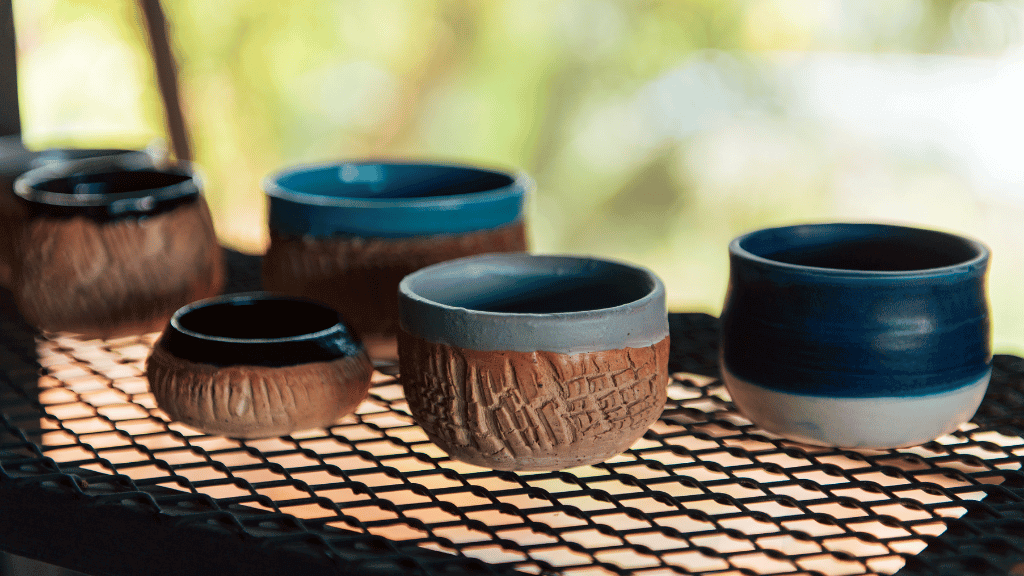
Salt-glaze pottery is ceramic that gets its glaze from common salt thrown into the kiln during a high-temperature firing, rather than from a glaze applied to the pot beforehand. At around 2300°F (1260°C), the salt vaporizes, and the sodium reacts with the silica in the clay body to form a thin, glassy sodium-silicate coating directly on the surface.
That vapor-formed glaze is what gives salt-glazed pottery its signature pitted “orange peel” texture, its glossy sheen, and its reputation for toughness. It is one of the oldest vapor-glazing techniques in ceramics, dating back to 15th-century Germany.
How Salt Glazing Works
Salt glazing is a kiln process, not a surface treatment. The pots go into the kiln bare or with minimal decoration, and the glaze forms during the firing itself.
Here is the basic sequence:
- Make and dry the work. Salt firing is almost always done on stoneware clay bodies with a decent silica content, since the silica is half of the chemical reaction.
- Fire to high temperature. The kiln climbs to roughly cone 9–12, about 2300–2380°F (1260–1300°C). Salt firings happen in fuel-burning kilns, wood or gas. Never electric.
- Introduce the salt. Once the kiln reaches temperature, the potter throws damp salt into the firebox or through ports in the kiln wall, usually in several small charges over an hour or more. A common rule of thumb is somewhere around half a pound to a pound of salt per cubic foot of kiln space, split across those charges.
- The vapor does the glazing. The salt (sodium chloride) breaks down in the heat. Sodium vapor circulates through the kiln and bonds with silica and alumina in the clay, building up a glassy layer wherever the vapor can reach.
- Check with draw rings. Potters pull small test rings of clay out through a spy hole during salting to judge how thick the glaze has built up, then stop adding salt when the surface looks right.
Because the glaze forms from vapor moving through the kiln, every piece comes out slightly different. Where flames and vapor swirled past a pot, you get richer color and texture (potters call this flashing), and the side facing away from the salt ports often glazes more thinly.
Why the Orange-Peel Texture Forms
The sodium vapor doesn’t condense evenly. It beads and pools microscopically as it reacts with the clay surface, and as the glassy layer melts and flows, it leaves a dimpled, pebbly finish that looks a lot like the skin of an orange. That texture is the single most reliable identifier of true salt glaze.
A Word on Safety
Salt firing releases hydrochloric acid vapor from the kiln chimney, which is why these kilns live outdoors and are fired with good clearance from neighbors. Never try to salt fire an electric kiln. The corrosive vapor destroys the heating elements and eats into the brick, and the kiln itself becomes permanently “seasoned” with sodium. Potters who salt fire dedicate a kiln to it for life.
What Salt-Glazed Pottery Looks Like
Beyond the orange-peel surface, salt-glazed pieces share a recognizable palette:
- Grays and tans from the bare stoneware clay showing through the clear glassy coat.
- Toasty browns and oranges where iron in the clay flashes in the kiln atmosphere.
- Cobalt blue decoration, painted on before firing, which survives the salt vapor beautifully and became the classic look of German and early American salt-glazed crocks and jugs.
The glaze layer is thin and follows every detail of the clay, so stamped, incised, and sprigged decoration stays crisp instead of pooling and blurring the way a dipped pottery glaze can.
A Short History of Salt-Glaze Ceramics
Salt glazing was developed in the Rhineland region of Germany in the 15th century, probably discovered when salt-soaked wood (possibly old brine barrels) was burned as kiln fuel. German potters refined it quickly because it solved a real problem: it produced cheap, durable, watertight vessels without the cost of applying a glaze.
A few landmarks worth knowing:
- Westerwald, Germany. Potters in the Westerwald region paired gray stoneware with cobalt-oxide blue decoration, a combination so iconic that gray-and-blue salt glaze is still shorthand for the style.
- 17th- and 18th-century England. English potters adapted the technique to white-firing clays, producing refined salt-glazed stoneware tableware that competed with early porcelain before creamware displaced it.
- 19th-century America. Salt-glazed stoneware crocks, jugs, butter churns, and preserve jars were the workhorse containers of American kitchens and farms. These pieces, often decorated with cobalt birds, flowers, and capacity numbers, are now the most collected category of American salt glaze.
- Industrial uses. Through the early 20th century, salt glaze coated sewer pipes, chemical jars, and ink bottles because the surface is dense, acid-resistant, and nearly indestructible.
Today salt glazing survives mostly in studio pottery. The results are too unpredictable for factories, but that unpredictability is exactly why studio potters love it.
Salt Glaze vs. Soda Glaze vs. Applied Glaze
People often lump salt and soda firing together, and fair enough. They’re close cousins, since both are vapor glazing. Here’s how the three approaches compare:
| Salt glaze | Soda glaze | Applied (dipped/brushed) glaze | |
|---|---|---|---|
| Glaze source | Salt vaporized in the kiln | Soda ash or baking soda sprayed/introduced in the kiln | Liquid glaze applied to bisque ware before firing |
| Typical temperature | Cone 9–12, 2300–2380°F (1260–1300°C) | Cone 9–11, similar range | Cone 04 to cone 10 depending on the glaze |
| Surface | Pronounced orange peel, all-over coat | Softer sheen, more directional flashing, less even | Whatever the glaze recipe gives: glossy, matte, etc. |
| Kiln | Dedicated fuel-fired kiln only | Dedicated fuel-fired kiln only | Any kiln, including electric |
| Emissions | Hydrochloric acid vapor | Far less corrosive; the common modern substitute | Minimal |
| Predictability | Low; every firing is a surprise | Low to moderate | High |
Many potters who trained on salt have switched to soda firing because it produces related effects without the acid fumes. If you see contemporary “salt-fired” work at a market, ask. There’s a fair chance it was soda fired, and most potters are happy to explain the difference. For a refresher on how conventional glazing compares, see my overview of glazed pottery in general.
Can You Do Salt Glazing at Home?
Honestly, for most hobby potters the answer is no, at least not in a home studio. Here’s why:
- You need a fuel-fired kiln dedicated to salt, because the sodium permanently coats the interior. You can’t borrow your electric kiln for a weekend experiment.
- The kiln must be outdoors with serious ventilation, since the firing releases corrosive vapor.
- Reaching cone 10+ takes a gas or wood kiln, fuel, and experience. Building one yourself is a project measured in months, and the materials alone can run a few thousand dollars even going the economical route.
The realistic path is to find a salt or soda firing workshop. Many community studios, craft schools, and university ceramics programs run group salt firings where you pay per shelf space or per piece, which is far cheaper than building your own kiln. A group firing is how most potters get their first salt-fired pots, and I’d recommend it before committing to a kiln build. If you do catch the bug, my guide on how to build a pottery kiln covers the fundamentals that apply to a salt kiln, too.
Is Salt-Glazed Pottery Food Safe?
Modern salt-glazed stoneware is generally food safe. The fired surface is a dense, fully vitrified glass that doesn’t absorb liquids, doesn’t harbor bacteria, and stands up to acidic foods.
Two cautions:
- Antique pieces are for display. Some historical wares were produced alongside lead-glazed interiors (salt vapor doesn’t reach inside narrow forms well, so potters sometimes glazed interiors separately, occasionally with lead-bearing glazes). Don’t store food or drink in antique crocks and jugs.
- When in doubt, test. For any piece you plan to eat from, the same rules apply as for any ceramic. See my guide on how to tell if pottery is food safe.
How to Identify Genuine Salt-Glaze Pottery
When I’m looking at a piece at an antique shop, here’s my mental checklist:
- Orange-peel texture. Run a finger over it; true salt glaze feels subtly pebbled, not smooth like a dipped glaze.
- Thin glaze that hugs the details. Stamps, incised lines, and handles stay sharp under the glaze.
- Stoneware weight and ring. Salt glaze sits on dense stoneware, so the piece should feel heavy for its size and ring when tapped, unlike porous earthenware.
- Unglazed or differently glazed interiors. On narrow forms like jugs, the vapor couldn’t reach inside, so interiors are often bare or coated with a brown Albany-type slip.
- Cobalt blue decoration on gray or tan clay is a strong (though not required) tell for German and American pieces.
Condition drives value for collectors. Cracks, chips, and heavy staining cut prices sharply, while crisp cobalt decoration raises them, especially figural designs like birds or animals on American crocks. Care is simple: wash by hand with a soft cloth, avoid thermal shock (no cold crock straight into a hot oven), and keep display pieces out of harsh direct sunlight.
FAQ
What is salt glaze on pottery?
Salt glaze is a glassy sodium-silicate coating formed when salt is thrown into a kiln at roughly 2300°F (1260°C). The salt vaporizes, and the sodium bonds with silica in the clay to create a thin, glossy, orange-peel-textured glaze directly on the pot’s surface. No glaze is applied beforehand.
What does salt do in a glaze firing?
The salt supplies sodium, which is a powerful flux. In vapor form it travels through the kiln and melts the silica at the clay surface into glass. The chlorine half of the salt exits the chimney as hydrochloric acid vapor, which is why salt firing requires an outdoor, fuel-fired kiln.
Is salt glazing still used today?
Yes, but mainly by studio potters and craft schools rather than factories. Many contemporary potters have shifted to soda firing, which gives similar vapor-glazed surfaces with far less corrosive emissions.
Can you salt fire in an electric kiln?
No. The sodium vapor corrodes electric heating elements and permanently contaminates the kiln brick. Salt firing requires a dedicated gas or wood kiln, fired outdoors with good ventilation.
How do I know if my pottery is salt glazed?
Look and feel for the orange-peel texture — a finely dimpled, glossy surface that follows every detail of the clay. A thin glaze with crisp decoration underneath, a dense stoneware body, and a bare or brown-slipped interior on narrow forms are all strong indicators.
Is salt-glazed pottery worth anything?
Contemporary salt-fired studio pots typically sell in the same range as other handmade stoneware. Antique salt-glazed stoneware varies enormously: plain utilitarian crocks may sell for modest sums, while pieces with elaborate cobalt decoration, maker’s marks, or unusual forms can command serious collector prices. Condition and decoration matter more than age alone.