
What Is Bone China Pottery?
By Linda · · 8 min read
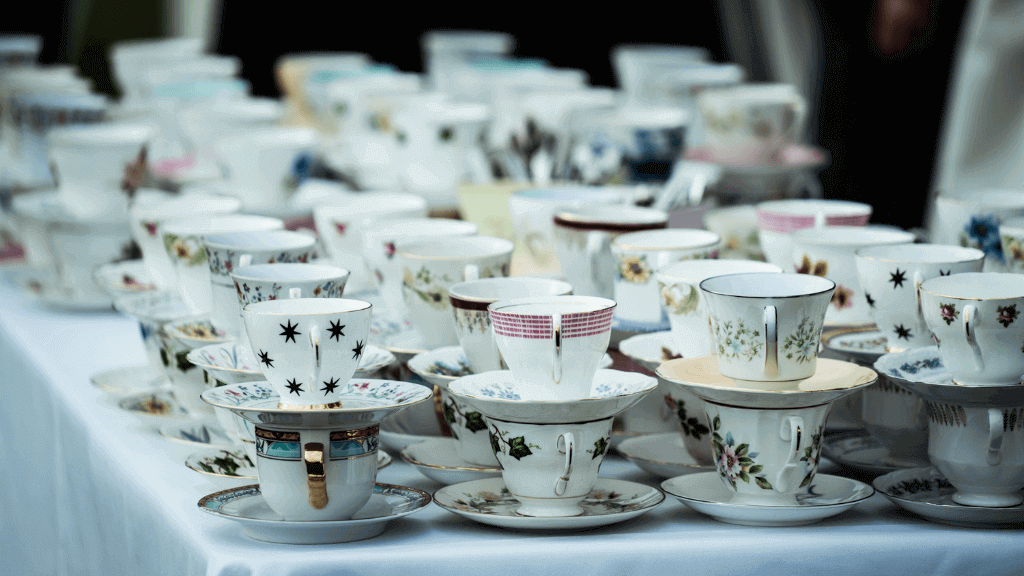
Bone china is a type of fine porcelain made from kaolin clay, feldspathic material, and at least 25–30% bone ash (calcined animal bone, usually cattle). The bone ash is what gives it three signature qualities: a warm milky-white color, noticeable translucency when held to the light, and surprising chip resistance despite walls thin enough to see your fingers through.
It was developed in England in the late 1700s and remains the standard for high-end tableware. If you hold a bone china teacup up to a lamp and can see the shadow of your hand through it, that translucency is the bone ash doing its job.
Bone China Definition
The simplest definition: bone china is porcelain that contains bone ash in its clay body. To legally carry the name, a piece generally needs a minimum bone ash content: about 30% in the UK and 25% in the US. Traditional English formulas go much higher, around 50% bone ash, 25% kaolin (china clay), and 25% Cornish stone or feldspar.
That bone content is the whole story. Take the bone ash out and you have ordinary porcelain; put it in and you get a whiter, lighter, more translucent body that resists chipping better than its delicate look suggests.
What Bone China Is Made Of
The classic recipe has three ingredients, each with a specific job:
- Bone ash (roughly 50%) – Cattle bones are cleaned, calcined (burned at high heat), and ground to a fine powder. This provides the whiteness, translucency, and the calcium phosphate that strengthens the fired body.
- Kaolin clay (roughly 25%) – The same china clay used in porcelain. It gives the body plasticity for shaping and structural integrity in the kiln.
- Cornish stone or feldspar (roughly 25%) – A flux that melts during firing and fuses everything into a dense, glassy body.
Cheaper “bone china” sold today sometimes runs closer to the legal minimums. More bone ash generally means a whiter, more translucent, and more expensive piece.
How Bone China Is Fired
Bone china is fired backwards compared to most pottery, and this trips people up. With typical stoneware or earthenware, the bisque firing is the cooler one and the glaze firing is hotter. Bone china flips that:
- Biscuit firing (the hot one) – The unglazed piece is fired to roughly 2,260–2,300°F (1,240–1,260°C), around cone 8–9. This is where the body vitrifies and becomes translucent. The clay shrinks dramatically and slumps easily at this stage, which is why factories fire pieces nested in setters for support. It’s also why bone china is so unforgiving in a home studio.
- Glost firing (the cool one) – The vitrified piece is coated with a clear glaze and fired again at roughly 1,940–2,010°F (1,060–1,100°C), around cone 04–02. Decorations and gilding go on after this, fixed in even lower-temperature enamel firings.
This is also why almost nobody makes bone china on a home wheel. The body has a very narrow firing range (a kiln that runs 50°F hot can slump an entire load) and the unfired clay is short and difficult to throw. Even experienced potters who handle porcelain well find bone china frustrating.
Bone China vs. Porcelain vs. Fine China
These three terms get used interchangeably in stores, but they’re not the same thing:
| Feature | Bone china | Porcelain (hard-paste) | Fine china |
|---|---|---|---|
| Contains bone ash | Yes (25–50%) | No | No |
| Color | Warm, milky white | Cool, bright white or grayish | Bright white |
| Translucency | High, light passes through thin walls | Moderate | Low to moderate |
| Weight | Lightest for its size | Heavier, denser | Similar to porcelain |
| Chip resistance | Best of the three | Good | Fair |
| Typical firing | Hot biscuit (~2,280°F / 1,250°C), cool glost | Single high firing ~2,380°F (1,300°C)+ | Lower temperatures |
| Typical price | Highest | Mid to high | Lowest of the three |
“Fine china” is essentially a marketing term for porcelain dinnerware fired at lower temperatures without bone ash. It looks similar on the shelf but won’t show the same translucency or warmth of color. For everyday durability at a lower price, stoneware beats all three; for sheer elegance, nothing touches bone china. Compare that with earthenware, which is porous and opaque. That’s the opposite end of the ceramic spectrum.
How to Identify Real Bone China
Three quick tests I use at estate sales and antique shops:
- The light test – Hold the piece up to a bright light or window with your fingers behind it. Genuine bone china glows translucent and you’ll see the shadow of your fingers. Opaque means it’s porcelain, fine china, or stoneware.
- The ring test – Balance a cup or plate lightly on your fingertips and tap the rim with a fingernail. Bone china gives a clear, sustained, almost musical ring. Thicker ceramics give a dull thud.
- The mark test – Flip it over. Reputable makers stamp “bone china” or “fine bone china” on the base, usually with the maker’s name. “Fine china,” “porcelain,” or no mark at all means it’s probably not bone china. Be aware that backstamps can be faked on valuable patterns, so for serious collecting, weight, color, and translucency matter more than the stamp.
The color is also a tell once you’ve handled enough pieces: bone china is a warm, creamy white, while hard-paste porcelain reads cooler and slightly gray-blue.
History of Bone China
Bone china is an English invention. Thomas Frye experimented with bone ash bodies at the Bow porcelain factory in London in the mid-1700s, but it was Josiah Spode who perfected and standardized the formula in Stoke-on-Trent in the 1790s. Spode was trying to match the beauty of imported Chinese porcelain using English materials. The recipe he settled on (roughly half bone, a quarter clay, a quarter stone) became the industry standard and barely changed for two centuries.
For most of its history, bone china was almost exclusively a British product. Today it’s manufactured worldwide, with major production in England, Japan, and China.
Notable Manufacturers Worth Knowing
If you’re buying or collecting, these names have long track records:
- Spode – The originators. Early Spode pieces are serious collector territory.
- Wedgwood – Heritage dating to 1759, known for both classic and modern patterns.
- Royal Doulton – English maker producing tableware and figurines since 1815.
- Royal Albert – Famous for floral patterns like Old Country Roses, one of the best-selling china patterns ever made.
- Noritake – Japanese maker blending Eastern and Western design, generally more affordable than the English houses.
Realistic pricing: a new bone china place setting from a major maker typically runs $50 to $200, with luxury patterns going well beyond that. Secondhand is where the bargains are. Complete vintage sets often sell at estate sales for less than a single new place setting, because formal china has fallen out of fashion.
Caring for Bone China
Bone china is stronger than it looks, but the decorations are often more fragile than the body itself:
- Washing – Hand-wash with mild soap and a soft cloth. Modern undecorated bone china is usually dishwasher-safe on a gentle cycle, but gilded or hand-painted pieces should never go in; the detergent abrades metallic trim over time. The same gentle approach applies to any glazed pottery with overglaze decoration.
- Temperature shocks – Don’t pour boiling water into a cold cup or move pieces straight from a cold cupboard into hot water. Warm them gradually. Thermal shock is the most common cause of hairline cracks.
- Stacking and storage – Put a paper towel, felt round, or coffee filter between stacked plates. Hang cups by their handles or store them upright, never stacked inside one another.
- Stains – Tea staining inside cups lifts with a paste of baking soda and water. Skip bleach on gilded pieces; it dulls the gold.
Ethical and Environmental Considerations
Two things to know before you buy. First, bone china contains real animal bone. There’s no way around it, since the bone ash is the defining ingredient. If that matters to you, look for pieces labeled “fine china” or porcelain, or for newer vegan bone-china-style bodies some makers now produce using mineral substitutes for the bone ash.
Second, the double high-temperature firing makes bone china one of the more energy-intensive ceramics to produce. Buying vintage is the easy answer here: the embodied energy was spent decades ago, the quality of older English bone china is excellent, and the secondhand market is flooded with it. Any potter will tell you a well-made piece of bone china can serve four generations. It’s about as far from disposable as tableware gets.
FAQ
What is bone china in simple terms?
Bone china is porcelain with ground animal bone ash mixed into the clay, usually 25–50% of the recipe. The bone ash makes it whiter, lighter, more translucent, and more chip-resistant than regular porcelain. It was invented in England in the late 1700s and is considered the highest grade of tableware ceramic.
How is bone china different from porcelain?
Porcelain contains no bone ash; bone china does. In practice, bone china is warmer white, lighter in weight, more translucent, and better at resisting chips, while porcelain is denser, cooler in color, and usually cheaper. Both are fired hot enough to fully vitrify, unlike earthenware or fine china.
Is bone china made from real bones?
Yes. The bone ash comes from animal bones (traditionally cattle) that are cleaned, burned at high temperature, and ground into powder. If you want the look without animal products, choose porcelain, fine china, or one of the newer mineral-based “vegan bone china” alternatives.
Can bone china go in the microwave or dishwasher?
Plain, undecorated bone china is generally microwave- and dishwasher-safe. The vitrified body handles it fine. Anything with gold, platinum, or hand-painted decoration should be kept out of both: metallic trim sparks in the microwave and detergent wears decoration away. When in doubt, hand-wash.
How can I tell if something is real bone china?
Hold it to a bright light. Genuine bone china is translucent and you’ll see your fingers’ shadow through it. Tap the rim and listen for a clear, sustained ring rather than a thud. Then check the base for a “bone china” backstamp from a known maker like Wedgwood, Spode, Royal Doulton, or Noritake.
Is bone china worth more than regular china?
Usually, yes. Bone china costs more new ($50 to $200 per place setting from major makers versus far less for fine china) and certain vintage patterns hold collector value. That said, most secondhand bone china sells cheaply because formal dining has fallen out of fashion — good news if you’re buying, tough news if you’re selling.