
Is Pottery And Ceramics The Same Thing?
By Linda · · 7 min read
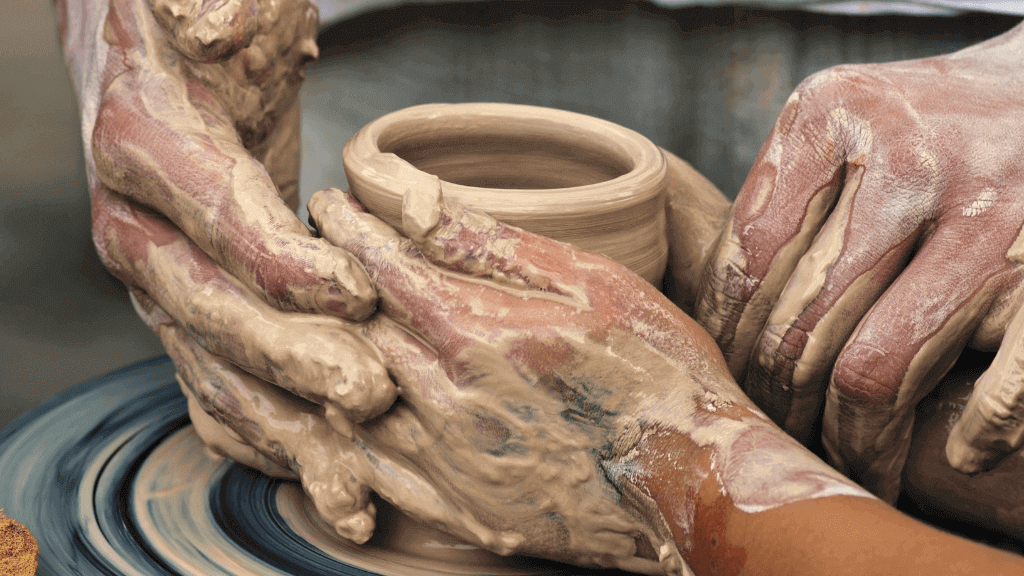
Pottery and ceramics overlap, but they are not identical. All pottery is ceramic, but not all ceramics are pottery. Ceramics is the broad category: any object made from a non-metallic mineral (usually clay) that is permanently hardened by heat. Pottery is the subset of ceramics formed from clay into vessels and functional ware: mugs, bowls, plates, vases, planters.
So a hand-thrown coffee mug is both pottery and ceramic. A porcelain figurine, a bathroom tile, a spark plug insulator, or a dental crown is ceramic but not pottery. In everyday conversation the two words get used interchangeably, and for studio work that’s fine. But the distinction matters when you’re reading kiln specs, buying clay, or signing up for a class.
The difference between pottery and ceramics at a glance
| Pottery | Ceramics | |
|---|---|---|
| Definition | Clay vessels and functional ware hardened by firing | Any non-metallic, inorganic material hardened by heat |
| Scope | Narrower, a subset of ceramics | Broader, includes pottery, tile, sculpture, industrial parts |
| Typical materials | Earthenware, stoneware, and porcelain clays | Clay, plus engineered materials like alumina and silicon carbide |
| Typical examples | Mugs, bowls, plates, vases, planters | All of the pottery examples, plus tiles, figurines, brick, electrical insulators |
| Where you’ll hear it | Studios, craft fairs, wheel-throwing classes | Art schools, materials science, “ceramics studio” class listings |
A simple test I give students: if it’s made of fired clay and it could hold something (food, water, a plant), call it pottery. If it’s fired clay, or another heat-hardened mineral, in any other form, “ceramic” is the safer word.
The word “ceramic” comes from the Greek keramos, meaning “potter’s clay,” which is exactly why the two terms blur together. Historically they were the same craft. The modern split happened when industry and fine art started making heat-hardened objects that had nothing to do with pots.
Why art schools say “ceramics” and studios say “pottery”
Class listings cause most of the confusion. A university “ceramics” program covers hand-building, sculpture, glaze chemistry, and wheel work. The whole medium. A community “pottery” class almost always means functional ware: throwing on the wheel, trimming, glazing mugs and bowls.
In practice:
- “Ceramics class” usually signals a broader, more art-focused curriculum, often including sculptural hand-building.
- “Pottery class” usually signals wheel-throwing and functional ware.
- “Paint-your-own ceramics” means decorating pre-made bisqueware, with no clay forming at all.
If you’re searching for “ceramics near me,” check what the studio teaches before booking. A drop-in paint-your-own studio is a fun afternoon, but it won’t teach you to throw a pot. I cover how to choose between classes, home setups, and memberships in my guide on how to get into pottery. Expect beginner wheel classes to run roughly $30 to $60 for a single session or $150 to $400 for a multi-week course, with clay and firing usually included. If a studio isn’t practical for you, it’s entirely possible to learn pottery at home with a modest starter setup.
The three main types of pottery clay
When potters talk about “types of ceramics,” they usually mean the three clay bodies, which differ mainly in firing temperature and how watertight they become.
| Clay body | Typical firing range | Character |
|---|---|---|
| Earthenware | Cone 06–04, about 1828–1945°F (998–1063°C) | Porous unless glazed, often red or buff, easiest to fire |
| Stoneware | Cone 5–10, about 2167–2381°F (1186–1305°C) | Dense, durable, the standard for functional dinnerware |
| Porcelain | Cone 8–12, about 2280–2419°F (1249–1326°C) | White, vitreous, can be translucent; least forgiving to work with |
Earthenware is the oldest and most common type. Terracotta planters and most majolica are earthenware, and even fired to cone 04 it stays porous unless you glaze it. Stoneware vitrifies at high temperatures, which is why it’s the workhorse for mugs and plates. Porcelain fires highest of all and is prized for its whiteness and strength, but it slumps and cracks easily in inexperienced hands. I’ve collapsed my share of porcelain bowls on the wheel.
You’ll also see ball clay and fire clay mentioned. Those aren’t finished-ware categories. Ball clay is a plastic, fine-grained clay blended into clay bodies (especially porcelain), and fire clay is a refractory clay used in kiln bricks and clay body recipes for extra heat tolerance.
Can ceramics be microwaved?
Most glazed, fully vitrified ceramics are microwave safe, but there are real exceptions:
- Metallic decoration. Gold or silver lusters, metallic rims, and some metallic glazes will spark. Never microwave them.
- Porous, low-fired ware. Unglazed or crazed earthenware absorbs water, and that trapped moisture turns to steam in the microwave. The piece gets scorching hot and can crack.
- Repaired pieces. Glue joints fail with heat.
One more caution that has nothing to do with the microwave: old or imported low-fired ware can carry lead glazes. If you don’t know a piece’s history, don’t eat or drink from it.
Quick test: microwave the empty piece next to a cup of water for one minute. If the dish comes out hot while the water is warm, the dish is absorbing energy and isn’t microwave safe. I go deeper on this in is pottery microwave safe, and the same logic applies to the dishwasher. Dense stoneware and porcelain generally handle it; low-fired and hand-painted ware often doesn’t.
Can you take ceramics on a plane?
Yes. Ceramics are allowed on planes in both carry-on and checked baggage. TSA and most international security agencies have no rule against fired clay. The risk isn’t confiscation; it’s breakage.
What I do when flying home with pottery:
- Carry it on if at all possible. Checked bags get thrown.
- Wrap each piece in clothing or bubble wrap, with padding inside bowls and mugs, not just around them.
- Expect security to swab or visually inspect dense, opaque pieces. It adds a minute, nothing more.
- For large or numerous pieces, ship them instead.
One caveat: a pottery item could still be questioned if it’s heavy enough to be considered a bludgeon for carry-on (think a large solid sculpture), so very heavy pieces belong in checked luggage or a shipping box. Full packing details are in can you take pottery on a plane.
Shipping ceramics safely
If you’re shipping ceramics domestically or internationally (including into the USA), the rules are simple: there are no restrictions on fired ceramic ware itself, but customs forms for international shipments need an honest description (“handmade ceramic mug”) and declared value.
Packing matters more than the carrier:
- Double-box with at least 2 inches (5 cm) of cushioning between the inner and outer box.
- Wrap each piece individually; fill all hollow spaces.
- Do the shake test. If you hear movement, repack.
- Insure anything you’d be upset to lose; carriers only pay claims on well-packed boxes.
I walk through the full double-box method in how to ship pottery.
Does the pottery vs. ceramics distinction really matter?
For day-to-day studio life, not much — call your work whichever you like. It matters in three situations:
- Buying classes or equipment. “Ceramics studio” listings may emphasize sculpture; “pottery studio” listings emphasize the wheel. Kiln and clay specs always use the technical terms (cone ratings, clay body types).
- Selling. At craft fairs and online, “ceramics” reads slightly more fine-art, “pottery” more functional and rustic. Use the word your buyers search for.
- Caring for finished pieces. Whether something is low-fire earthenware or vitrified stoneware determines if it’s microwave, dishwasher, and outdoor safe. The label on the bottom matters more than which word the maker used.
FAQ
What is the difference between pottery and ceramics?
Ceramics is the umbrella term for anything made from non-metallic minerals hardened by heat: pots, tiles, sculpture, even industrial parts. Pottery is specifically clay formed into vessels and functional ware and then fired. All pottery is ceramic; not all ceramics are pottery.
Is a ceramic mug the same as a pottery mug?
Functionally, yes. A clay mug hardened by firing is both ceramic and pottery. Sellers tend to say “ceramic mug” for factory-made ware and “pottery mug” or “handmade ceramic mug” for studio pieces, but there’s no technical difference in the words themselves.
Are ceramics allowed on planes?
Yes, in both carry-on and checked bags. There’s no security restriction on fired ceramics. Just pack against breakage and keep fragile pieces in your carry-on. Very heavy sculptural pieces are better checked or shipped.
Can ceramics be microwaved?
Most fully glazed stoneware and porcelain can be. Avoid microwaving anything with metallic decoration, unglazed or crazed low-fired earthenware, or repaired pieces. When in doubt, run the one-minute test with a cup of water beside the piece.
Why do some studios say ceramics and others say pottery?
It’s mostly emphasis. “Ceramics” suggests the whole medium, including sculpture and hand-building; “pottery” suggests wheel-thrown functional ware. Read the class description rather than relying on the name.
Which came first, pottery or ceramics?
Pottery, by tens of thousands of years. The broader category of “ceramics” (engineered materials, tiles, fine-art sculpture) grew out of the original craft of firing clay vessels, and the word itself comes from the Greek keramos, “potter’s clay.”