
What Is Earthenware Pottery?
By Linda · · 8 min read
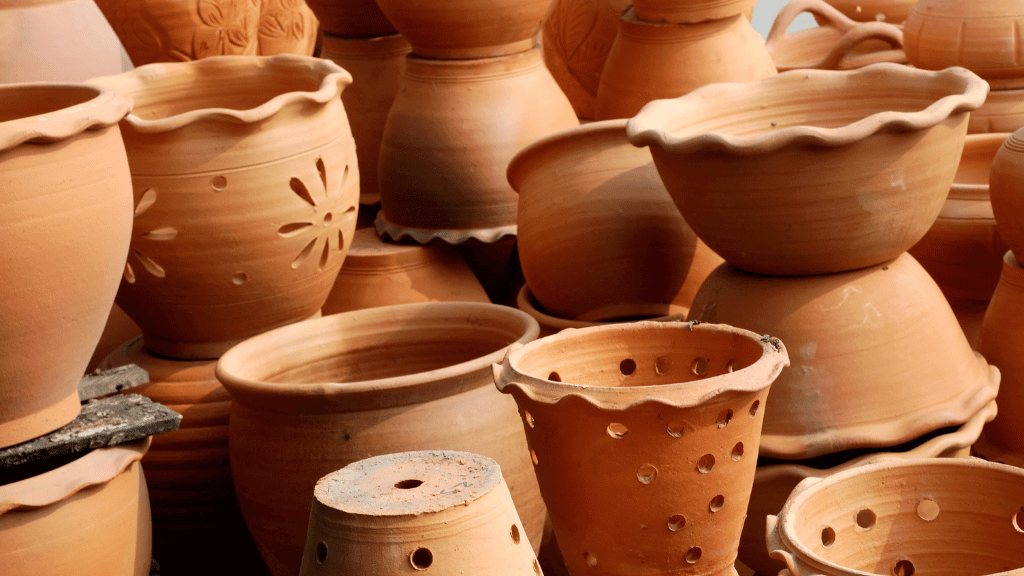
Earthenware pottery is ceramic made from clay and fired at relatively low temperatures, typically below 2,190°F (1,200°C). Most of it is fired in the range of 1,745–1,945°F (950–1,060°C).
Because of the low firing temperature, the clay body never fully vitrifies. That makes earthenware porous, slightly softer than stoneware or porcelain, and usually in need of a glaze if it’s going to hold liquids. Terracotta flower pots, Mexican talavera, Dutch delftware, and most colorful rustic tableware are all earthenware.
Earthenware Meaning and Definition
If you want a one-line definition: earthenware is any ceramic fired below the point of vitrification, leaving the fired clay body porous and opaque.
The word itself is literal: “earthen” (made of earth) plus “ware” (goods). It’s the oldest category of pottery, simply because low-temperature firing is the easiest kind to achieve. A wood fire or a simple pit fire can reach earthenware temperatures, which is why nearly every ancient culture made it.
In ceramics, the three main categories are earthenware, stoneware, and porcelain. What separates them is the clay used and how hot it’s fired. Earthenware sits at the low end of both.
What Is Earthenware Made Of?
Earthenware is made from secondary (sedimentary) clays, the kind that have traveled from their parent rock and picked up impurities along the way, especially iron oxide.
A typical earthenware clay body contains:
- Ball clay or common surface clay for plasticity
- Iron oxide and other mineral impurities, which give the classic red, orange, or buff color and lower the maturing temperature
- Sometimes added flux or fine grog to control shrinkage and improve workability
The iron content is what makes most earthenware fire red to brown. White earthenware bodies (like the ones used for creamware) use cleaner clays with talc or other fluxes added so they still mature at low temperatures.
These clays are cheap and found nearly everywhere, which is why earthenware is generally the most affordable clay to buy. Expect somewhere around $15 to $30 for a 25 lb bag at a ceramic supplier.
Earthenware Firing Temperature
Earthenware is fired in the low-fire range, usually cone 06 to cone 04, about 1,828–1,945°F (998–1,063°C).
A typical earthenware piece goes through two firings:
- Bisque firing at cone 06–04, which hardens the bone-dry clay into bisque pottery that’s ready to glaze. The clay has to be fully dry before it goes in, or steam will crack it.
- Glaze firing, usually at cone 06–04 as well, which melts the glaze into a glassy coating.
Even at the top of its range, earthenware never vitrifies the way stoneware does. The fired body still absorbs water, typically 5–15% by weight. That porosity is the defining trait of earthenware, and it drives almost everything else about how you use and care for it.
If you fire earthenware clay too hot (say, to stoneware temperatures around cone 6), it can bloat, slump, or even melt onto your kiln shelf. I’ve seen it happen, and scraping melted terracotta off a shelf is not how you want to spend an afternoon.
Types of Earthenware Pottery
There are several types of earthenware, each with distinct features and applications.
Terracotta
Terracotta, which means “baked earth” in Italian, is unglazed red earthenware. It’s the familiar orange-red of garden pots, roof tiles, and rustic sculpture.
Because it’s left unglazed, terracotta stays fully porous. That’s great for plant pots (roots like the breathability), but it will never be watertight, so don’t count on it to hold liquid.
Redware
Redware is glazed or decorated red earthenware, common in early American and European folk pottery. The iron-rich clay fires reddish-brown, and pieces often feature slip-trailed or sgraffito decoration under a clear glaze.
Creamware
Creamware is white-bodied earthenware with a clear glaze, developed in 18th-century England as an affordable alternative to porcelain. It has a soft, creamy color and was historically used for fine dinnerware.
Tin-Glazed Earthenware
A whole family of famous pottery traditions are earthenware coated with an opaque white tin glaze and then painted:
- Faience, the French and broader European term
- Majolica, the Italian and Spanish tradition, known for rich colors
- Delft pottery, the Dutch blue-and-white style
If you’ve admired blue-and-white Dutch tiles or a brightly painted Italian platter, you were looking at earthenware.
Raku and Pit-Fired Ware
Most raku and pit-fired pottery is technically earthenware, since both processes top out well below vitrification temperatures. These pieces are decorative only. The porous, crackled surfaces aren’t food safe.
Earthenware vs Stoneware vs Porcelain
This is the comparison most people came here for, so here it is side by side:
| Earthenware | Stoneware | Porcelain | |
|---|---|---|---|
| Firing temp | 1,745–1,945°F (950–1,060°C), cone 06–04 | 2,167–2,381°F (1,186–1,305°C), cone 5–10 | 2,280–2,420°F (1,250–1,330°C), cone 8–12 |
| Porosity | Porous (5–15% absorption) | Nearly nonporous (under 3%) | Nonporous (under 0.5%) |
| Typical color | Red, orange, buff, white | Gray, tan, buff, brown | White, often translucent |
| Durability | Chips most easily | Very durable | Hard but can chip on thin edges |
| Sound when tapped | Dull thud | Ring | Clear, bell-like ring |
| Typical cost | Lowest | Mid | Highest |
| Common uses | Planters, baking dishes, decorative ware, rustic tableware | Everyday dinnerware, mugs, bakeware | Fine dinnerware, teaware |
A quick identification trick I use: flip the piece over and look at the unglazed foot ring. Red or orange clay almost always means earthenware. Then tap the rim. Earthenware gives a dull thud, while stoneware and porcelain ring.
Common Uses of Earthenware
Tableware
Glazed earthenware makes charming plates, bowls, mugs, and serving pieces. It retains heat well and takes bright low-fire glaze colors that are hard to achieve at stoneware temperatures. The trade-off: it chips more easily than stoneware, so expect a shorter working life for everyday dishes.
Oven Baking Dishes
Many earthenware pieces are made for oven use: casseroles, pie plates, bean pots, tagines. The key rule is to avoid thermal shock. Put the dish into a cold oven and let it heat up gradually, and never set a hot dish on a cold, wet counter. Sudden temperature swings are the number one killer of earthenware bakeware.
Garden Pots and Outdoor Decor
Terracotta planters are the classic example. The porous walls let soil breathe and wick away excess moisture, which most plants love. The catch: water absorbed into the clay expands when it freezes, so unglazed pots left outside over winter in cold climates often flake or crack. I bring mine into the garage every fall.
Sculpture and Decorative Work
Low firing temperatures, inexpensive clay, and a huge palette of bright commercial glazes make earthenware a favorite for sculpture, tiles, and hand-built decorative pieces. It’s also the standard clay for school programs and beginner classes; most beginner pinch-pot and slab projects start with a low-fire earthenware body.
Glazing and Food Safety
Because the fired body is porous, unglazed earthenware will absorb water, oils, and bacteria. For anything that touches food or holds liquid, you want a fully glazed, properly fired surface. Here’s a deeper look at what pottery glaze is and how it works.
Two safety points:
- Lead: historically, many low-fire glazes contained lead. Modern commercial glazes sold in the US are labeled food safe when they are, but be cautious with vintage pieces, imported rustic ware, and anything of unknown origin. Use those for decoration, not dinner.
- Crazing: fine cracks in the glaze let moisture into the porous body underneath, which can harbor bacteria and cause weeping or odors. Crazed earthenware is best retired from food duty. If you’re unsure about a specific piece, treat it as decorative until you can confirm the glaze is intact and food safe.
Caring for Earthenware
- Wash by hand. Dishwasher heat, detergent, and rattling shorten the life of earthenware. Warm water, mild soap, soft sponge.
- Don’t soak unglazed pieces. They’ll absorb water and can take days to fully dry out.
- Heat and cool gradually. Cold dish into a cold oven; hot dish onto a trivet or dry towel, never a cold stone counter.
- Store with padding. A coffee filter or paper towel between stacked plates prevents chipped rims.
- Keep unglazed ware dry. Moisture absorbed into the body invites staining, mold in damp storage, and frost damage outdoors.
A Brief History of Earthenware
Earthenware is the oldest fired ceramic, with pieces dating back nearly 20,000 years. Because suitable clay exists almost everywhere and the firing temperatures are achievable with open fires, virtually every ancient culture developed its own earthenware tradition — Egyptian, Mesopotamian, Greek, Minoan, and Chinese among them.
Islamic potters developed tin glazes and lusters that transformed earthenware decoration, and those techniques traveled into Renaissance Europe as majolica, faience, and eventually delftware. Earthenware stayed the everyday ceramic of most households until industrial stoneware and porcelain became affordable.
Today it remains the workhorse of garden centers, art classrooms, and studio potters who love its color, low cost, and forgiving nature.
FAQ: Earthenware Pottery
What is earthenware in simple terms?
Earthenware is pottery made from common clay and fired at low temperatures, below about 2,190°F (1,200°C). The fired clay stays porous, so it’s usually glazed for use with food or liquids. Terracotta pots and most colorful rustic dishes are earthenware.
What is earthenware made of?
Earthenware is made from iron-rich secondary clays: ball clays and common surface clays with natural mineral impurities. The iron gives most earthenware its red-to-brown color; white earthenware uses cleaner clays with added fluxes so they mature at the same low temperatures.
What temperature is earthenware fired at?
Earthenware is typically fired between cone 06 and cone 04, roughly 1,828–1,945°F (998–1,063°C). Firing earthenware clay much hotter risks bloating or melting it.
What’s the difference between earthenware and stoneware?
Earthenware is fired lower, stays porous, and chips more easily; stoneware is fired around 2,167–2,381°F (1,186–1,305°C), vitrifies into a dense, nearly waterproof body, and is more durable for daily use. Flip a piece over, and if the unglazed foot shows red or orange clay, it’s usually earthenware.
Is earthenware microwave and dishwasher safe?
Fully glazed earthenware is usually microwave safe; unglazed or crazed pieces can absorb water, heat unevenly, and crack. For the dishwasher, I recommend handwashing all earthenware. The heat and detergent dull glazes and shorten its life.
Can earthenware go in the oven?
Many earthenware baking dishes are oven safe, but always heat them gradually: start in a cold oven and avoid sudden temperature changes. Never use earthenware on a direct stovetop flame unless the maker specifically says it’s flameware.