
What Is Lusterware Pottery?
By Linda · · 9 min read
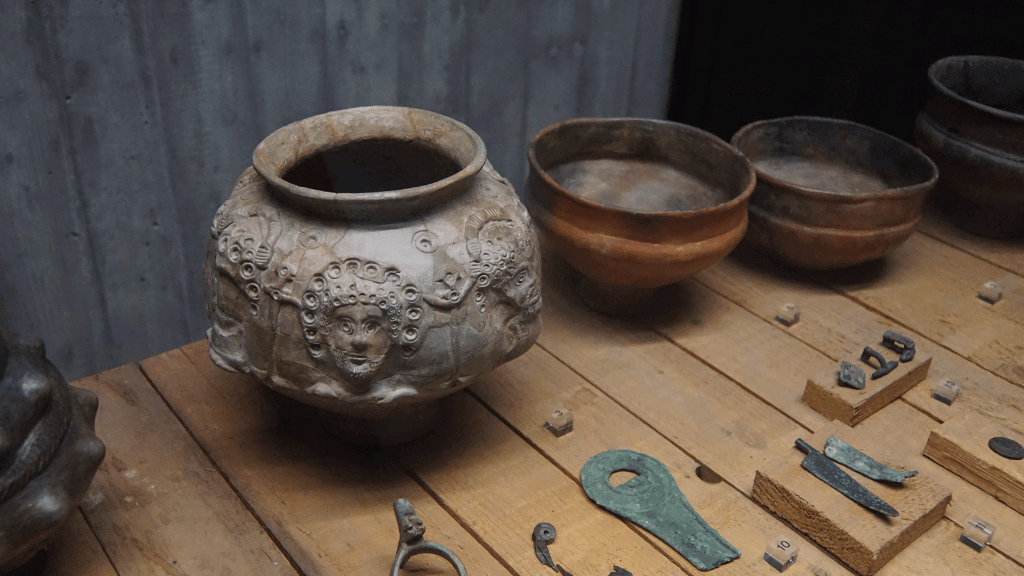
Lusterware pottery is ceramic decorated with a thin metallic film, usually made from silver, copper, gold, or platinum compounds, that gives the surface an iridescent, mirror-like sheen. The effect comes from a separate luster glaze applied over an already-fired glaze, then fixed in an additional low-temperature firing.
That extra firing is what separates lusterware from pottery that simply uses a shiny glaze. The metal particles sit in a layer only a few molecules thick on top of the glaze, which is why the finish shifts color as light moves across it. It’s also why the finish wears off if you scrub it.
What Makes Lusterware Different from a Shiny Glaze
A glossy pottery glaze is glass that reflects light evenly. Luster is real metal deposited on the glaze surface, so it reflects light the way a mirror or an oil slick does, with flashes of gold, pink, green, or rainbow iridescence depending on the viewing angle.
A few quick ways to tell them apart:
- Tilt the piece under a lamp. Luster shifts color and flares; ordinary gloss glaze just shines white.
- Look for wear. Because the metallic layer is microscopically thin, lusterware often shows dull patches where decades of handling or washing have rubbed it away.
- Check the interior or base. Luster is usually applied only to display surfaces, so you can often compare a lustered area against the plain glaze beside it.
History of Lusterware
Luster decoration began in the 9th century in Abbasid-era Mesopotamia (present-day Iraq), where potters adapted metallic stain techniques first used on glass. Egyptian and Persian workshops refined it over the following centuries.
The technique traveled west with Islamic potters into Spain, producing the famous Hispano-Moresque lusterware of Málaga and Manises in the 13th–15th centuries. Italian maiolica workshops in Deruta and Gubbio added gold and ruby-red lusters to their tin-glazed wares during the Renaissance, a tradition closely related to majolica pottery.
England industrialized the process in the early 19th century. Staffordshire and Sunderland factories produced copper, silver, and pink lusterware in huge quantities, which is why most lusterware you’ll encounter at antique shops today is Victorian-era English ware rather than rare Islamic or Spanish pieces.
How Lusterware Is Made: Glazes and Firing
Luster glazes
Luster preparations contain metal salts or oxides (silver, copper, gold, platinum, or bismuth) suspended in a carrier. Traditional reduction lusters mixed the metal compounds with clay and ochre and painted them onto a fired tin glaze. Modern commercial lusters are resin-based liquids you brush on straight from the bottle.
The metal content is tiny, but it’s enough. During the final firing, the compounds break down and leave a film of metal particles fused to the glaze surface.
The firing sequence
Lusterware always takes at least three firings:
- Bisque firing. The bare clay body is fired first, typically around cone 04 (1,945°F / 1,063°C), to harden it for glazing. This is the same step that produces bisque pottery.
- Glaze firing. The piece gets its base glaze and is fired to maturity. For earthenware bodies that’s commonly cone 06–04 (1,828–1,945°F / 998–1,063°C); stoneware and porcelain go higher.
- Luster firing. The luster is painted over the fired glaze and the piece is fired again at a much lower temperature, usually cone 022–018 (roughly 1,100–1,330°F / 595–720°C). The firing is hot enough to fuse the metal film to the glaze but not hot enough to re-melt the glaze underneath.
Traditional Islamic and Hispano-Moresque luster required a reduction atmosphere (a smoky, oxygen-starved kiln) to pull the metal out of its compounds. Historic potters got there by feeding the kiln with brushwood or rosemary at the critical moment. Modern resin-based lusters carry their own reducing agents, so they fire in an ordinary oxidation electric kiln, which is why luster work is far more accessible to studio potters now.
A related effect shows up in raku pottery, where copper-bearing glazes pulled from the kiln and reduced in combustible material produce flashy metallic surfaces. It’s a faster, less controlled cousin of true luster.
Types and Styles of Lusterware
| Type | Era and origin | Look | Where you’ll see it |
|---|---|---|---|
| Islamic luster | 9th–14th c., Iraq, Egypt, Persia | Golden-brown luster on tin glaze, calligraphy and figures | Museums; rarely on the market |
| Hispano-Moresque | 13th–16th c., Spain | Coppery-gold luster, often with cobalt blue, Moorish patterns | Museums and high-end auctions |
| Italian maiolica luster | 15th–16th c., Deruta, Gubbio | Gold and ruby luster over painted Renaissance scenes | Museums, major auctions |
| Copper lusterware | 19th c., England | All-over coppery metallic body, often with painted bands | Very common in antique shops |
| Silver luster | 19th c., England | Steel-gray platinum-based finish imitating silverware | Common; platinum, not silver, so it doesn’t tarnish |
| Pink/Sunderland luster | 19th c., England | Pink-to-purple splashed or marbled luster from dilute gold | Common; jugs, plaques, mottos |
| Studio and art luster | Late 19th c.–today | Iridescent art pottery (e.g., Art Nouveau era) and contemporary work | Galleries, art pottery auctions |
One detail collectors find useful: “silver” luster contains platinum, not silver. Real silver compounds fire to a straw-yellow color. That’s also why old silver luster pieces still look bright instead of tarnished black.
How to Identify Lusterware
When I’m checking a piece at an estate sale, I look at these things in order:
- The shift test. Rotate the piece under strong light. True luster flashes iridescent colors; metallic paint or modern decals look flat and uniform.
- Wear patterns. Honest age shows as soft, gradual rubbing on high points and rims. Sharp-edged losses or luster that flakes like paint suggests cold-painted decoration, not fired luster.
- The body. Most English lusterware is on a light earthenware or pearlware body; Hispano-Moresque is tin-glazed earthenware. If the body looks wrong for the claimed origin, be skeptical. (The same logic applies when identifying real Delft pottery.)
- Marks. Much 19th-century lusterware is unmarked, so the absence of a mark isn’t a problem. But a modern country-of-origin stamp like “Made in England” usually indicates 20th-century production.
Is Lusterware Food Safe?
Treat decorative and antique lusterware as display-only. The metallic film can contain metals you don’t want leaching into food, older pieces may have lead-based base glazes, and acidic foods plus utensil contact will wear the luster off quickly anyway.
Two firm rules regardless of age:
- Never microwave lusterware. The metallic film behaves like metal in a microwave — it arcs, sparks, and can crack the piece.
- Never put it in the dishwasher. Detergent and heat strip the luster layer in a handful of cycles.
Modern functional ware with fired-on gold or platinum bands (common on fine bone china) is the food-safe end of the luster family, but the no-microwave rule still applies.
Caring for Lusterware
- Wash by hand with lukewarm water and a drop of mild dish soap. No scouring pads, no abrasive cleansers, no soaking.
- Pat dry with a soft cloth rather than air-drying to avoid water spots on the metallic surface.
- Keep pieces out of direct sunlight and away from heat sources; avoid sudden temperature swings, which can craze the glaze beneath the luster.
- When stacking plates, put felt or paper between them. Luster scratches more easily than ordinary glazed pottery.
Collecting Lusterware and What It’s Worth
Lusterware spans an enormous price range, which is good news for new collectors:
- Victorian copper and pink luster jugs, cups, and plates are plentiful. Worn or common pieces often sell in the $15–$75 range; clean, well-decorated examples can bring $100–$300.
- Sunderland luster plaques and named jugs with ship scenes or mottos typically run a few hundred dollars in good condition.
- Art pottery luster from noted makers and Art Nouveau-era iridescent wares sell from the high hundreds into the thousands.
- Hispano-Moresque and Islamic luster is museum-grade material; authentic pieces command thousands to far more at major auctions.
Condition matters more with lusterware than with most ceramics because the decoration itself wears off. A piece with bright, intact luster can be worth several times an identical piece with rubbed, dull patches. Check rims, handles, and high spots first, and ask sellers directly about restoration, since overpainted repairs are common and hard to spot under warm shop lighting.
Making Luster Pottery Yourself
You don’t need a historic reduction kiln to try this. Commercial liquid lusters (gold, platinum, mother-of-pearl, and iridescent rainbow finishes) are applied with a brush over a fired glossy glaze, then fired to around cone 019–018 (about 1,250–1,330°F / 675–720°C) in an electric kiln.
A few things I’d tell anyone trying lusters for the first time:
- Apply a thin, even coat. Too thick and the luster fires cloudy or purple-tinged; too thin and it looks patchy.
- Cleanliness is everything. A fingerprint on the glaze shows up permanently in the fired luster, so handle pieces by unglazed areas and wipe the surface with alcohol first.
- Ventilate well. Lusters give off strong fumes during firing. Vent the kiln room and don’t linger near the kiln in the early stages.
- Gold and platinum lusters are sold in small bottles, and a little goes a long way; expect to pay noticeably more for real-gold luster than for iridescent or mother-of-pearl finishes.
- Luster fires best over smooth, glossy glaze. Matte glazes mute the effect.
FAQs on Lusterware Pottery
What is lusterware?
Lusterware is pottery with a thin fired-on metallic film over the glaze, made from silver, copper, gold, or platinum compounds. The film produces an iridescent, color-shifting sheen that a normal glossy glaze can’t, and it requires an extra low-temperature firing after the regular glaze firing.
How can I tell if a piece is real lusterware?
Tilt it under strong light. Genuine luster flashes shifting iridescent color rather than a flat shine. Look for gentle wear on high points (the thin metal layer rubs off with age), check that the clay body matches the claimed origin, and be wary of metallic decoration that flakes like paint, which indicates unfired decoration.
Is lusterware valuable?
It ranges widely. Common Victorian copper and pink luster pieces sell for $15–$75, better examples for $100–$300, and rare early Islamic, Hispano-Moresque, or fine art pottery luster reaches into the thousands. Brightness of the luster, condition, rarity, and maker drive the price.
Can you eat or drink from lusterware?
Use antique and decorative lusterware for display only. The metallic film and potentially lead-bearing old glazes aren’t suited to food contact, and use wears the finish off. Modern commercially made tableware with fired-on gold or platinum trim is food safe, but never put any lusterware in the microwave or dishwasher.
How is the luster effect created?
A luster preparation containing metal compounds is painted onto already-glazed, fired pottery, then fired a third time at a low temperature, around cone 022–018 (1,100–1,330°F / 595–720°C). Historically this required a smoky reduction kiln; modern resin-based lusters fire in a standard electric kiln.
Why does my lusterware look dull in spots?
The metallic layer is only a few molecules thick, so washing, stacking, and utensil contact gradually rub it away. Dull patches on rims and high points are permanent; the luster can’t be polished back. That’s why worn pieces are worth much less and why hand-washing with a soft cloth matters.