
What Is Bisque Pottery?
By Linda · · 7 min read
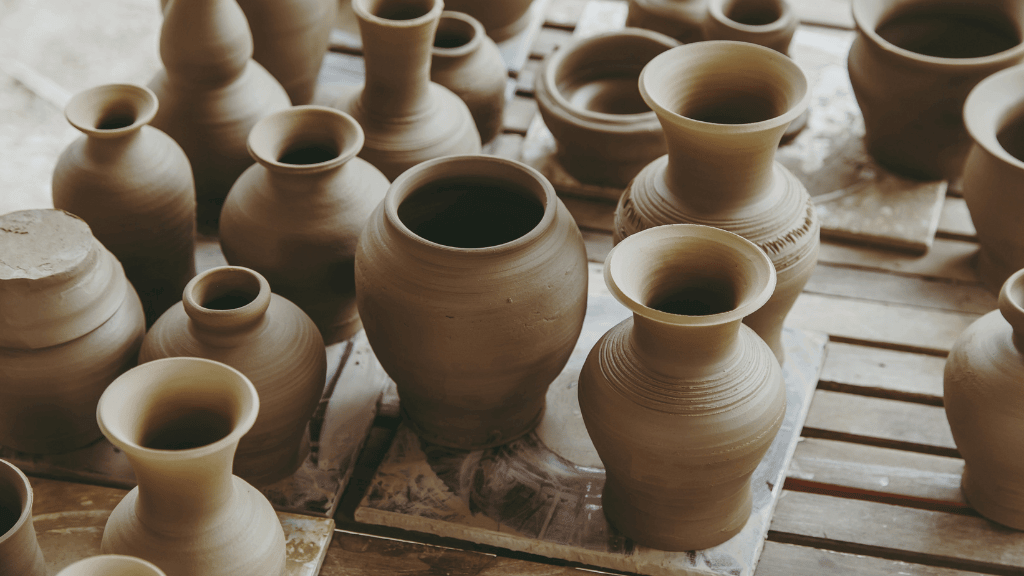
Bisque pottery (also called bisque ware or biscuit ware) is clay that has been fired once in a kiln but not yet glazed. That first firing, the bisque firing, usually lands between cone 08 and cone 04, roughly 1728°F to 1945°F (942°C to 1063°C). It permanently changes the clay from a fragile dried object into hard, porous ceramic.
Bisque can never be turned back into workable clay. It’s strong enough to handle, sand, and decorate, and porous enough to soak up glaze evenly. That porosity is why most potters fire twice instead of once.
What “Bisque” Means
The word covers three closely related things, and people use them interchangeably:
- Bisque ware: any piece that has been through its first firing but has no glaze on it yet.
- Bisque firing (or “a bisque fire”): the first kiln firing itself, which converts bone-dry clay into ceramic.
- Bisque clay: a slightly loose term, since there is no special clay called bisque. Any clay body (earthenware, stoneware, or porcelain) becomes bisque after that first firing.
You’ll recognize bisque immediately if you have ever visited a paint-your-own-pottery studio. Those chalky white mugs and figurines on the shelves are commercial bisque ware, waiting for color and a final glaze firing.
Greenware vs. Bisque vs. Glaze Ware
Clay passes through distinct stages, and knowing where a piece sits tells you what you can safely do with it.
| Stage | What it is | Strength | Can it get wet? |
|---|---|---|---|
| Greenware (bone dry) | Shaped, fully dried, unfired clay | Very fragile; chips and snaps easily | No, it will dissolve back into mud |
| Bisque ware | Fired once, unglazed | Hard but porous; survives normal handling | Yes, it absorbs water but won’t dissolve |
| Glaze ware | Glazed and fired a second time | Fully vitrified surface, durable | Yes, waterproof where glazed |
That middle column is the whole point of bisque firing. Greenware is so fragile that dipping it in a bucket of glaze would destroy it. Bisque takes the same dunking without complaint.
How Bisque Pottery Is Made, Step by Step
1. Shape the clay
The piece is formed by wheel throwing, slab building, coiling, or pinching. Nothing about bisque firing changes how you build. Even wall thickness matters a lot later, though, because thick spots hold hidden moisture.
2. Dry it completely
The piece must reach bone dry before it goes anywhere near a kiln, which typically takes 1 to 2 weeks at room temperature depending on size and thickness. A bone-dry piece feels room temperature against your cheek; a damp one feels cool.
Skipping this step is the classic cause of pieces blowing apart in the kiln. Trapped water turns to steam at 212°F (100°C) and expands violently. I cover this in detail in why pottery explodes in the kiln.
3. The bisque firing
The kiln climbs slowly. Most potters program a long, gentle schedule because this firing drives out the last of the physical and chemical water. A typical bisque firing takes 8 to 12 hours to reach temperature.
Around 660 to 1470°F (350 to 800°C), chemically bonded water leaves the clay molecules for good. This is the point of no return: the clay is now ceramic and can never be rehydrated and reused.
4. Cooling
The kiln then cools naturally for 12 to 24 hours. Opening it early invites thermal shock cracks, especially as pieces pass back down through quartz inversion at 1063°F (573°C). I never crack the lid until the pyrometer reads below about 200°F (93°C).
Bisque Firing Temperature and Cones
Most studios bisque fire between cone 08 and cone 04. The two most common targets:
- Cone 06: about 1828°F (998°C). This is the default in most community studios.
- Cone 04: about 1945°F (1063°C). A slightly harder, less porous bisque.
Notice the counterintuitive part: the bisque firing is usually cooler than the glaze firing for stoneware and porcelain, but hotter than the glaze firing for low-fire earthenware. A cone 04 bisque followed by a cone 06 glaze fire is standard low-fire practice, because the hotter bisque burns out impurities first and the cooler glaze fire keeps colors bright.
The choice is a trade-off:
- Lower bisque (cone 08 to 06): more porous ware that absorbs glaze quickly and thickly. Good if you dip your glazes.
- Higher bisque (cone 04): stronger ware that sheds dust and handles shipping better, but glaze goes on thinner and slower. Commercial paint-your-own bisque is usually fired to cone 04 for exactly this reason.
If you want the bigger picture on kiln temperatures across all firing types, see how hot a kiln needs to be for pottery.
Why Potters Bisque Fire Instead of Single-Firing
Single firing (glazing greenware and firing once) exists, but the two-firing system dominates for good reasons:
- Safe glazing. Bisque survives dipping, pouring, and brushing. Greenware often slumps or cracks when soaked with liquid glaze.
- Even glaze absorption. The porous bisque surface pulls a consistent layer of pottery glaze into itself, which means fewer crawls, pinholes, and bare patches.
- Burnout of organics. Carbon and sulfur compounds in the clay burn away during the bisque. If they escape during a glaze firing instead, the gases bubble up through the melting glaze and leave defects.
- A checkpoint for flaws. Cracks, warping, and weak joints show up after the bisque, before you invest glaze and a second firing in a doomed piece.
- Less shrinkage drama. Most of the early shrinkage has already happened, so the glaze firing holds fewer surprises.
What You Can Do With Bisque Ware
Bisque is a working surface, not just a waypoint:
- Glaze it. Brush, dip, pour, or spray, then fire again. Earthenware glaze fires around cone 06 to 04, stoneware at cone 5 to 6 (about 2167 to 2232°F / 1186 to 1222°C), and porcelain up to cone 10, about 2345°F (1285°C). The result is finished glazed pottery.
- Apply underglazes. Underglaze colors go on bisque beautifully and can be covered with clear glaze for a painted, illustrated look.
- Stain or oxide wash. Rubbing diluted oxides into texture and wiping back highlights carved detail.
- Sand it. Fine sandpaper smooths rough spots on bisque far more safely than on greenware. Wear a mask and sand damp — ceramic dust contains silica.
- Leave it raw. Some sculptural work stays unglazed on purpose, though unglazed surfaces stain and absorb water.
Tips for a Successful Bisque Firing
A few habits that have saved me the most heartbreak:
- Candle overnight for thick work. Holding the kiln at 180 to 200°F (82 to 93°C) for several hours before the climb drives out residual moisture from sculptures and thick-walled pieces.
- Slow through the steam zone. Keep the climb gentle until you’re well past 212°F (100°C). Speed kills more pots here than anywhere else.
- Stacking is allowed, within reason. Unlike glaze firings, bisque pieces can touch and even nest inside each other, since there is no glaze to fuse them together. Just don’t crush delicate rims under heavy pieces.
- Use witness cones. Even with a digital controller, a pyrometric cone on the shelf confirms the ware received the heat work you programmed.
- Vent early. Leave the kiln lid propped or the vent running during the first hours so water vapor and burnout gases can escape.
FAQ: Frequently Asked Questions About Bisque Pottery
What is bisque firing?
Bisque firing is the first of two kiln firings in most pottery. It takes bone-dry greenware up to roughly cone 08 to 04 (about 1728 to 1945°F / 942 to 1063°C), converting the clay into hard, porous ceramic that is ready to glaze. A typical bisque fire takes 8 to 12 hours plus 12 to 24 hours of cooling.
What is the difference between bisque pottery and greenware?
Greenware is shaped, dried, unfired clay, fragile and still soluble in water. Bisque pottery has been fired once, so it is permanently ceramic: harder, safe to handle, and porous enough to absorb glaze without falling apart.
Is bisque-fired clay still clay?
No. Once clay passes roughly 660 to 1470°F (350 to 800°C) in the kiln, its chemically bonded water is driven off and the change is irreversible. Bisque cannot be slaked down and reused the way dried greenware can.
Can I paint bisque pottery without glazing it?
Yes. Acrylic paints work well on bisque for purely decorative pieces, which is what most paint-your-own studios offer when they “cold finish” instead of glaze firing. Painted-only bisque is not waterproof or food safe, though. For anything that holds food or drink, use a food-safe glaze and a second firing; see my notes on whether unglazed pottery is food safe.
What cone do you bisque fire to?
Cone 06 (about 1828°F / 998°C) is the most common, with cone 04 (about 1945°F / 1063°C) the usual choice when you want stronger, less absorbent ware. Anywhere in the cone 08 to 04 range is normal. Pick lower for easier dip glazing, higher for durability.
Can I refire bisque pottery?
Yes. Underfired or questionable bisque can go through another bisque firing with no harm, and bisque ware can sit indefinitely before glazing. If a piece came out flawed, it’s worth asking an experienced potter or studio tech whether refiring will fix the problem or just waste kiln space. Cracks, for instance, do not heal in a refire.