
What Is Minoan Pottery?
By Linda · · 9 min read
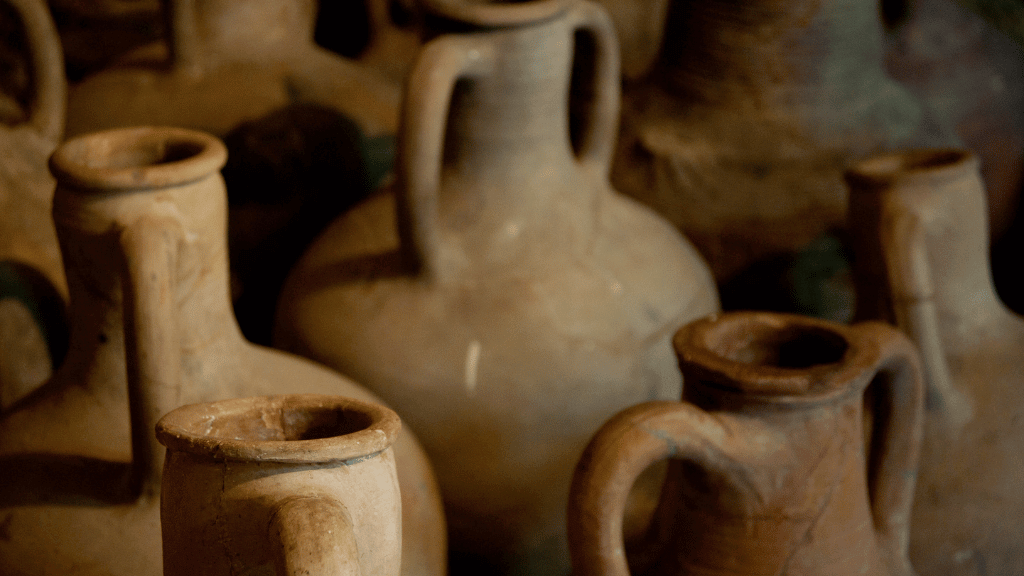
Minoan pottery refers to the distinctively styled ceramics produced by the Minoan civilization on the island of Crete and its surrounding areas during the Bronze Age (circa 3000-1100 BCE).
It’s known for rich decoration and advanced technique: polychromatic painting, marine-inspired motifs, geometric patterns, and naturalistic plants and animals. Famous styles include Kamares Ware, with its swirling designs on dark backgrounds, and the Marine Style, covered in octopuses and sea creatures.
Origins of Minoan Pottery
The Minoan civilization thrived on Crete from around 3000 to 1100 BCE, centuries before classical Greece. Their palaces at Knossos, Phaistos, and Malia were major centers of pottery production and trade.
Because Minoan buildings, frescoes, and texts survived only in fragments, pottery is one of the main ways archaeologists date and understand the culture. Pot styles changed steadily over the centuries, so a single sherd can often place a dig layer within a century or two.
That is also why Minoan ceramics dominate museum cases devoted to the Aegean Bronze Age: the pots are both the art and the historical record.
Timeline of Minoan Ceramic Periods
Archaeologists divide Minoan pottery into broad periods, each with recognizable styles. The dates are approximate and scholars debate the edges, but this is the standard framework.
| Period | Approximate Dates | Signature Pottery |
|---|---|---|
| Early Minoan | 3000-2100 BCE | Burnished wares, Vasiliki Ware with mottled red-and-black surfaces |
| Middle Minoan | 2100-1600 BCE | Kamares Ware: white, red, and orange designs on dark grounds; eggshell-thin cups |
| Late Minoan | 1600-1100 BCE | Marine Style, Floral Style, and the grand Palace Style jars |
Early Minoan potters worked before the fast wheel reached Crete, building vessels by hand with coil and pinch methods. If you’ve ever made a pinch pot, you’ve used the same basic technique they started with.
Techniques and Materials Used in Minoan Pottery
Clay Preparation
Minoan potters dug local Cretan clays, which fire to warm buff, orange, and red tones. They cleaned and levigated the clay (let it settle in water so the coarse grit sinks out), then wedged it to an even consistency.
Technically, all Minoan pottery is low-fired earthenware, the same broad family as modern terracotta.
Wheel-Throwing and Shaping
The potter’s wheel reached Crete during the Middle Minoan period, and Minoan potters became some of the earliest masters of it in the Aegean. Wheel work let them produce uniform, symmetrical vessels far faster than hand-building. The famous “eggshell ware” Kamares cups have walls only a millimeter or two thick.
For oversized storage jars (pithoi), some of which stand taller than a person, they combined wheel work with coil-building, adding and blending thick coils in stages so the lower walls could stiffen before more weight went on. The wheel itself was a hand- or assistant-spun turntable, not the motorized version we use now. I cover that history in when the pottery wheel was invented.
Slip Decoration Instead of Glaze
Here is a detail that surprises a lot of my students: Minoan pottery isn’t glazed. True vitreous pottery glaze was not used on Aegean ceramics in this era.
Instead, Minoan potters painted with slips, liquid clay refined so fine that it fires to a smooth, sometimes lustrous sheen. The glossy dark backgrounds on Kamares Ware are iron-rich slip, often burnished, not glass. Decorating with colored slips is a technique potters still use today; it is the foundation of slipware pottery.
The Minoans did know glassy surfaces from another craft, though. They produced faience figurines and inlays with self-glazing quartz pastes, a technology borrowed from Egypt. They just never applied it to their clay vessels.
Firing Techniques
Finished pots were dried, then fired in updraft kilns built of stone and clay, fueled with wood and brush. These kilns reached roughly 1470-1740°F (800-950°C), low-fire earthenware territory, well below the cone 6 range of about 2232°F (1222°C) used for modern stoneware.
The potters worked the kiln atmosphere to control color. Plenty of air (oxidation) turned iron-rich slips red and orange; smoky, oxygen-starved conditions (reduction) turned them black. Getting red motifs and black grounds on the same pot took real skill at managing the fire — something any potter who has wrestled with a wood or raku kiln will respect.
Decoration and Motifs in Minoan Pottery
Polychromatic Painting
One of Minoan pottery’s distinguishing features is its bold polychromatic painting, several colors on a single pot. Potters used mineral-based slips and pigments (iron oxides for reds and blacks, white clays for cream and white), layered to build elaborate scenes and designs.
Kamares Ware typically reverses the scheme most people expect from ancient pottery: light designs in white, red, and orange dance across a dark, glossy ground.
Marine-Inspired Motifs
As a seafaring culture, the Minoans covered their pots with marine life: octopuses wrapping their tentacles around the whole vessel, dolphins, argonauts, seaweed, rocks, and shells.
The octopus jars of the Marine Style are probably the single most recognizable images in all of Aegean ceramics. If you’ve seen one Minoan pot in a textbook, odds are it was an octopus flask.
Geometric Patterns and Naturalistic Forms
Spirals are everywhere in Minoan decoration, along with rosettes, bands, and net patterns. The Floral Style of the early Late Minoan period features lilies, crocuses, grasses, and olive sprays painted with loose, confident brushwork.
What sets Minoan painting apart from much ancient pottery is its sense of movement. Designs flow around the pot’s curves rather than sitting in stiff registers, which gives even a 3,500-year-old jar a surprisingly lively feel.
Types of Minoan Pottery
Kamares Ware
The most famous Middle Minoan style (roughly 2100-1600 BCE), named after the Kamares cave sanctuary on Crete where examples were first found. It features curvilinear white, red, and orange designs on a dark slipped ground, sometimes with added relief texture (barbotine).
The finest Kamares pieces, the eggshell-thin cups, were luxury palace products. They were exported as far as Egypt and the Levant.
Vasiliki Ware
An Early Minoan style (around 2600-2200 BCE) with a mottled red-and-black surface produced by uneven firing, possibly done deliberately by touching hot coals to the pot. It is proof the Minoans were experimenting with controlled “flashing” effects four thousand years before raku potters chased similar surfaces.
Marine Style
A Late Minoan style (peaking around 1500 BCE) characterized by detailed dark-on-light depictions of sea creatures covering the entire vessel surface. Octopuses, tritons, and starfish swim among rocks and seaweed with almost no empty space left.
Floral Style
A contemporary of the Marine Style, featuring plants (lilies, crocuses, reeds, and olive branches) painted in dark slip on a light ground with graceful, naturalistic brushwork.
Palace Style
The last great Minoan style (after about 1450 BCE), associated with Knossos. It favors large, imposing jars with grander, more formal and symmetrical decoration. Many scholars see Mycenaean influence here, as mainland Greeks had likely taken control of Knossos by this time.
Influence on Mycenaean and Greek Ceramics
Minoan pottery profoundly shaped the ceramics of the Mycenaeans on mainland Greece, who adopted Minoan shapes, motifs, and slip-painting techniques wholesale before gradually making the style stiffer and more symmetrical.
That Minoan-to-Mycenaean tradition is the root of the later Greek vase-painting lineage. The geometric, black-figure, and red-figure wares of classical Greece all descend from techniques the Minoans pioneered. The iron-slip technology behind a classical Athenian black-figure vase is a refined version of what Minoan painters were doing a thousand years earlier.
Function and Uses of Minoan Pottery
Minoan pottery served every level of society:
- Storage: giant pithoi held olive oil, wine, and grain in palace magazines. Rows of them still stand at Knossos.
- Tableware: cups, jugs, and bowls for daily eating and drinking, from plain workaday ware to eggshell-thin luxury cups.
- Transport: stirrup jars with narrow false spouts were the shipping containers of the Bronze Age, carrying oil and wine around the Mediterranean.
- Ritual: rhyta (libation vessels), often shaped like bulls’ heads or conch shells, were used in religious ceremonies.
- Burial: larnakes (clay coffins shaped like chests or bathtubs, painted like pots) held the dead, and vessels accompanied them as grave goods.
How to Recognize Minoan Pottery
When you’re looking at a museum case or an auction listing, these are the tells I look for:
- Movement: decoration that swirls and flows around the form rather than sitting in rigid horizontal bands.
- Marine and plant life: octopuses, dolphins, lilies, and spirals are the classic vocabulary.
- Light-on-dark or dark-on-light slip painting: glossy slip surfaces, never true glassy glaze.
- Buff or orange earthenware body: visible at chips and on unpainted bases.
- Distinctive shapes: stirrup jars, beak-spouted jugs, and bridge-spouted bowls are characteristically Aegean.
A practical warning: genuine Minoan pottery is antiquity, and most pieces offered to private buyers online are either modern museum-style reproductions or, worse, illegally excavated. Honest replicas from Cretan workshops are widely sold, from affordable small painted cups up to large hand-painted jars that cost considerably more. If a seller claims a piece is authentic, walk away unless it comes with documented, legal provenance.
Where to See Minoan Pottery Today
The Heraklion Archaeological Museum on Crete holds the world’s best collection, including the finest Kamares Ware and Marine Style pieces, and pairs well with a visit to the Knossos palace site a few miles away.
Outside Greece, strong Minoan collections live at the Ashmolean Museum in Oxford, the British Museum in London, and the Metropolitan Museum of Art in New York. If you can’t travel, all of these museums have searchable online collections with high-resolution photos. They make good reference material if you ever want to try Minoan-style slip decoration on your own pots.
FAQ About Minoan Pottery
What is Minoan pottery known for?
Minoan pottery is known for its flowing, colorful decoration, especially the swirling light-on-dark designs of Kamares Ware and the octopus-covered Marine Style. It is also famous for eggshell-thin cup walls and early mastery of the potter’s wheel.
What are Minoan ceramics made of?
Local Cretan earthenware clay, fired at roughly 1470-1740°F (800-950°C) and decorated with refined clay slips rather than glaze. The glossy blacks and reds come from iron-rich slip and controlled kiln atmospheres, not glass.
What are the main styles of Minoan pottery?
In rough chronological order: Vasiliki Ware (Early Minoan, mottled surfaces), Kamares Ware (Middle Minoan, polychrome on dark grounds), then the Marine Style, Floral Style, and Palace Style of the Late Minoan period.
Was Minoan pottery glazed?
No. True ceramic glaze was not used on Aegean pottery in the Bronze Age. The shiny surfaces are burnished and sintered slip. The Minoans did make glazed-looking faience objects, but from quartz paste rather than clay.
What is the difference between Minoan and Mycenaean pottery?
Minoan decoration is freer and more naturalistic, flowing around the vessel; Mycenaean pottery borrowed Minoan motifs but arranged them more stiffly and symmetrically, in neat zones. Mycenaean ware also tends toward a paler body with more standardized shapes.
How old is Minoan pottery?
Between roughly 3,100 and 5,000 years old. Production spanned about 3000 to 1100 BCE, with the most celebrated styles made between 2100 and 1400 BCE.