
What Is Glazed Pottery?
By Linda · · 8 min read
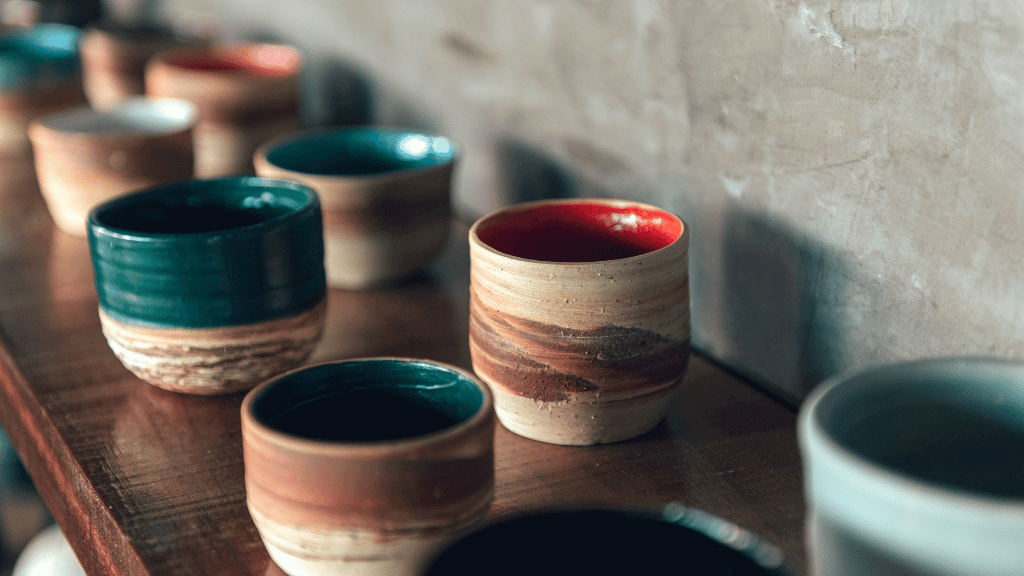
Glazed pottery is ceramic ware coated with a vitreous (glass-like) layer that fuses to the clay body during a kiln firing, typically between 1,800°F and 2,400°F (982°C and 1,316°C). Most glazes are a blend of silica, fluxes, and metal oxides.
The fired glaze seals the porous clay surface. That makes the piece waterproof, easier to clean, and far more durable, and it adds color, texture, and shine.
Understanding Glazed Pottery
Almost every functional ceramic piece you own (mugs, plates, bowls, casserole dishes) is glazed pottery. The clay body gives the piece its shape and strength; the glaze gives it a sealed, glassy skin.
Glazes can be transparent, opaque, glossy, matte, smooth, or textured, and they come in nearly every color you can imagine. If you want a deeper breakdown of what glaze is and how it behaves, I cover that in what is pottery glaze.
Unglazed pottery, by contrast, stays porous. Terracotta planters and bisque-fired pieces absorb water, which is fine for plants but a problem for food and drink.
Components of a Glaze
Every glaze, no matter how fancy, is built from the same four building blocks:
- Silica: The glass-former. It melts during firing and creates the hard, glassy surface.
- Flux: Materials like feldspar, boron, or (historically) lead that lower silica’s melting point so it matures at achievable kiln temperatures. Silica alone wouldn’t melt until roughly 3,100°F (1,700°C).
- Alumina (usually from clay): Stiffens the melted glaze so it doesn’t run off the pot, and helps the raw glaze stick to the piece before firing.
- Metal oxides and stains: The colorants. Iron gives browns, reds, and the green of celadon pottery; copper gives greens and turquoise; cobalt gives strong blues; manganese gives purples and browns.
Underglaze and Overglaze
Two terms that confuse a lot of beginners:
- Underglaze: A colored, clay-based decoration applied to the raw or bisque-fired piece, then sealed under a clear glaze. It’s how you get crisp painted designs that don’t blur in the firing.
- Overglaze: Decoration (including china paints and lusters) applied on top of an already-fired glaze, then fired again at a lower temperature. It allows fine detail and metallic effects that wouldn’t survive a hotter firing.
How Pottery Gets Glazed: The Process
- Bisque firing: The bone-dry clay piece is first fired to around cone 06–04, roughly 1,828–1,945°F (998–1,063°C). This hardens it into bisqueware: porous enough to absorb glaze, sturdy enough to handle.
- Applying the glaze: By dipping, pouring, brushing, or spraying. Dipping gives the most even coat; brushing usually takes three coats. The bottom of the piece is left bare or waxed so it doesn’t fuse to the kiln shelf.
- Glaze firing: The piece goes back into the kiln. Low-fire earthenware glazes mature around cone 06–04 (1,828–1,945°F / 998–1,063°C); mid-range stoneware glazes around cone 5–6 (2,167–2,232°F / 1,186–1,222°C); high-fire stoneware and porcelain around cone 9–10 (2,300–2,345°F / 1,260–1,285°C).
- Cooling: The kiln cools slowly over many hours — often longer than the firing itself. Opening it too early can crack both pots and glaze.
If you’re working from home without your own kiln, community studios and paint-your-own-pottery shops will fire glazed work for a per-piece or per-shelf fee.
What Is Salt Glazed Pottery?
Salt glazed pottery is stoneware glazed by throwing common salt into the kiln at peak temperature, around 2,300°F (1,260°C) at cone 9–10, rather than by applying a liquid glaze to the pot.
The intense heat vaporizes the salt. The sodium in the vapor reacts with the silica in the clay surface and forms a thin sodium-silicate glaze directly on the pot. The result is the signature “orange peel” texture: a slightly dimpled, glossy surface that no brushed-on glaze can replicate.
A few things to know about salt glaze:
- Origins: The technique was developed in the Rhineland region of Germany around the 14th–15th centuries and spread across Europe, then to colonial America.
- Classic look: Gray or tan stoneware with that pebbled orange-peel sheen, often decorated with cobalt blue brushwork. Antique American crocks, jugs, and butter churns are the textbook examples.
- Why stoneware: Salt glazing only works on clay bodies that mature at high temperatures, which is why “salt glazed stoneware” is practically one phrase. Earthenware can’t take the heat. (More on the clay itself in what is stoneware pottery.)
- Modern practice: Because salt firing releases chlorine compounds, many potters today use soda firing instead, spraying sodium carbonate or bicarbonate into the kiln. It gives a similar surface with less corrosive fumes. Salt and soda firing both require a dedicated fuel-burning kiln; you can’t salt-fire in an electric kiln without destroying the elements.
How to Identify Salt Glazed Stoneware
If you’re trying to tell whether an old crock or jug is salt glazed, look for these signs:
- A glossy but dimpled, orange-peel texture you can feel with your fingertips.
- Glaze that looks like part of the clay rather than a coating sitting on top, with no drips, brush marks, or pooling.
- An unglazed or differently colored interior (the vapor doesn’t reach inside enclosed forms well, so interiors were often lined with a brown Albany-type slip).
- Gray, tan, or brown stoneware bodies, frequently with cobalt blue decoration.
I cover the history, technique, and collecting side in much more depth in what is salt glaze pottery.
Common Types of Glazes Compared
| Glaze type | Typical firing | Look | Notes |
|---|---|---|---|
| Celadon | High-fire (cone 9–10), reduction | Translucent pale green to blue-green | Iron-based; rooted in ancient Chinese ceramics |
| Tenmoku | High-fire (cone 9–10) | Deep glossy brown to near-black | Iron-saturated; classic on tea bowls |
| Salt glaze | High-fire (cone 9–10) | Glossy orange-peel texture | Formed by salt vapor in the kiln, not applied as liquid |
| Raku | Low-fire (~1,800°F / 982°C) | Crackled, metallic, smoky | Pulled from the kiln red-hot; decorative, not food safe |
| Majolica | Low-fire (cone 06–04) | Opaque white with painted color | Tin-glazed earthenware tradition |
| Matte | Any range | Soft, non-glossy surface | Some mattes are less durable for daily-use dinnerware |
Raku deserves its own warning: the crackled glaze and porous body make it beautiful but unsuitable for food. See what is raku pottery for why.
Benefits of Glazing Pottery
- Waterproofing: Fired glaze seals the porous clay so mugs hold coffee and vases hold water without weeping.
- Hygiene: A smooth glazed surface doesn’t harbor bacteria the way bare clay can, and it wipes clean easily.
- Durability: The glassy layer resists scratching, staining, and everyday wear.
- Aesthetics: Color, depth, and surface effects that bare clay simply can’t deliver.
Health and Safety Considerations
- Lead and cadmium: Never use glazes containing lead or cadmium on surfaces that touch food or drink. Modern commercial glazes labeled “food safe” or “dinnerware safe” are formulated to pass leach testing. Old or imported glazed ware is the bigger risk; if in doubt, treat it as decorative. My guide on how to tell if pottery is food safe covers simple checks you can do at home.
- Dry materials: Mixing glazes from raw powders kicks up silica dust, which damages lungs over time. Wear a properly fitted respirator and wet-wipe your workspace rather than sweeping.
- Kiln fumes: Fire in a ventilated space and keep the kiln area clear while it runs.
Common Glaze Defects and How to Prevent Them
- Pinholes: Tiny craters left by escaping gases. A slower glaze firing with a brief hold at top temperature, a cleaner bisque, or a slightly thinner glaze coat usually solves them.
- Crazing: A fine web of cracks caused by the glaze shrinking more than the clay as it cools. Crazed surfaces aren’t reliably food safe because liquid can seep into the cracks. Fixing it means adjusting the glaze fit or switching clay bodies.
- Crawling: Bare patches where the glaze pulled away during firing, usually from dust, oil from your hands, or an overly thick application. Clean bisque and thinner coats prevent most of it.
- Running: Glaze that flows down the pot and welds it to the kiln shelf. Keep glaze off the bottom third of vertical pieces until you know how a glaze moves. I’ve chiseled more than one pot off a kiln shelf learning that one.
Glaze chemistry (how silica, flux, alumina, and colorants interact at the molecular level) is its own rabbit hole. Once you can read a recipe, you can adjust melt, color, and surface deliberately instead of guessing, and there are excellent books, workshops, and online calculators to get you there.
FAQ
What is salt glazed pottery?
Salt glazed pottery is high-fired stoneware glazed by introducing salt vapor into the kiln at around 2,300°F (1,260°C). The sodium reacts with silica in the clay to form a thin, glossy glaze with a distinctive orange-peel texture, rather than a glaze that’s brushed or dipped on.
Is salt glazed stoneware food safe?
Generally yes. The glaze is a stable sodium-silicate glass with no lead, and salt glazed stoneware was the everyday food storage ware of the 18th and 19th centuries. With antiques, check for cracks, crazing, or interior slips in poor condition before using them for food.
How do I know if a glaze is food safe?
Use commercial glazes explicitly labeled food safe or dinnerware safe, fire them to the temperature the manufacturer specifies, and avoid anything containing lead or cadmium on food surfaces. Crazed or matte surfaces on the food-contact area are also worth avoiding.
Can glazed pottery go in the microwave or dishwasher?
Most fully vitrified, properly glazed stoneware and porcelain handles both. Avoid microwaving pieces with metallic lusters or crazed glazes, and hand-wash handmade low-fire ware, which is more porous and more vulnerable to thermal shock.
What’s the difference between underglaze and glaze?
Underglaze is a colored, clay-based decorating material applied before glazing. It provides the design. Glaze is the glassy coating fused over it during firing, and it provides the seal and the shine. Underglaze on its own does not waterproof a pot.
Can glaze defects be fixed?
Often, yes. Pinholes, crawling, and thin spots can frequently be patched with fresh glaze and refired. Crazing is a glaze-fit problem that refiring won’t cure. It needs a change in the glaze recipe or clay body.