
Why Does Pottery Explode In The Kiln?
By Linda · · 7 min read
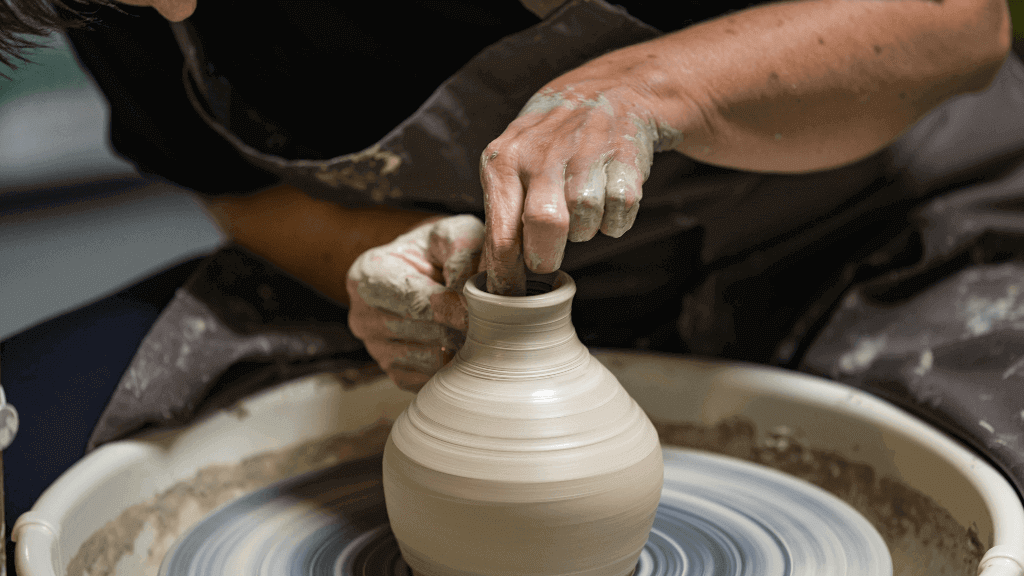
Pottery explodes in the kiln because of residual moisture trapped inside the clay, even when the piece looks and feels bone dry. When the kiln passes 212°F (100°C), that water turns to steam and expands to roughly 1,600 times its liquid volume. If the steam can’t escape through the clay walls fast enough, pressure builds until the piece blows apart.
The fix is simple in principle: make sure your work is truly dry before firing, and fire slowly through the water-smoking stage (room temperature up to about 500°F / 260°C). Contrary to what most beginners are told, air bubbles by themselves are not the real culprit. Moisture is.
What Causes Clay to Explode in the Kiln?
Every cause of a kiln explosion comes back to steam pressure. Here’s how it happens and what makes it worse:
- Residual moisture in the clay body. Clay holds water in two ways: mechanical water between the clay particles, and chemically bonded water inside the clay molecules. The mechanical water is what causes explosions, and it can hide deep in thick sections long after the surface feels dry.
- Thick walls and solid sections. A wall over about 1 inch (2.5 cm) thick takes far longer to dry, and steam from the center has a long way to travel. Solid sculptures are the highest-risk pieces in any kiln load.
- Firing too fast through the steam stage. Even a slightly damp piece can survive if you climb slowly. A damp piece hit with a fast ramp will almost always fail between 212°F and 400°F (100–200°C).
- Trapped moisture in enclosed spaces. A hollow form with no vent hole isn’t dangerous because of the air inside. The danger is that moisture inside the cavity can’t evaporate during drying.
- Uneven thickness. A piece with a thin rim and a thick base dries unevenly. The thin parts feel dry while the base is still damp inside, which fools you into firing too soon.
The myth worth killing: a small wedged-in air bubble does not blow up a pot. Air expands gently and predictably with heat. What an air pocket does do is trap moisture next to it and slow drying — and that moisture is what explodes. Wedge your clay well anyway, but don’t panic over every pinhole.
How to Tell If Pottery Is Dry Enough to Fire
Bone-dry greenware has a few reliable tells:
- The cheek test. Hold the piece against your cheek or the inside of your wrist. Damp clay feels noticeably cool because water is still evaporating. Bone-dry clay feels room temperature.
- Color check. Bone-dry clay is uniformly lighter in color than damp clay. Dark patches mean water is still present, especially at joins, bases, and thick spots.
- Weight. With experience you’ll notice a bone-dry piece feels surprisingly light compared to a leather-hard one.
- Time. Most thrown pieces need 1–2 weeks of air drying; thick or sculptural work can need 3–4 weeks or more. Humid climates stretch these times considerably.
Drying time depends heavily on thickness and humidity. I cover the full timeline in how long pottery takes to dry. And if you’re wondering about the opposite problem, the short answer is no: pottery can’t really be too dry to fire. Drier is always safer.
How to Prevent Pottery From Exploding in the Kiln
These habits have saved me more work than any other studio practice:
- Dry slowly and evenly. Cover fresh work loosely with plastic for the first day or two, then let it air dry away from drafts, heaters, and direct sun. Rushing the drying causes cracks; rushing the firing causes explosions.
- Keep walls under 1 inch (2.5 cm). Hollow out solid sculptures from the bottom or back, leaving consistent wall thickness. Consistent thickness matters more than absolute thinness.
- Poke vent holes in enclosed forms. Any fully enclosed hollow shape needs at least one pin-sized hole so moisture vapor can escape during drying and firing.
- Candle the kiln. Hold the kiln at 180–200°F (82–93°C) for several hours (overnight for thick work) before starting the actual ramp. This “candling” stage cooks off hidden moisture below the boiling point, where steam can’t build destructive pressure.
- Use a slow bisque schedule. Program no more than about 150–200°F (85–110°C) per hour up to 500°F (260°C). After that the danger window is past and you can speed up. A typical slow bisque to cone 04 takes 10–13 hours; see how long pottery takes to fire for full schedules.
- Pre-dry questionable pieces. A kitchen oven at its lowest setting (around 190°F / 88°C) for several hours, or a night on top of a warm kiln, drives off the last moisture safely.
Quick Reference: Risk Factors and Fixes
| Risk factor | Why it’s dangerous | The fix |
|---|---|---|
| Damp greenware | Steam pressure at 212°F+ (100°C+) | Dry 1–2+ weeks; cheek test before loading |
| Walls over 1” (2.5 cm) | Moisture hides deep inside | Hollow out; keep thickness even |
| Enclosed hollow forms | Moisture can’t escape the cavity | Poke a pin-sized vent hole |
| Fast firing ramp | No time for steam to diffuse out | Candle overnight; ramp ≤200°F (110°C)/hr to 500°F (260°C) |
| Humid studio | Pieces never fully dry | Extend drying time; pre-dry in a low oven |
Does the Type of Clay Matter?
Yes, though less than drying does. Heavily grogged sculpture clays and raku bodies are more “open”. The coarse particles create channels that let moisture escape, which makes them more forgiving of thick walls and faster ramps. Fine, dense porcelain and smooth stoneware hold moisture longer and punish impatience.
Whatever the body, the rule doesn’t change: clay that is 100% dry inside and out when it passes the boiling point has essentially zero risk of exploding. The clay type only changes how long it takes to get there and how much margin for error you have. Firing temperature for the clay body itself is a separate question, and it’s covered in how hot a kiln needs to be for pottery.
What to Do After a Piece Explodes
An exploded piece can’t be repaired. The fragments have already been bisque fired and won’t rejoin. Your job now is protecting the rest of the kiln load and the kiln itself:
- Let the kiln cool completely before opening. Never open a hot kiln to inspect damage.
- Remove the large fragments by hand, then vacuum shelves and the kiln floor with a soft brush attachment. Sharp shards left on shelves will mar the next load.
- Inspect neighboring pots. Flying fragments often chip or crack pieces shelved nearby, and those flaws may not show until after glaze firing.
- Check kiln shelves and elements for embedded debris before the next firing.
The one consolation: an explosion is diagnostic. It tells you exactly what went wrong (moisture plus speed), and it’s completely preventable next time. Note that an explosion is different from a crack. Cracks usually come from uneven drying, poor joins, or quartz inversion stress during cooling, and I break those down in why pottery cracks.
Explosions vs. Cracks: Know the Difference
| Symptom | Likely cause | When it happens |
|---|---|---|
| Piece shattered into fragments | Steam pressure from trapped moisture | Early bisque, 212–400°F (100–200°C) |
| Clean S-shaped crack in the base | Uneven compression when throwing | Visible after drying or bisque |
| Hairline cracks at joins | Attachments made at different moisture levels | After drying or bisque |
| Cracks or dunting in fired ware | Quartz inversion stress (around 1063°F / 573°C) | Cooling too fast, or reheating fired ware unevenly |
If your kiln keeps producing cracked rather than exploded ware, the cooling side of the firing schedule is usually the place to look, not the heating side.
FAQ
What causes clay to explode in the kiln?
Trapped moisture turning to steam. Water expands enormously when it boils, and if the clay walls are too thick, too damp, or heated too fast for the steam to diffuse out, pressure shatters the piece. It almost always happens early in the bisque firing, between 212°F and 400°F (100–200°C).
Do air bubbles make pottery explode?
Not directly. This is the most persistent myth in pottery. Heated air expands far too gently to shatter clay. Air pockets are a problem because they trap moisture and create weak spots, but the moisture is what does the damage. Wedge well, vent enclosed forms, and dry thoroughly.
How long should pottery dry before firing?
A minimum of one week for typical thrown ware, two weeks to be safe, and three to four weeks for thick or sculptural pieces. Always confirm with the cheek test: if the clay feels cool against your skin, it’s still releasing moisture and isn’t ready.
Can you fire pottery that is slightly damp?
You can get away with it if you candle the kiln at 180–200°F (82–93°C) for several hours or overnight before ramping up. That holds the piece below boiling while remaining moisture evaporates. It’s a rescue technique, not a habit. Fully dry greenware is always the safer bet.
Will an exploding pot damage my kiln?
The kiln itself usually survives. Explosions damage ware, shelves, and neighboring pieces more than the kiln. Vacuum out all debris, check that no fragments landed on or near the heating elements, and inspect shelves for chips before firing again.