
Is Unglazed Pottery Food Safe?
By Linda · · 7 min read
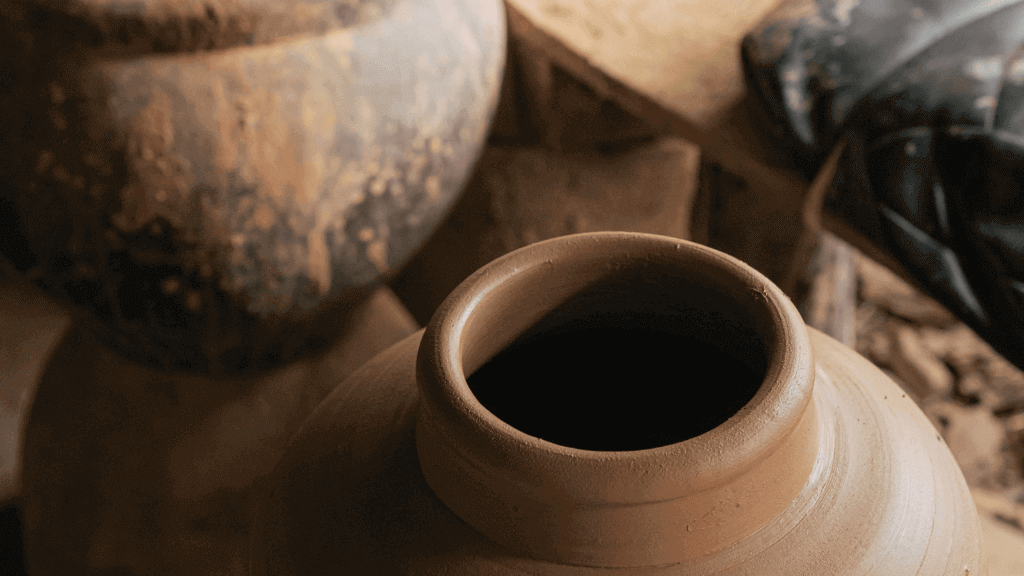
Unglazed pottery can be food safe, but only if the clay was fired hot enough to vitrify, meaning the clay particles fused into a dense, nearly waterproof body. Stoneware and porcelain fired to mid-range or high temperatures (cone 5 and up, roughly 2,167°F / 1,186°C and hotter) usually qualify. Low-fire clays like earthenware and terracotta do not vitrify, stay porous, and are not food safe without a glaze.
So the real question isn’t “is it unglazed?” It’s “what clay is it, and how hot was it fired?” Below I’ll walk you through how to tell the difference, where the risks come from, and how to care for unglazed pieces you do use with food.
What Makes Unglazed Pottery Food Safe (or Not)
Glaze does two jobs on functional pottery: it seals a porous clay body so it can’t absorb liquids, and it gives you a smooth, cleanable surface. If the clay body itself is vitrified, the first job is already done, and the glaze becomes optional.
Vitrification happens when clay is fired hot enough that the silica in it begins to melt and fill the gaps between particles. A well-vitrified stoneware or porcelain body absorbs less than about 1–2% water, which is tight enough for everyday food use.
A clay that never reaches that point (terracotta is the classic example) stays full of microscopic pores. Those pores soak up liquids, harbor food residue and bacteria, and weaken the piece over time. That’s why unglazed low-fire ware belongs on a shelf or under a plant, not on the dinner table.
Low-Fire vs. Mid-Fire vs. High-Fire Clay
Here’s the quick reference I give students when they ask whether their unglazed piece can hold food:
| Clay type | Typical firing range | Vitrified? | Food safe unglazed? |
|---|---|---|---|
| Earthenware / terracotta (low-fire) | Cone 06–04, about 1,828–1,945°F (998–1,063°C) | No, stays porous (often 10%+ absorption) | No |
| Stoneware (mid-fire) | Cone 5–6, about 2,167–2,232°F (1,186–1,222°C) | Yes, if the clay is rated for that cone and fired to maturity | Usually yes |
| Stoneware / porcelain (high-fire) | Cone 9–10, about 2,300–2,345°F (1,260–1,285°C) | Yes | Yes |
| Bisque-fired anything (first firing only) | Cone 08–04 | No | No |
Two caveats. First, the clay has to be fired to its rated maturity. Stoneware clay fired only to cone 04 is just as porous as earthenware. Second, bisqueware is never food safe, no matter what the clay is. Bisque firing is deliberately kept low so the piece stays absorbent for glazing; it’s an unfinished surface.
Decorative low-temperature techniques fail the same test. Raku pottery, for example, is porous and crazed by design and should never be used for food or drink, glazed or not.
Is Unglazed Terracotta Food Safe?
Not for regular dinnerware use. Terracotta fires low, stays porous, and will absorb whatever you put in it: oil, wine, coffee, bacteria-laden juices from raw food.
The exception you’ve probably seen: traditional terracotta cookware like Spanish cazuelas, tagines, and clay bakers. These work because they’re soaked in water before use, heated with the food, and the cooking heat itself sanitizes the surface. That’s a specific cooking tradition with its own care routine. It doesn’t make a dry terracotta bowl safe for serving salad.
If you do buy terracotta cookware, buy from a reputable maker who certifies it lead-free. Cheap imported low-fire cookware is exactly the category where lead problems still turn up.
Can You Drink Out of Unglazed Pottery?
Yes, if it’s vitrified stoneware or porcelain. Plenty of potters leave the outside of a mug bare clay on purpose, and entire tea traditions (Chinese Yixing teapots, for one) are built around unglazed high-fired clay.
A few things to know first:
- The surface is slightly absorbent even when vitrified. Coffee and tea will stain bare clay over time, and an unglazed interior can hold onto flavors. Yixing teapot owners treat this as a feature; you might not.
- Texture matters. Bare clay can feel rough on the lips. Many potters burnish or sand the rim, or glaze just the lip and interior while leaving the rest raw.
- Skip it for low-fire clay. An unglazed earthenware cup will weep moisture through its walls, stay damp, and eventually sour. Some cultures use that evaporation on purpose to cool water in clay vessels, but those are short-use water pots, not daily mugs.
My honest recommendation as a potter: for mugs and cups, glaze at least the interior and rim, even on vitrified stoneware. It costs nothing in looks and saves you the staining headache.
What About Lead and Other Contaminants?
Lead risk is mostly a glaze problem. Old or poorly made glazed pottery is where leaded frits historically lived. But unglazed ware isn’t automatically in the clear:
- Vintage and imported pieces can be made from clay bodies or slips containing lead or other heavy metals, especially older Latin American and Mediterranean low-fire ware.
- Decorated unglazed ware may have underglaze, stain, or paint on the surface that was never meant to contact food.
- Unknown origin = decorative use. If you can’t ask the potter or manufacturer what the piece is made of and how it was fired, treat it as decor.
Inexpensive home lead-test swabs exist and work on pottery surfaces; they’re a reasonable check for a thrift-store find you’d like to use, though a negative swab is reassurance, not certification.
How to Test Whether Your Piece Is Vitrified
No kiln records? Two simple home checks tell you most of what you need to know:
- The water test. Stand the piece on a dry paper towel, fill it with water, and leave it for a few hours. If the towel dampens, the foot darkens, or the outside of the piece feels moist, it’s porous. Don’t use it for food.
- The ring test. Tap the rim gently with a fingernail or pencil. Vitrified stoneware and porcelain give a clear ring; porous low-fire clay gives a dull thud. It’s not foolproof (cracks also kill the ring), but it’s a useful first signal.
For the full checklist, including how to spot crazing and what manufacturer markings mean, see my guide on how to tell if pottery is food safe.
Caring for Unglazed Pottery You Use With Food
Bare clay needs a little more attention than a glazed surface:
- Wash promptly by hand with hot water and mild soap, then dry thoroughly before storing. Trapped moisture is what breeds odors and mildew.
- Skip long soaks and avoid leaving food sitting in the piece overnight. Even vitrified clay picks up stains and smells given enough contact time.
- Be cautious with the dishwasher. Vitrified, unglazed stoneware usually survives, but the harsh detergent dulls the surface and the unglazed foot can scratch other dishes. I cover the details in can pottery go in the dishwasher.
- Microwaving is risky if the piece is porous. Absorbed water turns to steam and can crack the piece — or make it dangerously hot to grab. More on that in can you microwave pottery.
- For stains, a paste of baking soda and water and a soft brush lifts most marks without scratching the clay.
FAQ
Is unglazed clay food safe?
Only if it’s a mid- or high-fire clay (stoneware or porcelain) fired to full maturity, roughly cone 5 and above (2,167°F / 1,186°C or hotter). Vitrified clay is dense enough to use with food unglazed. Low-fire clay is porous and is not food safe without glaze.
Is unglazed terracotta food safe?
No, not for serving or storing food. Terracotta fires low and stays porous. The exception is purpose-made terracotta cookware (tagines, cazuelas, clay bakers) from reputable, lead-free makers, used with their traditional soak-and-heat routine.
Can you drink coffee or tea from an unglazed mug?
Yes, if the mug is vitrified stoneware or porcelain, but expect the bare clay to stain and hold flavors over time. I recommend mugs with at least a glazed interior and rim for daily use.
Does unglazed pottery need to be sealed?
Vitrified stoneware and porcelain don’t need sealing. Porous low-fire pottery can be sealed with food-safe waxes or oils for light use, but no aftermarket sealer makes it as durable or cleanable as a properly fired, glazed piece. For daily dinnerware, sealing is a workaround, not a fix.
How can I tell if my unglazed pottery is safe to use?
Do the water test: fill it and watch for moisture wicking through over a few hours. If it stays bone dry outside, the clay is vitrified. When the maker is unknown (vintage and imported pieces especially), add a home lead-swab test or just keep the piece decorative.