
Can You Paint Over Glazed Pottery?
By Linda · · 7 min read
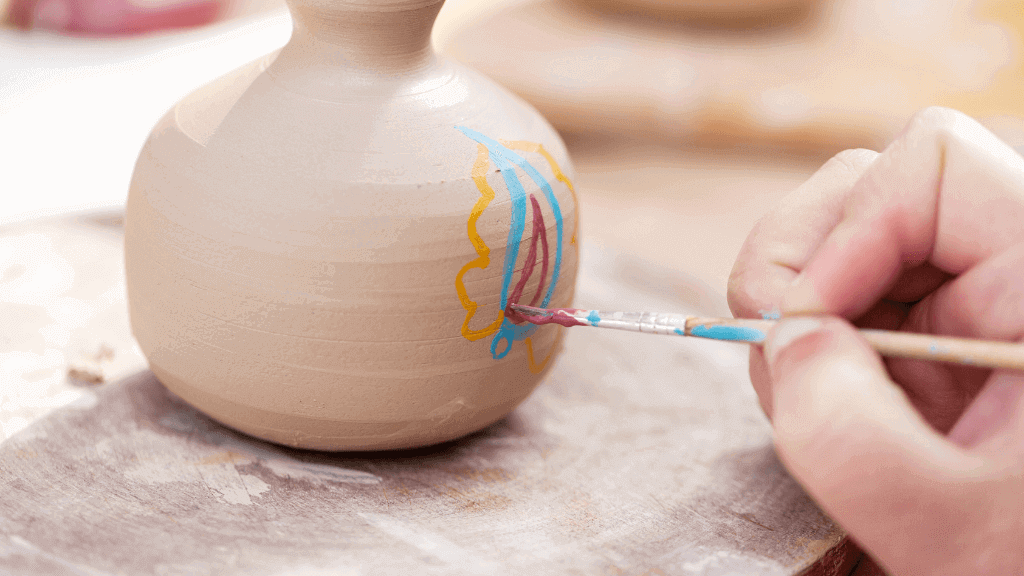
Yes, you can paint over glazed pottery, but the glaze has to be prepped first. Fired glaze is essentially glass, and paint will not bond to slick glass without help. Scuff the surface with fine-grit sandpaper, wipe it clean, apply a bonding primer, and then paint with acrylics, enamel, or a bake-on ceramic paint.
The catch: anything you paint on top of fired glaze is decorative only. It sits on the surface rather than fusing into it, so it will never be as durable or as food-safe as the original glaze. For a piece that needs to survive daily handling, dishwashers, or contact with food, refiring with a new glaze is the better route.
Why Paint Won’t Stick to Glaze Without Prep
A glaze firing melts the glaze coating into a thin layer of glass, typically at cone 06 to cone 6 (roughly 1,830-2,230°F / 1,000-1,220°C). That glassy surface is what makes glazed pottery stain-resistant and easy to clean. It is also exactly why paint slides right off it.
Paint needs two things to hold: mechanical grip (a slightly rough surface to bite into) and chemical adhesion (a primer or paint formulated to bond with glass and ceramic). Skip both and the paint will peel in sheets, often within weeks, or scratch off with a fingernail.
How to Paint Over Glazed Ceramic: Step by Step
This is the process I use on glazed pots, vases, and thrift-store ceramics. Budget about an hour of hands-on work plus drying time.
- Clean the piece. Wash with warm water and dish soap to remove oils and dust. Wipe with rubbing alcohol and let it dry completely. Any grease left behind becomes a peeling spot later.
- Scuff the glaze. Sand the entire surface with 150-220 grit sandpaper until the shine is dulled everywhere you plan to paint. You are not removing the glaze, just deglossing it. Wear a dust mask, because ceramic and glaze dust should never end up in your lungs.
- Wipe off the dust. A damp cloth or tack cloth works. Let it dry again.
- Prime. Apply a thin coat of bonding primer made for slick surfaces (look for “adheres to glass, tile, and ceramic” on the label). Spray primers give the smoothest finish on curved pots. Let it cure per the can, usually 1-24 hours.
- Paint. Two or three thin coats beat one thick coat every time. Let each coat dry fully (acrylics usually need 20-60 minutes between coats).
- Seal. Once the paint has cured for 24-72 hours, apply a clear acrylic sealer in matte, satin, or gloss. For outdoor pieces, use a sealer rated for exterior use and UV resistance.
If you skip a step, make it the sealer on a purely decorative indoor piece. Never skip the sanding or the primer.
What Kind of Paint Works Over Glaze?
| Paint type | Prep needed | Durability | Best for |
|---|---|---|---|
| Acrylic craft paint | Sand + prime + seal | Moderate | Decorative pots, vases, figurines |
| Bake-on ceramic/glass enamel | Clean surface; cure in home oven ~300-350°F (150-175°C) | Good; often top-rack dishwasher safe | Mugs and plates (outside surfaces only) |
| Chalk paint | Light sanding; wax or seal after | Moderate | Matte, farmhouse-style planters |
| Spray paint (with bonding primer) | Sand + prime | Good for indoor decor | Even coverage on large or curved pieces |
| Overglaze/china paint | None, but requires a kiln firing around cone 018-015 (roughly 1,330-1,450°F / 720-790°C) | Excellent; permanently fused | Fine detail on finished glazed ware |
| New glaze + refire | Clean piece; full kiln firing | Excellent and food-safe | Functional dishes you plan to eat from |
Acrylics are the easiest entry point, and I cover the details in using acrylic paint on pottery. If you want a soft matte look on a planter, chalk paint on pottery is a forgiving option that needs only a light scuff first.
Bake-on enamels and ceramic paint markers are the middle ground: you decorate, let the paint air-dry, then cure the piece in a regular home oven following the manufacturer’s temperature and time. They hold up far better than uncured acrylic, but they still aren’t certified food-safe on surfaces that touch food.
Do You Have to Sand Glazed Pottery Before Painting?
For lasting results, yes. Sanding with fine-grit paper (150-220 grit, or up to 400 grit for a finer tooth) breaks the gloss and gives paint something to grip. On a small decorative piece you handle rarely, a slick-surface bonding primer alone can get you by. But sanded-and-primed always outlasts primed-only.
Two safety notes from my own studio habits: sand wet or wear a mask, because glaze dust is bad news for your lungs, and wash your hands afterward. Older or imported glazed ware can contain lead in the glaze, which is one more reason not to create and breathe the dust.
Painting vs. Reglazing: Which Should You Choose?
Painting over glaze is a surface treatment. Reglazing means applying new glaze and firing the piece again in a kiln, which fuses the new coating permanently. The deciding question is how the piece will be used.
- Choose paint for planters, vases, lamp bases, and display pieces. It is cheap (a few dollars in paint and primer), fast, and needs no kiln.
- Choose reglazing for mugs, bowls, and anything functional. I walk through the process and its limits in can you reglaze pottery.
Reglazing already-fired glaze ware is tricky. New glaze doesn’t want to stick to glass any more than paint does, so potters warm the piece or add a binder to the glaze. If you have access to a kiln and the piece matters, it is worth the effort. If you are glazing at home for the first time, start with my guide to glazing pottery at home.
Is Painted Glazed Pottery Food-Safe?
Treat painted surfaces as not food-safe. Acrylics, spray paints, and most sealers are not formulated or tested for food contact, and even “non-toxic” on the label means safe to handle, not safe to eat from.
You have three workable options for functional ware:
- Paint only the outside of a mug or the rim-free exterior of a bowl, keeping paint at least an inch away from the lip line.
- Use a bake-on enamel and still keep it off food-contact surfaces.
- Reglaze with a food-safe glaze and refire. That is the only method that produces a genuinely food-safe finish.
The same logic applies to bare clay, which I cover in is unglazed pottery food safe.
How Durable Is Paint Over Glaze?
Prepped and sealed properly, painted glazed pottery holds up well for years as indoor decor. Expect these limits:
- Hand-wash only. Dishwasher heat and detergent will lift acrylic paint, sealed or not. Bake-on enamels tolerate the top rack once fully cured.
- Outdoor pieces need exterior sealer and will still weather faster than fired glaze. Plan on touching up painted outdoor planters every couple of seasons.
- High-wear spots fail first. Handles, rims, and bases scuff sooner; an extra coat of sealer there helps.
- No oven or stovetop use. Painted coatings are not rated for cooking heat.
Routine care is simple: a soft damp cloth, no abrasive scrubbers, and a gentler hand on the painted areas than you’d use on plain fired glaze.
FAQ
Can you paint over glaze without sanding it?
You can on a low-touch decorative piece if you use a bonding primer made for glass and tile, but adhesion will be weaker. For anything handled regularly, spend the five minutes sanding. It is the difference between paint that lasts years and paint that peels in months.
How do you paint over glazed ceramic so it lasts?
Clean with soap and alcohol, sand to dull the gloss, apply a slick-surface bonding primer, paint in two or three thin coats, then seal with clear acrylic after the paint cures for 24-72 hours. Every failure I’ve seen traces back to skipping the cleaning, the sanding, or the primer.
Can you paint over glazed pottery with acrylic paint?
Yes, acrylic is the most common choice. It must go over sanded, primed glaze and be sealed afterward, and the piece becomes decorative only: hand-wash, no food contact, no oven.
Can you put new glaze over old fired glaze instead of paint?
Yes, if you have kiln access. New glaze resists sticking to the glassy fired surface, so the piece is usually warmed first or the glaze is mixed with a binder, then refired to the glaze’s normal temperature. It is the only way to get a result as durable and food-safe as the original finish.
Will painted glazed ceramic survive outdoors?
Yes, with an exterior-rated sealer over the paint, though it weathers faster than fired glaze. Keep painted planters out of standing water, bring them in over hard freezes if you can, and expect to refresh the sealer every year or two.