
Can You Glaze The Bottom Of Pottery?
By Linda · · 7 min read
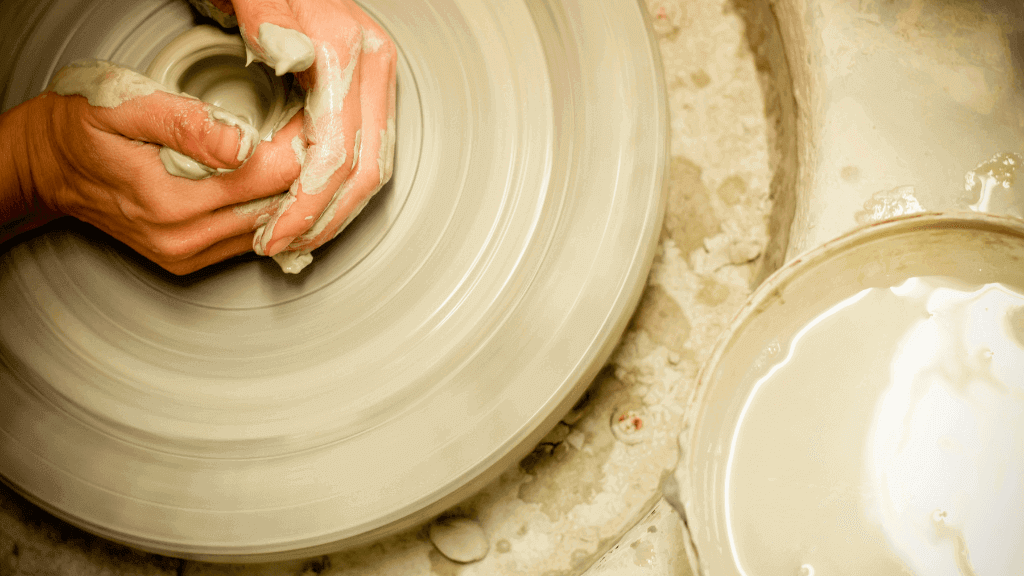
You can glaze the bottom of pottery, but in most cases you shouldn’t. Glaze melts into liquid glass in the kiln, and anything molten touching the kiln shelf will fuse to it permanently. That’s why potters leave the foot of a pot bare, or use stilts or wadding to lift the glazed bottom off the shelf.
The standard rule: keep glaze off the bottom 1/4 inch (6 mm) of any piece that sits directly on a kiln shelf. If you genuinely need a fully glazed bottom (say, for a piece that must be sealed all over), there are workarounds, and I’ll walk through each one below.
Why Don’t You Glaze The Bottom Of Pottery?
Glaze becomes molten glass at firing temperature. That’s roughly cone 06 (1828°F / 998°C) for low-fire earthenware, up to cone 10 (2345°F / 1285°C) for stoneware and porcelain. When it cools, it hardens into a glassy layer bonded to whatever it touched.
If that “whatever” is your kiln shelf, you now have a pot welded to the shelf. Getting it off usually means breaking the pot, chiseling the shelf, or both. A damaged kiln shelf typically costs $30–$100+ to replace depending on size and material, and in a community studio you’ll be the person who ruined shared equipment.
There are three other practical reasons potters skip the bottom:
- Glaze moves. Even glaze applied an inch above the foot can run during firing. Runny glazes (and over-applied glaze) drip down and pool at the base.
- An unglazed foot grips better. A bare clay foot ring is less slippery on tables and shelves than a glassy one.
- It’s not needed for function. Stoneware and porcelain fired to maturity are vitrified. The clay itself is nearly waterproof, so a bare foot doesn’t leak.
The one real downside of an unglazed bottom is scratching. Raw fired clay, especially groggy stoneware, can scratch wood tables. The fix is to sand the foot smooth with 220-grit sandpaper or a diamond sanding pad after firing, not to glaze it.
How To Keep Glaze Off The Bottom
Whether you dip, pour, or brush your glaze, you need a clean bare foot before the piece goes in the kiln. Here’s my routine:
- Apply wax resist to the foot first. Brush a thin coat of wax resist on the bottom and the lower 1/4 inch of the wall. Let it dry 30–60 minutes before glazing. Glaze beads up on the wax and wipes off easily.
- Glaze the piece by dipping, pouring, or brushing. If you’re new to this, my guide to glazing pottery at home covers application in detail.
- Wipe the foot anyway. Wax resist isn’t perfect. Go over the bottom with a damp sponge before loading. Any glaze speck left on the foot can fuse to the shelf.
- Check your glaze thickness near the base. If the glaze looks thick or drippy in the bottom inch, sponge some off. Thick glaze runs.
No wax resist? A damp sponge alone works fine, it just takes longer. Wipe the foot two or three times, rinsing the sponge between passes, until you see clean bare clay.
Ways To Fire Pottery With A Glazed Bottom
Sometimes you really do want glaze on the bottom: fully glazed tiles, sculptural pieces, or pots where the design wraps underneath. These are the standard options:
| Method | How it works | Best for | Risk |
|---|---|---|---|
| Stilts | Metal-pointed ceramic posts hold the piece above the shelf | Low-fire only (cone 06–04) | Stilt marks; pieces slump at high fire |
| Firing upside down | Glaze the bottom, leave the rim bare, fire inverted | Plates, bowls, lids | Bare rim needs finishing |
| Wadding | Small balls of refractory material lift the piece | Atmospheric firings (soda, salt, wood) | Rough marks to grind off |
| Kiln wash + thin glaze | Heavily washed shelf catches minor contact | Nothing (it’s a backup, not a method) | Still ruins shelves with real glaze contact |
| High foot ring | Trim a tall foot so glaze can run without reaching the shelf | Everyday ware with runny glazes | Doesn’t allow glaze on the foot itself |
Stilts are the most common answer, and the most misunderstood. Stilts work at earthenware temperatures, around cone 06–04 (1828–1945°F / 998–1063°C), where the clay stays rigid. At stoneware temperatures, cone 5–6 (2167–2232°F / 1186–1222°C) and up, clay softens enough to slump and warp over the stilt points. Don’t stilt stoneware or porcelain. After firing, snap the piece off the stilt and grind the three small scars smooth with a stilt stone or Dremel.
Firing upside down flips the problem: glaze the bottom, leave the rim unglazed, and rest the piece on its rim. It works well for plates and shallow bowls, but now your rim is bare. That’s fine for a lid that seats against a gallery, less fine for a mug you drink from.
Wadding is borrowed from soda and wood firing. You rest the piece on small pads of a refractory mix (typically alumina hydrate, EPK kaolin, and sometimes sawdust). It keeps glaze off the shelf but leaves rough scars you’ll need to grind down.
Does An Unglazed Bottom Leak Or Stain?
It depends on the clay and how hot it was fired:
- Stoneware and porcelain fired to maturity (cone 5–10): vitrified, with water absorption typically under 2%. A bare foot will not leak or weep. This covers most functional handmade pottery.
- Earthenware (cone 06–04): porous, often 10%+ absorption. An unglazed earthenware bottom can absorb water, weep onto furniture, and stain. Terracotta planters do this by design.
For porous earthenware that needs a sealed bottom, either fire it on stilts with a glazed base or seal the bare foot after firing with a food-safe liquid sealer made for ceramics. And if a piece can’t go back in a kiln at all, see my post on glazing pottery without a kiln for the realistic alternatives.
Bare clay bottoms can also collect grime over time. A scrub with baking soda paste handles most of it. There are more tips in my guide to cleaning glazed ceramic pottery.
How To Tell If A Piece Is Glazed On The Bottom
Picking up a finished pot, yours or a thrift-store find, here’s how to read the bottom:
- Shine and feel. Glaze is glassy and slick; bare fired clay is matte and slightly grippy or toothy.
- Color match. Bare clay on the bottom usually looks different from the glazed walls: buff, red, brown, or white depending on the clay body.
- Stilt marks. Three tiny rough scars in a triangle mean the piece was fired on stilts with a fully glazed bottom. Common on commercial low-fire ware.
- Water test. Put a drop of water on the bottom. If it soaks in within a minute or two, the surface is unglazed and porous.
If you bought a piece with a bare or scratchy bottom and want to refinish it, that’s a different project. I cover what’s realistic in can you reglaze pottery.
What I Recommend
For functional stoneware (mugs, bowls, plates), trim a clean foot ring, wax it, wipe it before loading, and sand it smooth after the glaze fire. That’s the approach virtually every production potter uses, because it’s reliable and the bare foot causes zero problems on vitrified clay.
Save stilts for low-fire decorative work where a fully glazed base genuinely matters. And whatever you do, never gamble with “it’s probably fine” on a borrowed kiln shelf. Wipe that foot.
FAQ
Can you glaze the bottom of pottery?
Yes, but the piece can’t sit directly on the kiln shelf or the molten glaze will fuse to it. Fire it on stilts (low-fire only), on wadding, or upside down with a bare rim. For everyday ware, leave the bottom 1/4 inch unglazed instead.
Why don’t you glaze the bottom of pottery?
Glaze melts into liquid glass at firing temperature, and a glazed bottom will permanently stick to the kiln shelf. Unglazed feet also grip surfaces better, and vitrified stoneware doesn’t need glaze to be waterproof.
Will an unglazed bottom let water through?
Not on stoneware or porcelain fired to maturity. The clay itself is vitrified and nearly waterproof. Low-fired earthenware is porous and can weep water through a bare bottom, so seal it or glaze it on stilts.
Can you use stilts for stoneware?
No. Stilts are for low-fire work, around cone 06–04. At cone 5–6 and above, the clay softens and will slump, warp, or crack over the stilt points.
How much of the bottom should stay unglazed?
Keep the bottom 1/4 inch (6 mm) bare, including the lower edge of the walls if your glaze tends to run. With a very runny glaze, leave 1/2 inch (12 mm) or set the piece on a catch plate of scrap clay as insurance.
How do you make an unglazed bottom smooth?
Sand it after the glaze firing with 220-grit wet/dry sandpaper or a diamond sanding pad, using a little water to keep dust down. A minute of sanding leaves a foot smooth enough that it won’t scratch furniture.