
Is Pottery An Art?
By Linda · · 7 min read
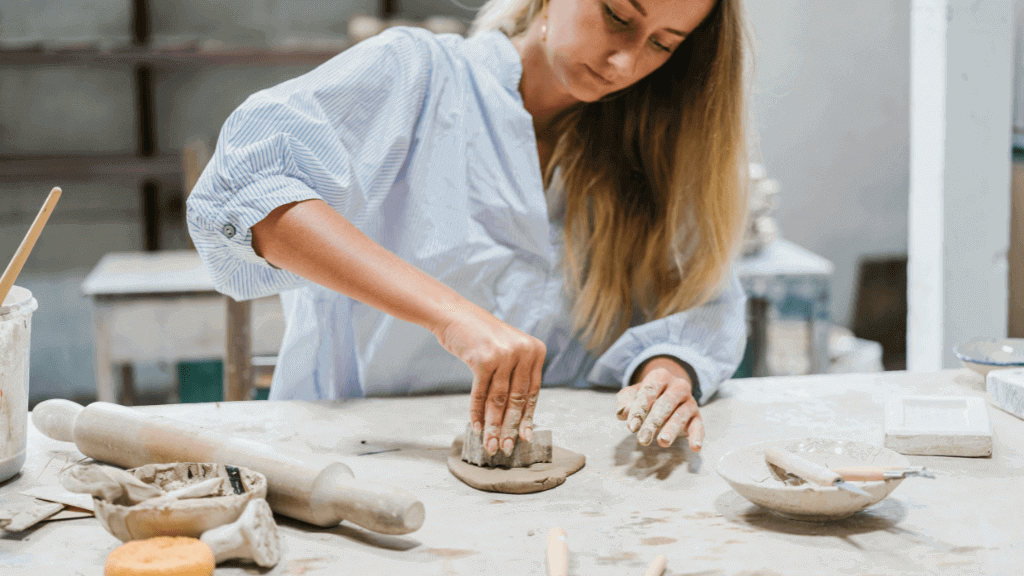
Yes, pottery is an art. It sits in the category of fine and decorative arts because it involves creative expression, aesthetic judgment, and skilled handwork, the same ingredients you find in painting or sculpture. Museums collect it, galleries sell it, and universities teach it as a fine arts discipline under the name “ceramics.”
Pottery is also a craft, and that is not a contradiction. A mug has to hold coffee and feel right in your hand, which makes it functional; the curve of its handle, the glaze choice, and the maker’s fingerprints in the clay make it art. After more than a decade at the wheel, I think the function is part of what makes it beautiful.
Why Pottery Qualifies as Art
Art, in the most common definition, is the expression of human creative skill and imagination in a form that appeals to the senses. Pottery checks every box:
- Creative decisions at every stage. Clay body, form, surface texture, glaze, firing method. Each choice changes the final piece.
- Skill that takes years to develop. Centering clay on a wheel, pulling an even wall, and trimming a clean foot are learned the same way a painter learns brushwork.
- Emotional and aesthetic response. A good pot communicates something (calm, energy, weight, lightness) before you ever use it.
- A maker’s voice. Experienced potters can often identify who made a piece just by looking at it, the way you recognize a painter’s style.
The fired result is also permanent. Ceramic doesn’t rot, rust, or fade, which is why pottery shards are the backbone of archaeology. Much of what we know about ancient daily life and ancient art comes from pots.
The Art vs. Craft Debate
The “is it art or craft” argument has been running for centuries, and the honest answer is that pottery lives on a spectrum. Here’s how the two ends compare:
| Pottery as craft | Pottery as fine art | |
|---|---|---|
| Primary purpose | Function: mugs, bowls, plates | Expression: sculpture, installation |
| Judged by | Usefulness, durability, consistency | Concept, originality, emotional impact |
| Production | Often made in repeating sets | Usually one-of-a-kind |
| Where it’s sold | Craft fairs, shops, studios | Galleries, art auctions, museums |
| Typical price | Roughly $20–$80 for a handmade mug or bowl | Hundreds to many thousands per piece |
Most working potters move along this spectrum all the time. I throw production mugs in the morning and experiment with sculptural forms in the afternoon. The clay doesn’t care which label you use.
Historically, Western art institutions treated ceramics as a “lesser” decorative art compared to painting. That wall came down over the last century. Artists like Pablo Picasso made thousands of ceramic pieces, the studio pottery movement (Bernard Leach, Shoji Hamada) elevated the handmade pot, and contemporary ceramic artists now show in major museums alongside painters and sculptors.
What Does “Bisque” Mean in Art?
Bisque (sometimes spelled “bisqueware” or called “biscuit”) is pottery that has been fired once in a kiln but not yet glazed. In art and ceramics, the bisque definition is simple: clay that has been permanently hardened by a first firing, leaving it porous, matte, and usually white, buff, or terracotta-colored.
The bisque firing typically happens between cone 06 and cone 04, about 1,828°F to 1,945°F (998°C to 1,063°C). This first firing does two things:
- It makes the piece durable enough to handle. Unfired clay (called greenware) is fragile and dissolves in water. Bisque won’t.
- It keeps the clay porous. That porosity lets bisque absorb glaze evenly, which is why almost all pottery is bisque fired before glazing.
After glazing, the piece goes through a second, hotter glaze firing. For cone 5–6 stoneware that runs around 2,167°F to 2,232°F (1,186°C to 1,222°C). If you’re curious how hot kilns run for different clays, I break it down in how hot does a kiln need to be for pottery.
You’ll also hear “bisque” outside the kiln room. Unglazed bisque porcelain figurines, like antique bisque dolls, use the same meaning: fired, unglazed ceramic with a soft matte surface.
Pottery Painting Cafés: Art for Everyone
If you’ve searched for a pottery art café or paint-your-own-pottery studio, here’s what those places offer: shelves of pre-made bisque pieces (mugs, plates, figurines, bowls) that you decorate with ceramic underglazes. The studio then clear-glazes and fires your piece, and you pick it up about a week later, glossy and food-safe.
A typical visit works like this:
- Pick a bisque piece, usually $10–$40 depending on size, sometimes plus a small studio fee.
- Paint it with the studio’s underglazes (two to three coats gives solid color).
- Leave it for glazing and firing; pickup is commonly 5–10 days later.
It’s a genuinely good entry point into ceramic art. No wheel skills required, and the firing is handled for you. I cover what to expect to spend in more detail in how much does it cost to paint pottery. And if you’d rather decorate pieces at home without a kiln, read up on using acrylic paint on pottery first. Acrylics work for decorative pieces, but they’re not food-safe and can’t be fired.
A Short History of Pottery as Art
Pottery is one of humanity’s oldest art forms. Ceramic figurines date back roughly 28,000 years, and functional vessels appear in East Asia around 18,000–20,000 years ago, long before writing, metalworking, or the wheel.
Every major civilization developed its own ceramic art: Greek black-figure vases that told myths in pictures, Chinese porcelain so refined that Europe spent centuries trying to copy it, Japanese raku ware tied to the tea ceremony, Islamic lusterware, Pueblo pottery in the American Southwest, and Delftware in the Netherlands (here’s how to tell real Delft pottery if you collect it).
The pattern is consistent: cultures start making pots because they need containers, and within a generation they’re decorating them. The urge to make a useful thing beautiful is as old as the thing itself.
Pottery in the Contemporary Art World
The contemporary art world has fully embraced ceramics after a long stretch of treating it as “mere craft.” A few markers of that shift:
- Major museums now mount dedicated ceramics exhibitions and acquire work by living ceramic artists.
- Art schools award BFA and MFA degrees in ceramics as a fine arts concentration.
- Sculptural ceramic work regularly sells through top galleries and auction houses at fine-art prices.
- The studio pottery movement established the idea of the potter as artist — one person designing, making, and finishing each piece as a personal expression.
The old hierarchy that put painting above “decorative arts” has largely collapsed. What matters now is the quality of the idea and the execution, not the material.
Making Your Own Pottery Art
You don’t need a degree or a gallery to make pottery that counts as art. Hand-building with slabs and coils requires nothing but clay and a table, and plenty of celebrated ceramic art was built entirely by hand. If you want to try it, start with my guide on how to get into pottery. It covers classes, starter tools, and realistic costs.
A few honest starting points:
- Take a class first. A 6–8 week wheel or hand-building course (commonly $150–$400) teaches you more than months of solo trial and error.
- You can absolutely start at home. Air-dry clay or a small batch of stoneware will get you going. Here’s how to make pottery at home, step by step.
- You don’t need to own a kiln. Most community studios fire pieces for a small fee, and I explain the options in do you need a kiln for pottery.
- Expect ugly pots at first. Everyone’s first cylinders are lopsided. That’s not failure; that’s the skill-building part of art.
FAQ
What is the definition of bisque in art?
Bisque is ceramic ware that has been fired once without glaze. The first firing (around 1,828°F–1,945°F / 998°C–1,063°C) hardens the clay permanently while leaving it porous and matte, ready to absorb glaze. Paint-your-own-pottery studios stock bisque pieces for exactly this reason: they take underglaze beautifully.
Is pottery an art or a craft?
It’s both. Pottery made primarily for function is usually called craft; pottery made primarily for expression is usually called fine art. Most handmade pottery blends the two, and the art world no longer treats the distinction as a ranking.
Is pottery considered fine art?
Yes. Ceramics is taught as a fine arts discipline, collected by major museums, and sold through galleries. Sculptural and one-of-a-kind ceramic work in particular is treated exactly like other fine art.
What happens at a pottery painting café?
You choose a pre-fired bisque piece, paint it with ceramic underglazes in the studio, and the staff clear-glaze and kiln-fire it for you. Pieces are typically ready for pickup in about a week and come out glossy and food-safe.
Can I make pottery art without any experience?
Yes. Hand-building requires no equipment beyond clay and simple tools, and pottery painting studios need zero experience. If you want to learn properly, see can I learn pottery at home for a realistic path from beginner to confident maker.
Why is pottery historically important as an art form?
Fired clay survives for millennia, so pottery is often the best-preserved art a civilization leaves behind. Decorated vessels record myths, trade, daily life, and aesthetics from cultures that left no written records.