
Do You Need A Kiln For Pottery?
By Linda · · 8 min read
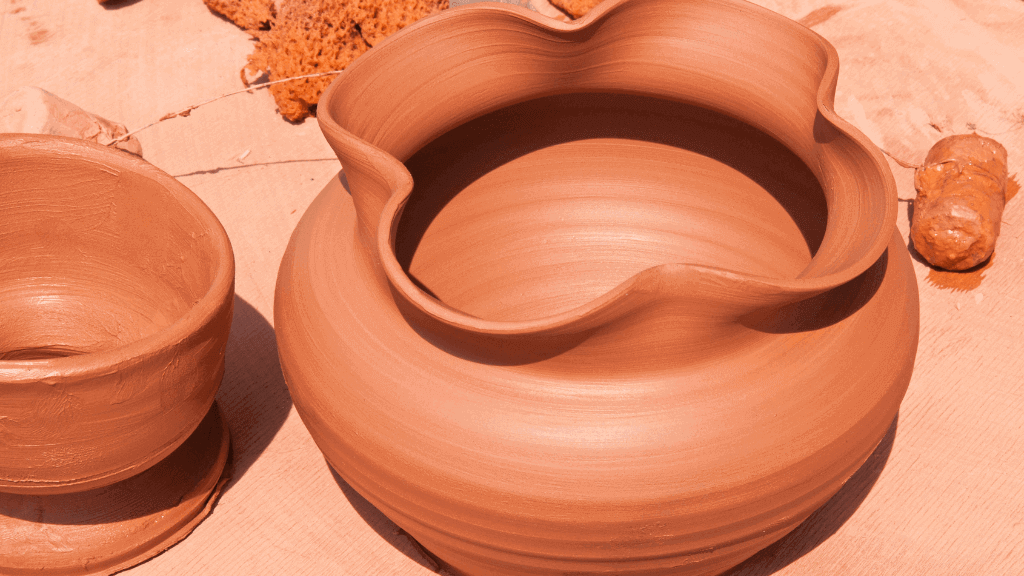
You need a kiln if you want pottery that is fully fired: hard, durable, and safe to eat and drink from. Functional, food-safe pottery needs to reach roughly 1,800°F (1,000°C) or hotter, and a kiln is the only practical way to hit and hold those temperatures with control.
That said, you do not need to own a kiln to make pottery. You can rent kiln space at a local studio, use air-dry clay for decorative pieces, or try primitive firing methods like pit and raku firing. Below I’ll walk through when a kiln is truly necessary, what the alternatives are, what kilns cost, and how hot they need to get.
Why Clay Needs A Kiln At All
Raw clay that simply dries out is called greenware. It feels hard, but it dissolves the moment it gets wet — set a bone-dry mug in the sink and it turns back into mud.
Firing changes that permanently. As the temperature climbs past roughly 660°F (350°C), the water that is chemically bonded inside the clay is driven off (potters call this the “ceramic change”) and the piece can never return to workable clay. At higher temperatures the clay particles sinter and fuse, which is what gives fired pottery its hardness and strength.
A kitchen oven tops out around 500°F (260°C), nowhere near hot enough. I cover why in detail in Can You Fire Pottery In An Oven?. An oven can dry clay, but it cannot fire it.
Ways To Do Pottery Without Owning A Kiln
Not owning a kiln has never stopped anyone from learning pottery. Here are the realistic options, roughly in the order I recommend them:
- Rent kiln space. Most community studios, art centers, and many private potters fire other people’s work for a fee, typically charged per piece, per shelf, or by the cubic inch. This is by far the best option for beginners: you get real, food-safe stoneware without any of the cost or wiring headaches.
- Take a class. Studio classes almost always include firing in the tuition, plus you get instruction and wheel time.
- Air-dry clay. No firing needed, and modern air-dry clays are much better than they used to be. The catch: pieces are not waterproof or food safe, so this is strictly for decorative work.
- Pit firing or barrel firing. Dig a pit, layer pottery with sawdust and combustibles, and burn for several hours to overnight. Pit firing reaches roughly 1,400–2,000°F (760–1,100°C). That’s enough for low-fired, decorative earthenware, but not for food-safe glazed ware.
- Raku-style outdoor firing. Fast, dramatic, and beautiful surfaces, but again porous and decorative only.
- Microwave kilns. Small fiber chambers heated in a household microwave. They work for tiny test pieces and glass fusing, but they’re too small and uneven for real pottery.
I walk through the primitive methods step by step in How To Fire Pottery Without a Kiln.
The honest summary: every no-kiln method produces porous, low-fired ware. If you want mugs, bowls, and plates you can use every day, you need a real kiln firing. Yours or someone else’s.
Kiln Temperature: How Hot Does A Pottery Kiln Need To Be?
Potters measure heat in cones, which track both temperature and time rather than temperature alone. Here are the firing ranges you’ll use in practice:
| Firing | Cone | Approx. Temperature | What It’s For |
|---|---|---|---|
| Bisque firing | Cone 06–04 | 1,830–1,940°F (1,000–1,060°C) | First firing; hardens greenware so it can be glazed |
| Low-fire glaze (earthenware) | Cone 06–04 | 1,830–1,940°F (1,000–1,060°C) | Bright colors; ware stays slightly porous |
| Mid-fire (stoneware) | Cone 5–6 | 2,160–2,230°F (1,180–1,220°C) | The most common range for functional pottery |
| High-fire | Cone 9–10 | 2,300–2,380°F (1,260–1,300°C) | Porcelain and traditional stoneware |
Most hobby potters today work at cone 6 in an electric kiln. A typical firing takes 8–12 hours to reach temperature, then another 12 hours or more to cool. See How Long Does Pottery Take To Fire? for full schedules, and How Hot Does A Kiln Need To Be For Pottery? for a deeper look at cones and clay bodies.
One firing rule I’ll repeat forever: never rush the early stages. Moisture trapped in thick or insufficiently dried clay turns to steam and blows the piece apart, which is why kilns climb slowly through the first 1,100°F (600°C).
How Much Does A Pottery Kiln Cost?
Realistic price ranges for new electric kilns:
- Small tabletop/test kilns: roughly $400–$1,000. Fine for jewelry, test tiles, and small pieces; most run on a standard 120V outlet.
- Mid-size home studio kilns (2–4 cubic feet): roughly $1,500–$3,500. This is the sweet spot for serious hobbyists. These need a 240V circuit, usually 30–60 amps, so budget a few hundred dollars more for an electrician.
- Large studio kilns (7+ cubic feet): $4,000–$6,000 and up.
Used kilns regularly sell for half those prices or less. When shopping kilns for sale secondhand, check the condition of the elements and the brick, confirm it reaches the cone you need (some older low-fire kilns can’t hit cone 6), and make sure your panel can handle the amperage.
Operating cost is modest: a typical cone 6 firing in a mid-size electric kiln uses electricity costing roughly $5–$20 depending on kiln size and your local rates. I break down models, sizes, and buying advice in How Much Is A Pottery Kiln?.
Building A Kiln For Pottery
Building your own kiln is a real option, and potters have done it for thousands of years. The common DIY routes:
- Pit or trench kiln: essentially free. A hole in the ground, fuel, and a few hours of burning. Low-fire only.
- Brick wood-fired kiln: built from firebricks (insulating firebrick or hard brick), typically a few hundred dollars in materials for a small updraft design. Capable of real bisque and even stoneware temperatures with skill and a lot of wood.
- Barrel or raku kiln: a steel drum lined with ceramic fiber blanket, fired with a propane burner. One of the cheapest ways to reach 1,800°F (980°C)+ at home.
A homemade kiln demands patience: you control temperature by managing fuel and airflow instead of pressing a button, and your first few firings will involve losses. If you want to try it, start with my guide on How To Build a Pottery Kiln and fire outdoors, away from structures, with water on hand.
For most people, though, a used electric kiln ends up cheaper and far less work than building anything capable of cone 6.
Types Of Kilns And Which To Choose
- Electric kilns are the default for home potters: plug in (after proper wiring), program the controller, walk away. Even heating, predictable results, no open flame.
- Gas kilns allow reduction firing, which produces glaze effects electric kilns can’t. But they require burner experience, ventilation, and usually a permit.
- Wood-fired kilns give gorgeous ash surfaces but are a lifestyle, not a convenience.
- Glass kilns heat from the top and aren’t designed for pottery’s needs. More on that in Can You Use A Glass Kiln For Pottery?.
My advice for a first kiln: a used, name-brand electric kiln with a digital controller, sized around 2–3 cubic feet. Big enough to fire a real batch, small enough that you’ll keep it full.
Kiln Safety Basics
A kiln’s exterior can exceed 500°F (260°C) during firing, and firing releases fumes from clay and glazes, so treat setup seriously:
- Install on a noncombustible surface with at least 12–18 inches of clearance from walls, per the manufacturer’s manual and local fire code.
- Vent to the outside, either with a downdraft vent or strong cross-ventilation. Never fire an unvented kiln in living space.
- Have a licensed electrician install the circuit; undersized wiring is the most common cause of kiln-related electrical problems.
- Wear kiln gloves and infrared-rated safety glasses when peering through peepholes.
- Never open the lid above about 250°F (120°C); thermal shock cracks both ware and kiln brick.
- Keep children and pets away while firing, and don’t leave a firing kiln completely unattended for long stretches.
FAQ
Do I need a kiln for pottery as a beginner?
No. Start with classes or a community studio that fires your work, or use air-dry clay for decorative pieces. Buy a kiln only once you’re producing enough work to fill one regularly.
Can I make food-safe pottery without a kiln?
No. Food-safe pottery requires a properly fired glaze, which means at least cone 06 (about 1,830°F / 1,000°C) and realistically cone 5–6 for durable stoneware. Pit-fired and air-dry pieces are decorative only.
How much does a kiln cost?
New electric kilns run from about $400 for a small tabletop model to $1,500–$3,500 for a typical home studio kiln, plus electrical installation. Used kilns often cost half as much, and each firing adds roughly $5–$20 in electricity.
What temperature does a pottery kiln reach?
Most pottery is fired between 1,830°F (1,000°C) for low-fire bisque and 2,380°F (1,300°C) for high-fire porcelain. The most common home setup fires stoneware at cone 6, around 2,230°F (1,220°C).
Can I build my own kiln for pottery?
Yes. A pit fire costs almost nothing, a fiber-lined raku barrel kiln is cheap to assemble, and a small brick wood kiln can reach stoneware temperatures. Expect a learning curve and fire outdoors with proper clearance.
Where can I fire my pottery if I don’t own a kiln?
Community studios, art centers, colleges, and many private potters offer kiln rental, usually priced per piece or per shelf. See Where Can I Fire My Pottery? for how to find them.