
5 Best Pottery Tools for Throwing in 2023
By Linda · · 11 min read
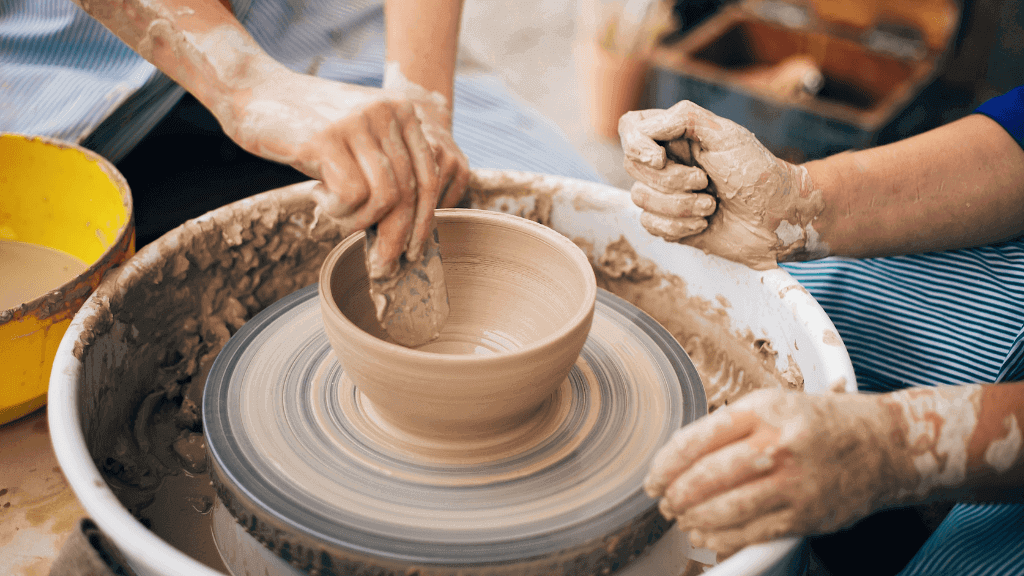
The best pottery tools for throwing are a sponge, needle tool, wire cutter, wooden rib, metal rib, and trimming loop — a basic kit you can buy for $15–$30. Beyond that core kit, three specialty tools earn a permanent spot at my wheel: a throwing gauge for repeat forms, a throwing stick for narrow-necked pots, and a quality edging rib for finishing.
This guide covers all of them: what each tool does, which specific products held up after testing, and what to skip until your skills catch up. If you’re still shopping for a wheel itself, start with my guide to the best electric pottery wheel and come back here for the tools.
The Essential Throwing Kit
Before any specialty tool, you need the six basics. Every potter I know uses some version of this kit at every session:
| Tool | What it does | Typical cost |
|---|---|---|
| Sponge | Controls water on the clay surface; soaks up water inside pots | $1–$3 |
| Needle tool | Trims uneven rims, pops air bubbles, checks wall thickness | $2–$5 |
| Wire cutter | Cuts the finished pot off the wheel head | $2–$6 |
| Wooden rib | Shapes and compresses walls while throwing | $3–$8 |
| Metal rib | Smooths and refines the surface; removes throwing lines | $3–$8 |
| Trimming loop | Removes excess clay from the foot at leather-hard stage | $4–$10 |
A starter set with all six runs $15–$30, and honestly, a cheap set is fine for your first year. Where it pays to spend more is on the specialty tools below (gauges, throwing sticks, and shaped ribs) because precision and build quality matter there. For a fuller breakdown of what a complete setup costs, see how much pottery tools cost.
One more thing before tools: none of them fix bad centering. If your pots wobble, the problem is almost never your tools. Work on centering clay on the wheel first.
Best Pottery Tools for Throwing
These are the specialty tools that made the cut after testing. Each one solves a specific throwing problem the basic kit can’t handle: repeat forms, narrow necks, or finishing edges.
Cuptisserie Pottery Throwing Gauge

The Cuptisserie is the throwing gauge I’d point most potters to first. It’s reliable, simple to set up, and light enough to carry between studio and class.
Pros
- The stainless steel arms and wooden base hold up well, and the steel won’t rust even in a damp studio.
- It installs quickly and can be fixed in place at your work area, so it won’t tilt into a pot mid-throw.
- You can adjust the angle, height, and reach of the throwing arms, and the pointer rotates, which makes it easy to check height and keep rims level.
Cons
- The friction nuts loosen with use, so you’ll be re-measuring and re-tightening more than you’d like.
- It can get in the way when you’re improvising or making one-of-a-kind pieces.
- The sharp tip can cut into your pots. I fixed this by taping an old plastic credit card over the tip.
The Cuptisserie suits beginners, home studios, and production shops alike. The surfaces and edges are smooth, the arms slide easily, and it packs up small. The gauge stands 11″ tall, and the arm with the pointer reaches 12.6″, so there’s plenty of adjustment range for most forms.
If you’re throwing sets (mugs, bowls, dinnerware) this is the gauge I’d reach for first. It takes the guesswork out of matching heights across a batch.
DAFENCHI Pottery Throwing Gauge

The DAFENCHI is the wood version of the same idea: a precise, adjustable gauge for throwing repeat forms.
Pros
- The arms adjust for both height and reach, so you can set a target and throw to the same spot every time.
- Bamboo and beech construction is sturdy and resists warping, even with water splashing around.
- Assembly is simple. Fix the throwing arms and base with screws and you’re done.
Cons
- The little posts at the ends of the arms are hard to tighten, and the arms droop when they loosen.
- The height range runs from 2.28 to 11.8 inches, which won’t cover tall forms.
- If you don’t throw repeat forms often, you won’t get much use out of it.
The DAFENCHI earns its keep in a production setting, where matching forms with precision saves real time. Set the arms to your target height and reach, and every pot in the batch comes out the same.
The bamboo and beech build is sturdy and slow to deform, even with wet hands on it all day, and the varnished surface helps it shrug off water. Assembly is just a few screws. The base comes pre-drilled, and you can screw it to the workbench or weigh it down.
The flaws are real, though. Those little end posts are fiddly to tighten and the arms droop when they work loose. The 2.28 to 11.8 inch height range rules out tall vases. And if repeat forms aren’t part of your practice, skip it entirely.
For potters who throw sets regularly, the DAFENCHI is a solid buy. The sturdy build and adjustable arms make it a dependable workhorse at a lower price than the steel options.
Kemper Tools for Clay & Pottery – Throwing Stick – TS2

The Kemper TS2 is built for shaping deep, wheel-thrown pieces with narrow interiors or necks, like bottles and vases. It’s made from highly polished hardwood that feels good in the hand, and it comes in two head sizes, both 12-1/2″ long.
Pros
- The curve fits well into pots, so shaping and smoothing the interior comes naturally.
- The polished hardwood is comfortable to grip, which matters when you’re spending hours at the wheel.
- It’s a durable tool that stands up to regular use.
Cons
- The head is asymmetrical, so it may not suit left-handed potters or anyone who throws with the wheel in reverse.
- It costs more than most hand tools.
- Some buyers have received only one head size, despite the listing promising two.
If you want a throwing stick that will last for years, the TS2 is a good buy. It’s comfortable to hold and reaches places your fingers can’t. But if you’re left-handed or throw in reverse, look at a symmetrical stick instead.
Kemper Tools for Clay & Pottery – Throwing Stick – TS1

The TS1 covers the same territory as the TS2: deep forms with narrow interiors or necks, bottles, vases, anything your hand can’t reach into.
Pros
- The fine hardwood handle with a satin finish feels comfortable in the hand.
- It’s made in the USA and built to last.
- The two head sizes cover a wider range of forms than a single-head stick.
Cons
- It takes practice to use well.
- Beginners may find it frustrating at first.
- It’s not the right tool for larger pieces.
The TS1 is my pick for anyone serious about bottles and narrow-necked vases. The satin-finished hardwood handle stays comfortable through long sessions, the build quality means it’ll outlast a lot of your other tools, and the two head sizes let you match the head to the form.
The tool does take practice. Expect to ruin a few pots while you learn the feel of pushing the wall out from the inside without being able to see your hand. But once it clicks, a throwing stick opens up forms (narrow bottles, round-bellied vases) that you simply can’t make with fingers alone. It also makes a genuinely useful present for a wheel-throwing friend. For more ideas along those lines, see my list of best gifts for pottery makers.
C.Rae Designs Ultimate Edger

The Ultimate Edger works for both throwing and handbuilding. One piece of steel carries five different designs and six working edges, so it rewards potters who like to experiment with shapes and textures.
Pros
- The XL size handles slightly larger pots.
- Five different designs in one tool covers a lot of ground.
- It’s cut from 20 gauge stainless steel and will last a long time.
Cons
- It can be too aggressive for novices on the wheel.
- Some of the shapes are awkward to maneuver into place for a uniform trim.
- The packaging could use more photos showing what each edge produces.
The Ultimate Edger is a patented tool, made in the USA and precision laser cut from 20 gauge stainless steel, so it holds its edge and won’t bend in use. The XL size suits slightly larger pots, and the five designs give you a lot of options when throwing or handbuilding.
It might be too aggressive if you’re new to the wheel; the edges bite into clay fast, and a heavy hand will gouge a wall before you know it. Potters with more experience will appreciate the range of profiles. Maneuvering some of the shapes into place for a uniform trim takes patience, though.
This is the tool I’d hand to a potter who wants to experiment with different edges and textures without buying five separate ribs. I wish the packaging showed what each edge produces, but the durability and range make it a worthwhile addition to the toolkit.
Buying Guide
Four things separate tools that last from tools you replace every season: material, size and shape, ergonomics, and durability. Here’s what to check on each.
Material
Pottery tools come in wood, metal, and plastic, and each has trade-offs. Wood is lightweight and comfortable to hold, but it can warp or crack over time. Metal is durable and long-lasting, but heavy, and it gets uncomfortable over a long session. Plastic is cheap and light, but it wears out faster than the other two.
Size and Shape
Size and shape decide how a tool handles. Tools that are too small are hard to grip with wet hands, while oversized ones get unwieldy at the wheel. Shape matters too. Some tools are made for one job, like trimming or shaping, and picking the right profile makes the work faster and a lot more pleasant.
Ergonomics
Ergonomics is just how well the tool fits your hand and how little strain it puts on your body. Look for comfortable grips and handles you can hold for an hour without thinking about them. Weight and balance count as well; a well-balanced tool saves your wrist and forearm over a long throwing session.
Durability
Good tools are an investment, so buy ones that will last. Check the materials and construction first, then look at the manufacturer’s warranty and what other potters say in reviews before you commit.
My rule of thumb: buy cheap for tools that touch wet clay constantly (sponges and wires are consumables), and buy quality for anything with moving parts or a precision edge (gauges, throwing sticks, metal ribs).
FAQs about Best Pottery Tools for Throwing
Here are the questions I get most often about throwing tools.
What are the essential pottery tools for throwing?
The essential pottery tools for throwing are a sponge, a needle tool, a wire cutter, a wooden rib, a metal rib, and a trimming loop, plus the wheel, clay, and a bucket of water. These six hand tools handle shaping, trimming, and smoothing the clay as it spins, and a complete set costs $15–$30.
What is the best type of pottery wheel for throwing?
The best type of pottery wheel for throwing is an electric wheel with a sturdy base and a powerful motor, at least 1/3 HP if you plan to center more than a few pounds of clay. The wheel should spin smoothly and consistently at different speeds. I compare specific models in my guide to the best pottery wheel for adults.
What type of clay is best for throwing?
Stoneware is the easiest clay for throwing. It’s forgiving, holds its shape well, and fires to a durable finish around cone 5–10 (2,167–2,345°F / 1,186–1,285°C). Porcelain throws beautifully but is far less forgiving, and earthenware is soft and easy to shape but less durable. I break down the differences in what type of clay is used for pottery.
What are the different types of rib tools used for pottery throwing?
There are several types of rib tools used for pottery throwing, including metal ribs, rubber ribs, and wooden ribs. Metal ribs are durable and give the smoothest finish. Rubber ribs are flexible and gentle on the clay. Wooden ribs sit in the middle and work for both shaping and smoothing.
What is the purpose of a needle tool in pottery throwing?
A needle tool trims excess clay, creates texture, and carves designs into the clay. It handles both functional jobs (leveling a rim, checking wall thickness) and decorative ones.
How should pottery tools be cleaned and maintained?
Rinse tools at the end of every session, because dried clay is abrasive and shortens their life. Wipe metal tools down with a cloth and oil them lightly to prevent rust. Sand and oil wooden tools occasionally so they don’t crack or split. Wash rubber tools with soap and water and let them dry completely before use. With basic care, even a $20 starter kit lasts for years.
Are expensive pottery tools worth it for beginners?
No. A $15–$30 starter kit covers everything a beginner needs for the first year or more. Spend the money on clay, wheel time, and pottery classes instead, then upgrade individual tools (a good metal rib, a throwing gauge) once you know what your work demands.