
Best Pottery Wheel for Adults: Top Picks for 2023
By Linda · · 12 min read
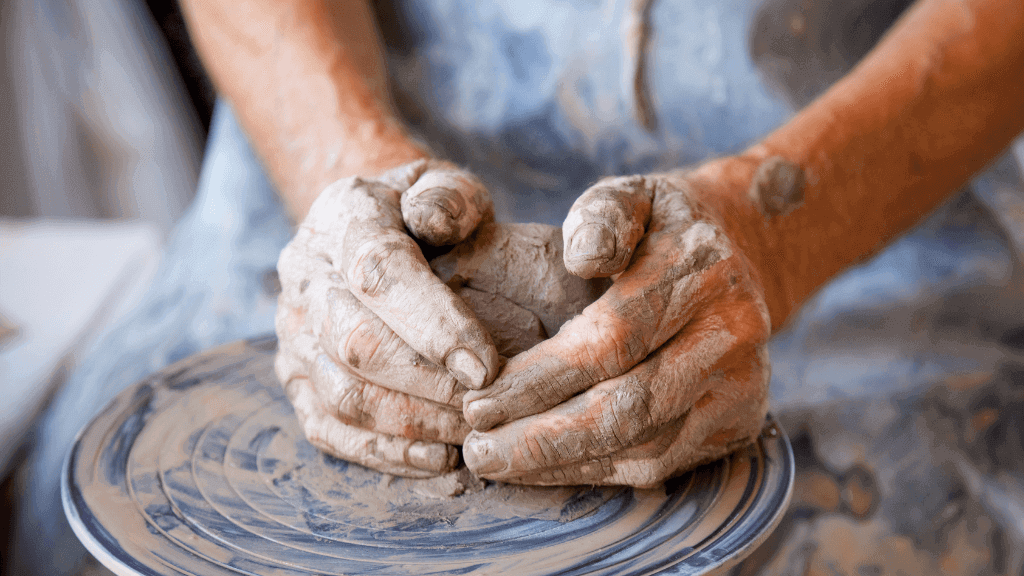
The best pottery wheel for most adults is an electric wheel with a wheel head of at least 10 inches, variable speed control up to about 300 rpm, and a stable, heavy base. That combination handles everything from mugs and bowls to mid-size vases, and it’s forgiving enough for a beginner while still useful as your skills grow.
For home use, expect to spend roughly $150–$400 for a hobby-grade electric wheel like the ones reviewed below, and $800 or more for a studio-grade machine. I cover what pottery wheels cost in more detail in a separate guide, but the five wheels below are the ones I’d point an adult beginner or returning hobbyist toward first.
Best Pottery Wheels for Adults
An adult-friendly wheel needs three things: enough torque that the wheel head doesn’t stall when you press into the clay, a speed control you can adjust without lifting your hands off the work, and a frame that doesn’t walk across the table while you center. Every wheel on this list meets that bar at a hobby level.
Huanyu Pottery Wheel Ceramic Machine

The Huanyu Pottery Wheel Ceramic Machine is the wheel I’d point most adults toward first. It’s well-built, and the controls don’t fight you.
Pros
- The aluminum alloy turntable and bright finish body are scratch-resistant and wear-resistant.
- You can control the speed with the pedal or the LCD touch screen, whichever suits how you work.
- The detachable basin made of ABS material is easy to assemble and clean.
Cons
- The basin could be sturdier.
- It’s a bit heavy at almost 38 pounds.
- It’s not the cheapest option on the market.
This pottery wheel is well-made, with thickened and heightened foot pads for non-slip and stable placement. It’s easy to operate and works for both adults and children, so it suits parent-child sessions. The dual speed control system is a genuinely useful feature, and the stepless speed regulation motor runs quietly. The reversible rotation makes centering the clay easier for left-handed potters too.
The Huanyu is versatile enough for home studios, pottery bars, and schools, and the company backs it with a one-year after-sales guarantee and one-to-one online guidance.
VEVOR Pottery Wheel 9.8″ LCD Touch Screen Pottery Wheel Forming Machine

The VEVOR Pottery Wheel 9.8″ LCD Touch Screen Pottery Wheel Forming Machine is a reliable wheel that works for a first machine and keeps up as your skills grow.
Pros
- The upgraded LCD touch screen allows for easy monitoring and adjusting of work speed and direction of the turntable, and switching between manual and foot pedal modes.
- The aluminum alloy turntable is durable and rust-resistant, and the detachable ABS water basin is easy to clean.
- The quiet reversible motor offers both clockwise and counterclockwise rotation, and a rotary speed of 0-300 rpm to meet your demands.
Cons
- The pedal reverts to stop, so you must press or put a block under it to stay steady.
- The included shaping tools are not of the highest quality.
- Some customers have reported receiving damaged or used products.
The LCD touch screen makes it simple to monitor speed and direction, and switching between manual and foot pedal modes takes one tap. The 0–300 rpm range covers everything an adult hobbyist needs: slow speeds for trimming and pulling handles, fast speeds for centering.
The main quirk is the pedal, which springs back to stop unless you keep pressure on it or block it. The included shaping tools are throwaways. Plan to replace them with a proper set of pottery tools for throwing.
Huanyu Pottery Wheel Ceramic Machine
This second Huanyu is the budget pick. It’s easy to operate, and nothing about it will hold a beginner back.
Pros
- The dual speed control system lets you set wheel speed with either the pedal or the LCD touch screen.
- The detachable basin made of ABS material is easy to assemble and clean, saving you time and effort.
- The pottery machine has a forward and reverse switch, making it easy to find the center, even for beginners.
Cons
- The pottery wheel is relatively heavy, which may make it difficult to move around.
- The foot pedal is not as responsive as some other models, which may take some getting used to.
- The basin may not be as deep as some other models, which may limit the size of the pottery you can create.
This version of the Huanyu trades a little pedal responsiveness for a lower price. The thickened foot pads keep it planted during centering, the stepless speed motor runs quietly, and the detachable ABS basin resists abrasion and cleans up fast.
The shallower basin is the real limitation: if you plan to throw tall or wide pieces regularly, the splash containment will feel cramped. For mugs, bowls, and planters it’s a non-issue.
SKYTOU Pottery Wheel Pottery Forming Machine

The SKYTOU Pottery Wheel Pottery Forming Machine sits comfortably in the middle of this list: enough wheel for a serious hobbyist, simple enough for a first-timer.
Pros
- The machine has a large plate of 25 cm (about 9.8 inches) in diameter, providing ample space for throwing and shaping pottery.
- The ABS removable basin is easy to clean and comes with two small grids for holding tools and water.
- The machine is equipped with a foot pedal for more agile operation, allowing you to adjust the rotary speed as you wish.
Cons
- Some users have reported that the machine is a bit noisy, although it’s still quieter than many other pottery wheels on the market.
- The shaping tools that come with the machine are of average quality and may not be suitable for more advanced pottery projects.
- The machine is a bit heavy at 28.4 pounds, which may make it difficult to move around if you need to store it away between uses.
The SKYTOU runs smoothly at up to 300 rpm, and the tool grids built into the basin are a small touch I appreciate. Sponge and rib stay within reach instead of migrating across the table. At 28.4 pounds it’s heavy enough to stay put while centering but still light enough for one adult to move.
It’s a sensible pick for school teaching, pottery bars, and home use. The included tools are average; budget for upgrades if you stick with the hobby.
VEVOR Pottery Wheel

The VEVOR Pottery Wheel is the cheap-and-cheerful entry on this list, and it earns its spot with one thing: the biggest wheel head here.
Pros
- The large 11″ aluminum alloy wheel allows you to draw large pieces quickly, and the enclosed water basin prevents mud from eroding and penetrating the fuselage.
- The foot pedal runs smoothly with low noise, and the wheel spins clockwise or counterclockwise, which helps left-handed throwers and makes trimming easier.
- The machine has single-phase three-wire connection with earth leakage protection device for secure and reliable operation. Reinforced pads at the bottom keep it stable and protect your floor from scratches.
Cons
- The components are made of cheaper materials, and it may not have the quality of more expensive pottery wheels.
- The foot pedal does not have much control over the speed of the wheel.
- The water-resistant apron may have a chemical smell.
The 11-inch wheel head is the biggest in this roundup, which matters if you want to throw plates or wide bowls. The enclosed basin keeps slip out of the motor housing, and the earth leakage protection is reassuring for a machine that lives next to a bucket of water.
The trade-off is build quality: the components are cheaper than the Huanyu’s, and the pedal offers coarse speed control rather than fine. As a budget entry point it gets the job done; as a forever wheel it will eventually frustrate you.
Quick Comparison
| Wheel | Wheel head | Max speed | Weight | Best for |
|---|---|---|---|---|
| Huanyu (detachable basin) | ~9.8 in | Variable, stepless | ~38 lbs | Overall quality, shared family use |
| VEVOR 9.8″ LCD | 9.8 in | 300 rpm | Mid-weight | Touch-screen control, reversible throwing |
| Huanyu (budget model) | ~9.8 in | Variable, stepless | Heavy | Lowest cost per feature |
| SKYTOU | 25 cm (9.8 in) | 300 rpm | 28.4 lbs | Built-in tool storage, classrooms |
| VEVOR 11″ | 11 in | Variable | Mid-weight | Plates and wide forms on a budget |
Buying Guide
A handful of factors decide whether you’ll love a wheel or fight it. Here’s what I’d check before paying for one.
Type of Wheel
There are two types of pottery wheels: electric and kick wheels. Electric wheels are more common and easier to learn on. Kick wheels cost less to run and give experienced potters fine speed control, but they take real physical effort and floor space. For almost every adult buying a first wheel, electric is the right call. I compare specific models in my guide to the best electric pottery wheel options for beginners.
Size and Weight
A heavier wheel is more stable while centering. The 28–38 pound machines above hit a workable middle ground between stability and portability. Measure your workspace first: you need the wheel, a stool at the right height, and room for a water bucket and ware board within arm’s reach.
Speed and Power
Look for a top speed around 240–300 rpm. You’ll center at high speed, then drop to a third of that for shaping and slower still for trimming. Underpowered motors stall when you apply pressure to more than 2–3 pounds of clay, which teaches bad habits — you start babying the clay instead of controlling it.
Centering Capacity
Hobby wheels like these comfortably handle 1–5 pounds of clay, which covers mugs, bowls, and small vases. Studio wheels rated for 20+ pounds cost several times more; don’t pay for capacity you won’t use in your first couple of years.
Features and Accessories
A removable splash pan is the feature you’ll thank yourself for at cleanup time. Reversible rotation matters if you’re left-handed. Bat pins on the wheel head let you lift finished pieces off without warping them. Most bundled tool kits are mediocre, so factor in the modest cost of a decent starter tool set.
New or Used?
A lightly used wheel from a studio upgrade or an abandoned hobby can save you a lot of money. Check that the wheel head spins true (no wobble), the pedal responds smoothly across its range, and the motor doesn’t whine under load. I walk through what to check and pay in my guide to buying a used pottery wheel.
Pottery Kit or Pottery Wheel: Which Should an Adult Buy?
If you’re searching for a “pottery kit for adults,” be aware that the term covers two very different things. Air-dry clay kits (clay, basic tools, sometimes paint) cost little and need no equipment, but the results aren’t food-safe or waterproof. Wheel kits bundle a small electric wheel with clay and tools, a reasonable way to test the hobby before committing to a standalone machine.
The catch with any kit that uses real pottery clay: the clay must be kiln-fired to become permanent. That means a bisque firing around cone 06–04 (about 1,828–1,945°F / 998–1,063°C), and functional stoneware is typically fired to cone 5–6 (about 2,167–2,232°F / 1,186–1,222°C). No kit includes that capability. Most home potters solve it by renting kiln space at a local studio for a few dollars per piece, or eventually investing in their own. See my guide to choosing an electric pottery kiln when you reach that point.
My honest recommendation: skip the toy-grade kits. A real entry-level wheel from the list above plus 25 pounds of stoneware clay and a basic tool set costs only modestly more than a premium kit and won’t need replacing in six months.
Finding Pottery Lessons Near You
Before spending a few hundred dollars on a wheel, take at least one class. An hour with an instructor fixes centering mistakes that take weeks to self-diagnose, and you’ll find out whether wheel throwing is for you before the machine is in your spare room.
To find adult pottery lessons near you:
- Search for “pottery studio,” “ceramics studio,” or “paint your own pottery” plus your town. Community studios almost always run adult beginner wheel courses.
- Check community colleges, parks and recreation departments, and art centers, which often run the cheapest multi-week courses.
- Ask studios about one-off “try the wheel” sessions, which usually cost less than a full course and include clay and firing.
Group classes commonly run somewhere in the range of $25–$75 per session depending on your area, with multi-week courses priced lower per session. I break down typical pottery class costs separately. If there’s no studio within reach, the best online pottery classes pair well with a home wheel: you supply the equipment, the instructor supplies the technique.
FAQs about Best Pottery Wheel for Adults
If you’re new to pottery or looking to upgrade your current pottery wheel, these are the questions I hear most often.
What is the best pottery wheel for adults who are just starting out?
Any of the wheels reviewed above will serve an adult beginner. Prioritize a 9.8–11 inch wheel head, speed control via foot pedal, reversible rotation if you’re left-handed, and a weight of at least 25 pounds so the machine stays put while you center. If your budget allows only one upgrade, spend it on motor quality rather than touch-screen extras.
How much should I spend on a pottery wheel for adults?
Hobby wheels like the ones above generally run from around $150 to $400. Studio-grade wheels from established makers start near $800 and can pass $2,000. Start at the hobby tier; upgrade only when you’re consistently throwing more than about 5 pounds of clay or the motor’s limits are holding you back.
Should I choose an electric or kick wheel?
Electric wheels are the practical choice for nearly all adults: consistent speed, smaller footprint, far easier learning curve. A kick wheel suits you only if you want the traditional experience, have the floor space, and don’t mind the physical workout. For a potter who learns on electric, a kick wheel tends to feel like a novelty rather than a replacement.
Is a pottery kit for adults worth it, or should I buy a wheel?
A kit is worth it only as a low-cost test of your interest. If you already know you want to throw on the wheel, buy an entry-level wheel and real stoneware clay instead. Kits with miniature wheels and air-dry clay don’t translate into the skills or results you’re after.
How do I find pottery lessons near me as an adult?
Search for local ceramics studios, community college continuing-education programs, and parks-and-rec art classes; nearly all offer adult beginner wheel courses. One taster session before buying a wheel is the single best money you can spend. If nothing local exists, online courses plus a home wheel work well.
Can I use any type of clay on a pottery wheel?
Wheels handle earthenware, stoneware, and porcelain. Start with a smooth mid-fire stoneware. It’s forgiving, and it fires to a durable, food-safe finish at cone 5–6 (about 2,167–2,232°F / 1,186–1,222°C). Porcelain is beautiful but unforgiving on the wheel; save it for after your first hundred pots.
Do I need any additional accessories for my pottery wheel?
A few inexpensive additions make a big difference: a splash pan if your wheel’s basin is shallow, a set of bats so you can remove pieces without distorting them, a wire cutoff tool, a sponge, and a wooden rib. A dedicated water bucket and a board for drying ware round out the basics.