
How Much do Pottery Tools Cost?
By Linda · · 8 min read
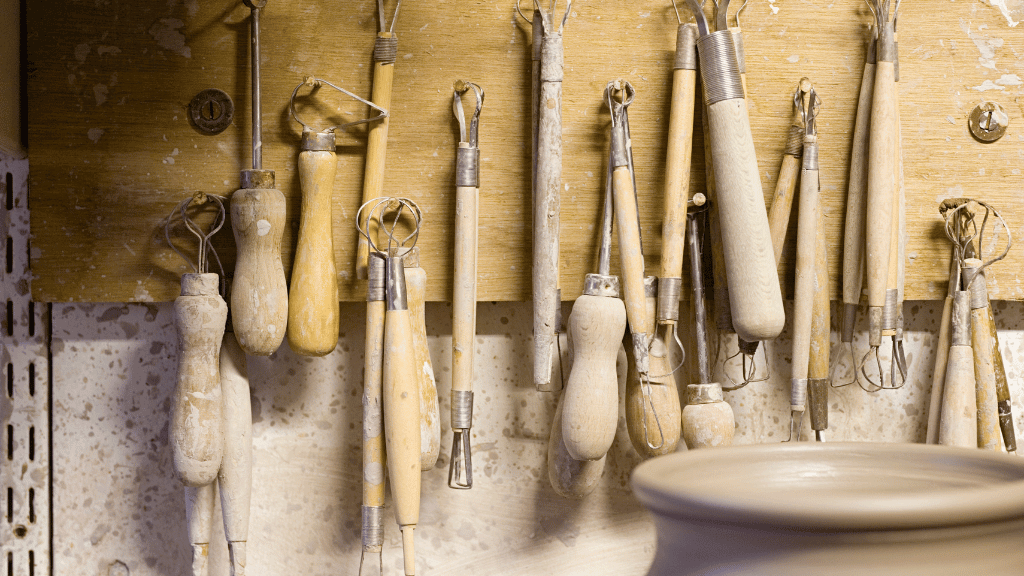
Pottery tools range from a few dollars for basic hand tools like wooden ribs and trimming loops to $200 or more for equipment like pottery wheels. A complete beginner hand-tool kit runs $20 to $40, while a fully equipped home studio with a wheel and kiln typically costs $1,500 to $5,000.
The price depends on the quality and type of tool, the brand, and where you buy. Here’s a realistic breakdown of what each category costs and where your money matters most.
Pottery Tool Costs at a Glance
| Tool Category | Typical Price Range | Notes |
|---|---|---|
| Basic hand tools (ribs, needles, wire) | $1 – $10 each | Beginner kits: $20 – $40 |
| Trimming and carving tools | $5 – $30 each | Tungsten-tipped trimming tools last longest |
| Rotary tool + bits | $40 – $150 | For grinding, drilling, and cleanup |
| Brushes and glazing tools | $3 – $25 each | Bamboo and hake brushes are inexpensive |
| Banding wheel | $20 – $100 | Heavier cast-iron models hold momentum better |
| Slab roller | $300 – $1,500 | Tabletop models at the low end |
| Extruder | $150 – $600 | Wall-mounted models cost more |
| Pottery wheel | $400 – $1,500+ | Manual kick wheels: $200 – $400 |
| Kiln | $500 – $2,500+ | Tabletop test kilns at the low end |
For the big-ticket items, I’ve covered wheels and kilns in more depth in my guide to pottery equipment costs.
Basic Pottery Tool Costs
Basic pottery tools include wooden ribs, trimming tools, sponges, needle tools, wire cutters, and brushes.
These typically cost $1 to $10 each. A metal rib might be $3, a needle tool $4, and a cut-off wire $5. None of it breaks the bank.
Beginner pottery tool kits bundle the essentials for $20 to $40, which is cheaper than buying piece by piece. The kits sold for school use are fine to learn with; you’ll only notice the quality difference once you’re trimming regularly.
The one upgrade I recommend early: a tungsten-carbide-tipped trimming tool ($15 to $30). Standard steel loop tools dull fast on leather-hard stoneware, and a dull trimming tool causes chattering and gouges.
Rotary Tools for Pottery
A rotary tool (the handheld, high-speed type with interchangeable bits) is one of the most useful non-traditional tools in a pottery studio. Expect to pay $40 to $100 for a decent corded model, plus $10 to $50 for bits.
Here’s what potters use them for in practice:
- Grinding kiln-shelf drips and glaze runs off fired pots with a diamond or silicon-carbide bit
- Smoothing rough foot rings on fired stoneware so they don’t scratch tables
- Drilling holes in bisqueware or glazed pieces (for lamps, planters, wall hangings) with a diamond core bit, kept wet to control dust and heat
- Carving and detailing leather-hard or bone-dry clay
- Cleaning kiln shelves before re-kiln-washing them
For fired ceramic you need diamond bits. Standard high-speed steel bits just skate and burn. A small set of diamond burrs runs $10 to $25.
Safety matters here: always wear a respirator and work wet or outdoors when grinding fired clay or glaze. Silica dust from dry grinding is the real long-term hazard in ceramics, not the kiln.
Advanced Pottery Tool Costs
Larger equipment (wheels, kilns, slab rollers, extruders) is where the spending jumps from tens of dollars to hundreds or thousands.
Pottery Wheel Cost
Manual kick wheels run $200 to $400, while electric wheels cost $400 to $1,500 or more depending on motor strength and centering capacity.
Entry-level electric wheels (around $400 to $700) handle up to roughly 25 lbs of clay, which is more than most hobbyists will ever center. Mid-range wheels ($800 to $1,500) add stronger motors, smoother pedals, and better resale value.
Used wheels from reputable brands hold value well. A 20-year-old wheel that’s been maintained often sells for half its original price and works fine.
Kiln Cost
Electric kilns range from about $500 for small tabletop test kilns to $2,000 to $2,500+ for full-size models that fire to cone 6–10 (2,232–2,381°F / 1,222–1,305°C).
Budget beyond the kiln itself: a kiln vent ($300 to $500), furniture kit with shelves and posts ($150 to $400), and possibly an electrician to install a dedicated 240V circuit ($200 to $600 depending on your panel). These add-ons surprise more new kiln owners than the kiln price does.
Gas and wood-fired kilns are typically custom or self-built projects and cost more in materials and site work than most hobbyists want to take on.
Slab Rollers and Extruders
A tabletop slab roller costs $300 to $700; floor-standing models run $800 to $1,500. If you mostly hand-build, a slab roller saves your wrists more than any other purchase.
Extruders cost $150 to $600. A simple handheld extruder for handles and coils is under $50 and covers most needs.
Where to Buy Pottery Tools
Pottery tools are sold at local ceramic supply shops, art stores, online retailers, and second-hand through other potters, studio sales, and online marketplaces.
Where you buy heavily influences your total pottery costs. Online prices are often lower, but shipping on heavy items like wheels and kilns can erase the savings. Local ceramic suppliers often match online pricing on equipment once freight is factored in.
Buying used is the single best way to cut costs. Closing studios, retiring potters, and university surplus sales regularly move wheels and kilns at 40–60% off. For kilns, check that the elements heat evenly and the controller works before paying; for wheels, listen for bearing noise at full speed.
Tool Costs If You’re Selling Your Work
If you sell pottery, tools shift from a hobby expense to a business cost, and that changes the math.
Buy the durable version. A $25 tungsten trimming tool that lasts five years beats five $6 tools that dull in months, and your time per pot is what determines whether you can make money selling pottery.
Track what you spend. Tool and equipment purchases (and depreciation on big items like kilns) belong in your cost calculations when you price your pottery work. Potters who ignore equipment costs end up underpricing.
Online sellers should also budget for finishing tools that improve perceived quality: rotary tools for smoothing foot rings, diamond sanding pads ($10 to $20 each), and good photography. Smooth, finished bottoms are the detail buyers and reviewers mention most.
Quality vs Price
With pottery tools, you mostly get what you pay for — but only where the tool touches clay under pressure.
Spend more on: trimming tools, ribs you use constantly, and anything with a motor. Cheap motors and bearings fail; cheap steel dulls.
Spend less on: sponges, brushes for slip and wax, needle tools, and texture tools. The $2 version works the same as the $8 version.
If pottery is a casual hobby, basic tools are genuinely fine. I cover the full budget picture in is pottery an expensive hobby.
DIY Pottery Tool Options
Plenty of working potters make their own tools, and not just to save money.
- Ribs cut from old credit cards or yogurt-lid plastic
- Trimming and shaping tools ground from old silverware or hacksaw blades
- Texture tools from found objects: bolts, lace, carved erasers, dried corn cobs
- Throwing sticks whittled from dowels for narrow-necked forms
- Cut-off wire from braided fishing line and two washers
Homemade tools won’t outlast commercial ones, but a custom rib shaped exactly to your favorite bowl profile is something you can’t buy anyway.
Maintaining Your Pottery Tools
Maintenance is cheap; replacement isn’t. Rinse clay off tools after each session, dry metal tools before storing, and keep everything out of the slop bucket overnight.
Metal loop tools need occasional sharpening with a fine file or stone, and carbon-steel tools benefit from a light wipe of oil to prevent rust. Wheel splash pans, wheel-head bearings, and kiln elements have their own upkeep schedules. I break those down in costs of maintaining pottery equipment.
Ten minutes of cleanup after each session keeps a $30 tool kit working for a decade.
FAQ Section
Here are the questions I get most often about pottery tool costs.
What are the essential tools for a beginner potter?
A sponge, needle tool, cut-off wire, wooden rib, metal rib, and a trimming loop, about $20 to $40 as a kit. Everything else can wait until a specific project demands it.
Can I use a rotary tool on pottery?
Yes. A rotary tool with diamond bits grinds glaze drips, smooths foot rings, drills holes, and carves greenware. Use diamond bits on fired ware, keep the work wet, and wear a respirator, because dry-grinding ceramic releases silica dust.
How can I save money on pottery tools?
Buy a beginner kit instead of individual tools, shop used equipment from closing studios and retiring potters, and make simple tools (ribs, texture stamps, cut-off wires) yourself. Put your savings toward the few tools that matter: a good trimming tool and reliable motorized equipment.
Do I need a pottery wheel to start with pottery?
No. Pinch, coil, and slab hand-building need only basic hand tools and a work surface. A wheel becomes worth its $400+ cost once you know you’ll throw regularly. Taking a class first is cheaper than buying a wheel you abandon.
Are electric pottery wheels better than manual ones?
Electric wheels give consistent, controlled speed, which makes learning to center easier. Manual kick wheels cost less ($200 to $400), never need electricity, and some potters prefer the rhythm. But most beginners progress faster on electric.
Is a small tabletop kiln sufficient for a beginner potter?
A tabletop kiln works for test tiles, jewelry, and small pieces, and many run on a standard household outlet. For mugs, bowls, and anything in batches, a full-size kiln is the better investment, and a beginner potter can often rent kiln space at a local studio until that purchase makes sense.