
What To Make On A Pottery Wheel?
By Linda · · 8 min read
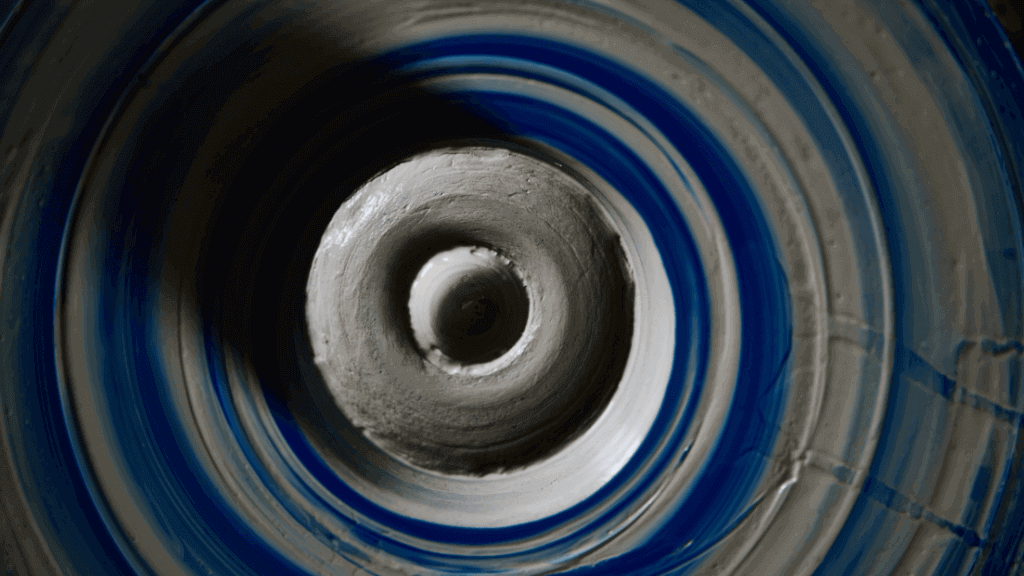
A pottery wheel can be used to make mugs, bowls, plates, vases, jars, planters, teapots, and lidded containers. Beginners should start with small cylinders and simple bowls using about 1 pound (450 g) of clay, then work up to mugs with handles, plates, and finally lidded and multi-part forms like teapots.
Everything thrown on a wheel is round by nature, but that one shape covers an enormous range of useful pottery. Below is the order I teach projects in, plus the techniques and clay choices that make each one go smoothly.
Things to Make on a Pottery Wheel, From Easiest to Hardest
Here’s the rough progression I recommend. Each project builds a skill you need for the next one.
| Project | Difficulty | Clay needed | Skill it teaches |
|---|---|---|---|
| Small cylinder / cup | Easy | ~1 lb (450 g) | Centering, pulling walls |
| Simple bowl | Easy | 1–1.5 lb (450–680 g) | Opening wide, shaping curves |
| Jewelry or trinket dish | Easy | ~0.5 lb (225 g) | Low, wide forms; trimming |
| Tea light or candle holder | Easy | ~0.75 lb (340 g) | Small precise forms |
| Mug with handle | Moderate | 1–1.25 lb (450–570 g) | Pulling handles, attaching parts |
| Planter with drainage hole | Moderate | 1.5–2 lb (680–900 g) | Thicker walls, drilling at leather-hard |
| Plate | Moderate | 2–3 lb (900–1,360 g) | Compressing wide flat bottoms |
| Vase with narrow neck | Harder | 2–3 lb (900–1,360 g) | Collaring in, taller pulls |
| Lidded jar | Harder | 2–4 lb (900–1,800 g) | Measuring with calipers, fitting lids |
| Teapot | Hardest | 3–5 lb (1,360–2,270 g) | Spouts, lids, and handles, all at once |
Don’t rush the cylinder stage. A mug is just a cylinder with a handle, a vase is a cylinder collared in at the top, and a jar is a cylinder with a gallery for a lid. If you can throw an even-walled cylinder 5–6 inches tall, most of the list above opens up to you.
Beginner Projects: Where to Start
For your first few sessions, throw the same simple form over and over rather than chasing variety. Centering is the gatekeeper skill. Until clay is truly centered, everything wobbles and collapses, so spend your first hour or two just practicing it. I walk through the whole process in my guide on how to center clay on a pottery wheel.
Good first-month projects:
- Cups and tumblers. Small, fast, forgiving, and you can drink from your failures.
- Cereal or soup bowls. These teach you to open the clay wide and shape a smooth inner curve.
- Jewelry dishes and spoon rests. Use leftover scraps of clay; they make easy gifts.
- Tea light holders. A short cylinder you can carve or pierce once it firms up.
- Small planters. Succulents don’t care if the walls are a little thick.
Expect to lose half of what you throw in the beginning. That’s normal. Wedge the failures back up and reuse the clay. Nothing is wasted until it’s fired.
If you’re practicing at home without a kiln yet, you can still throw and recycle clay endlessly. And if you don’t have a wheel at all, hand-building gets you surprisingly far. See can you make pottery without a wheel for the techniques.
Intermediate Projects: Mugs, Plates, and Planters
Once your cylinders are consistent, these are the projects that build real skill.
Mugs. The throwing is easy by now; the handle is the challenge. Pull handles from a carrot-shaped lug of clay, let both mug and handle firm to soft leather-hard, then score, slip, and attach. Attach too wet and the handle sags; too dry and it cracks off in the bisque firing.
Plates. Wide and flat means the bottom must be compressed thoroughly with a rib, or you’ll get S-cracks as it dries. Throw plates on a bat so you don’t have to lift them off the wheel head wet, and dry them slowly under plastic.
Planters. Throw slightly thicker walls than usual, and cut or drill the drainage hole while the pot is leather-hard. Wait until it’s bone dry and the clay will chip and crack around the hole.
Berry bowls and colanders. Same idea: throw a bowl, then pierce the holes at leather-hard with a hole cutter.
Advanced Projects: Lidded Jars, Vases, and Teapots
Vases with narrow necks teach collaring: squeezing the spinning cylinder inward with both hands while the wheel turns slowly. Go in small passes; collaring too fast twists and ripples the neck.
Lidded jars force you to measure. Use calipers on the gallery (the ledge the lid sits on) and again on the lid itself, and throw the lid in the same session so both parts shrink at the same rate. A lid that fits perfectly wet can be loose or stuck after firing if the clay bodies don’t match.
Teapots are the final exam: a body, a lid, a pulled or thrown spout, and a handle, all assembled at leather-hard. Cut the spout opening at an angle, place the spout tip level with or above the rim so it pours without dribbling, and put a strainer of holes behind the spout. Expect your first few to be ugly. Mine were.
For decoration beyond glaze, advanced throwers also use chattering, faceting (cutting flat planes into a round pot with a wire or knife), slip trailing, and colored clay made with mason stains.
What Clay Should You Use on the Wheel?
For wheel throwing, mid-range stoneware with fine grog is the best all-around choice. It’s plastic enough to throw tall, forgiving of uneven drying, and fires to a durable, food-safe body at cone 5–6, around 2,167–2,232°F (1,186–1,222°C).
- Stoneware. My recommendation for beginners and most functional ware. Smooth or fine-grog bodies both throw well.
- Porcelain. Beautiful but unforgiving. It’s soft, floppy, and shows every fingerprint, so save it until your throwing is solid.
- Earthenware / terracotta. Throws nicely and fires low (cone 04, about 1,945°F / 1,063°C), but it stays porous unless well glazed.
- Heavily grogged sculpture clay. The coarse grit sands your hands raw during long throwing sessions. Skip it.
One thing not to put on the wheel: air dry clay. It behaves very differently from ceramic clay and gums up the process. I cover why in can you use air dry clay on a pottery wheel.
Wheel Speed and Setup Basics
Speed matters more than beginners expect. Center fast, roughly 200–300 RPM, then slow down progressively as the pot gets taller and wider. Finish rims and wide bowls at a crawl. I break down the numbers in how fast does a pottery wheel spin.
If you’re shopping for your own wheel, entry-level electric wheels generally run a few hundred dollars, while studio-grade machines cost more like $1,000–$2,500 new. My guide to how much pottery wheels cost covers what you get at each price point, and buying used can cut that substantially.
Safety and Studio Habits
A wheel is one of the safer pieces of studio equipment, but a few habits matter:
- Tie back long hair and remove dangling jewelry, scarves, and loose sleeves — anything that can catch on the spinning wheel head.
- Keep elbows braced against your body or legs while centering instead of muscling the clay with your arms; your skeleton does the work, not your shoulders.
- Never force the wheel head to stop with your hands, and don’t overload it with more clay than the motor is rated for.
- Clean with water, not by sweeping or sanding dry clay. Dry clay dust contains silica, and chronic inhalation is the real long-term health risk in any pottery studio. Wipe surfaces with a wet sponge and mop the floor.
- In a shared studio, get instruction before using any wheel, kiln, or slab roller you haven’t been trained on.
Finishing and Glazing Your Wheel-Thrown Pieces
Throwing is only half the job. Trim your pots at leather-hard to clean up the foot, let them dry slowly and completely, then bisque fire (typically cone 04, about 1,945°F / 1,063°C) before glazing.
Dipping gives the most even coat on round wheel-thrown forms, but brushing, pouring, spraying, sponging, and wax-resist designs all work. Layering two glazes where they overlap on a curved bowl is one of the easiest ways to make a simple form look sophisticated. For the full process (including options if you don’t own a kiln), see my guide on how to glaze pottery at home.
FAQ
What are easy things to make on a pottery wheel?
Cups, simple bowls, jewelry dishes, tea light holders, and small planters are the easiest wheel projects. They all start from a basic centered lump of about 1 pound (450 g) of clay and don’t require attaching parts or fitting lids.
What should a beginner make first on a pottery wheel?
Throw small cylinders (simple cups, really) over and over before anything else. The cylinder is the parent form of mugs, vases, and jars, and repeating it builds centering and wall-pulling skills faster than jumping between shapes.
How much clay do I need for a mug?
About 1 to 1.25 pounds (450–570 g) for the body, plus a small extra lug for pulling the handle. Clay shrinks roughly 10–13% from wet to glaze-fired, so throw slightly larger than the finished size you want.
What is the hardest thing to make on a pottery wheel?
Teapots are widely considered the hardest standard wheel project because they combine four skills in one piece: a well-thrown body, a fitted lid, a spout that pours cleanly, and a comfortable handle, all joined at exactly the right moisture stage.
Can you make money selling wheel-thrown pottery?
Functional ware sells best: mugs, bowls, planters, and jewelry dishes are the reliable sellers at markets and online. Mugs in particular sell steadily because people buy them as gifts. That’s convenient, since they’re also one of the best skill-building projects.