
Pottery Glazes and Pregnancy Safety
By Linda · · 8 min read
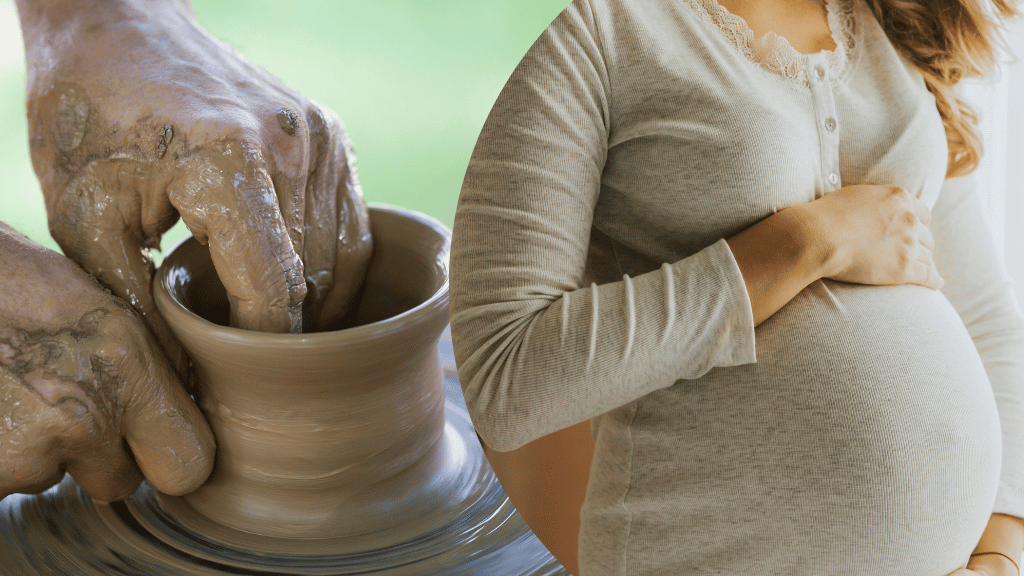 Most commercial pottery glazes are safe to use during pregnancy as long as you stick to liquid, pre-mixed glazes labeled non-toxic (look for the ACMI “AP” seal), avoid mixing glazes from dry powder, wear gloves, and work in a ventilated space.
The real risks come from a handful of ingredients (lead, cadmium, barium, manganese, and a few other heavy metals) and from breathing glaze dust. Control those two things and glazing remains one of the safest parts of pottery for an expectant mother.
How Glaze Exposure Happens
A glaze sitting in a jar isn’t dangerous. The risk shows up through three specific routes, and knowing them tells you exactly what to change:
- Inhaling dust. Dry glaze powders, dried glaze drips that get crushed underfoot, and sanding fired or bisque-glazed ware all put fine particles into the air. This is the number one exposure route in any studio.
- Hand-to-mouth transfer. Glaze on your fingers ends up on your water bottle, your snack, your phone. Pregnancy cravings plus a contaminated workspace is a bad combination.
- Spraying glaze. A spray gun turns the entire glaze recipe into a breathable mist. I don’t recommend spraying at all during pregnancy unless you have a proper spray booth and a fitted respirator. And honestly, dipping and brushing do the job fine.
Skin contact with most glazes is a minor concern by comparison, but gloves are still smart because they break the hand-to-mouth chain.
Glaze Ingredients to Avoid While Pregnant
These are the materials that earn glazes their bad reputation. Most show up in raw powdered form or in older, imported, or hobby-grade products. Reputable modern liquid glazes from major manufacturers have largely engineered them out or encapsulated them safely.
| Ingredient | Why it matters in pregnancy | Where you’ll find it |
|---|---|---|
| Lead (frits, raw galena, litharge) | Crosses the placenta; linked to developmental harm and low birth weight | Old glaze recipes, vintage supplies, some imported low-fire glazes |
| Cadmium | Toxic to the developing baby; accumulates in the body | Bright red, orange, and yellow glazes and stains |
| Barium carbonate | Toxic if ingested or inhaled as powder | Matte glaze recipes, mostly studio-mixed |
| Manganese dioxide | Neurotoxic fumes when fired; dust risk when dry | Speckled clay bodies, dark brown/black glazes |
| Lithium carbonate | Toxic in powder form | Some studio glaze recipes |
| Raw colorant oxides (cobalt, chrome, nickel, copper) | Mainly a dust-inhalation hazard in powder form | Dry oxide jars used for glaze mixing and washes |
You don’t need to memorize chemistry. The practical rule: buy pre-mixed liquid glazes labeled non-toxic, and leave the dry-materials shelf alone until after the baby arrives.
How to Tell If a Glaze Is Safe
Three checks, in order:
- Look for the ACMI “AP” (Approved Product) seal. In the US, this means a toxicologist has evaluated the product as non-toxic. A “CL” (Cautionary Labeling) seal means the opposite. The product contains something that needs handling warnings, so set it aside for now.
- Read the label for “lead-free” and “non-toxic.” Nearly all major commercial glaze lines state this plainly. If a jar says neither, treat it as unknown.
- Pull the Safety Data Sheet (SDS). Every manufacturer publishes these free online. The SDS lists hazardous ingredients and is the definitive answer when a label is vague or worn off.
A jar of unlabeled mystery glaze from a studio shelf or an estate sale? Don’t use it while pregnant. It costs $10 to $20 to replace with a known-safe pint, which is the cheapest peace of mind in ceramics.
One more thing: “non-toxic to use” and “food safe when fired” are separate questions. A glaze can be safe to brush on and still craze or leach on a dinner plate if fired wrong. If you’re making functional ware, my guide on how to tell if pottery is food safe covers that side.
Mixing Glazes From Powder: Skip It for Now
Mixing your own glazes means scooping silica, feldspar, frits, and colorant oxides as dry powders, exactly the fine, breathable dust pregnancy guidelines tell you to avoid. Even with a respirator, weighing and sieving sessions fill the air around your scale.
My advice for the next nine months:
- Use commercial pre-mixed liquid glazes exclusively.
- If your studio mixes house glazes, ask someone else to do the dry mixing and sieving, and stay out of the room until the dust settles (give it 30 to 60 minutes and a wet wipe-down).
- Skip dry brushing oxides and rubbing powdered washes into texture.
This is temporary. Your glaze recipes will still be there later.
A Safe Glazing Routine, Step by Step
Here’s how I’d set up a glazing session while pregnant:
- Glove up with nitrile gloves before opening any jar.
- Brush or dip rather than spray. Dipping pre-mixed glaze creates almost no airborne particles.
- Wipe drips immediately with a wet sponge. Dried glaze drips become dust when they’re stepped on or brushed against.
- Clean wet, never dry. Wet-mop floors and sponge tables. Never sweep or use a household vacuum; both just launch the fine particles back into the air.
- Wash hands and forearms before eating, drinking, or touching your face, and keep all food and drink out of the studio entirely.
- Change clothes before going home if you work in a shared studio, so you’re not carrying dust to your couch and car.
If you wet-sand glazed ware to smooth rough spots, do it under running water or in a basin. Never dry sand.
Kiln Firing and Fumes During Pregnancy
Loading a kiln with glazed ware is fine. Being in a poorly ventilated room while it fires is not.
During a firing, glazes and clay release fumes (sulfur compounds, carbon monoxide from burning organics, and trace metal vapors), mostly between bisque temperatures around cone 06 (1828°F / 998°C) and glaze temperatures of cone 6 (2232°F / 1222°C) or cone 10 (2345°F / 1285°C). A few sensible rules:
- Use a vented kiln (a downdraft vent or strong room exhaust) and keep the kiln room door closed.
- Don’t sit in the kiln room during a firing. Load it, start it, leave. Check on it briefly if you must.
- Electric kilns are gentler than gas, but both need ventilation.
- Skip raku entirely while pregnant. The open-flame reduction phase at around 1800°F (982°C) produces heavy smoke and carbon monoxide at close range.
- Skip luster and overglaze firings too; metallic lusters off-gas solvents and metal fumes at low temperatures around cone 018 (1323°F / 717°C).
If you work in a community studio, the staff fire the kilns anyway. Just time your visits so you’re not glazing next to a kiln in mid-fire.
The Rest of the Studio Still Matters
Glaze is only one piece of pottery-and-pregnancy safety. Clay dust contains silica and behaves exactly like glaze dust, so the same wet-cleaning habits apply. Long wheel sessions get uncomfortable fast in the second and third trimesters. Handbuilding is an easy switch, and the types of pottery that are safe during pregnancy guide walks through the gentlest options.
A few related reads if you’re planning your studio time:
- The full answer to can you do pottery while pregnant (short version: yes, with adjustments).
- A complete checklist of pottery safety precautions during pregnancy, covering dust, ergonomics, and lifting.
- An honest look at the risks of pottery making during pregnancy so you can weigh them for yourself.
- The pottery tools worth having as a pregnant potter, mostly comfort and dust-control gear.
And as always: mention your studio hobby to your doctor or midwife. They know your specific situation; I only know pottery.
Frequently Asked Questions
Is pottery safe during pregnancy?
Yes, for most people pottery is safe during pregnancy with a few adjustments: use pre-mixed non-toxic glazes, control dust with wet cleaning, stay out of the room during kiln firings, and listen to your body at the wheel. The hobby itself isn’t the hazard — specific materials and dust are.
Can I glaze pottery while pregnant?
Yes. Brush or dip commercial liquid glazes labeled non-toxic and lead-free, wear nitrile gloves, and wash up before eating. Avoid spraying glaze, mixing glazes from dry powder, and any product containing lead, cadmium, barium, or manganese.
Can I use underglaze and overglaze colors during pregnancy?
Underglazes labeled non-toxic (AP seal) are fine. They’re applied wet and create little dust. Overglazes are a mixed bag: standard non-toxic overglaze colors are okay, but metallic lusters and china paints often contain solvents and metals, so I’d shelve those until after delivery.
Is it safe to fire a kiln while pregnant?
Loading and starting a kiln is fine. The caution is about fumes during the firing itself: make sure the kiln is vented, keep the kiln room door closed, and don’t linger in the room while it fires. Avoid raku and luster firings entirely while pregnant.
How can I tell if a glaze is lead-free?
Check the jar for “lead-free” and “non-toxic” wording and the ACMI AP seal, then confirm with the manufacturer’s Safety Data Sheet, which is published free online for every commercial glaze. If a glaze has no label and no traceable SDS, don’t use it while pregnant.
What can I do to minimize dust exposure in my pottery studio?
Clean wet, never dry: sponge tables, wet-mop floors, and wipe glaze drips before they dry. Never sweep or dry-sand, keep clay scraps in covered buckets, work with pre-mixed glazes instead of powders, and ventilate the space. If others mix dry materials nearby, leave the room and come back after the air has cleared.