
Risks of Pottery Making During Pregnancy
By Linda · · 8 min read
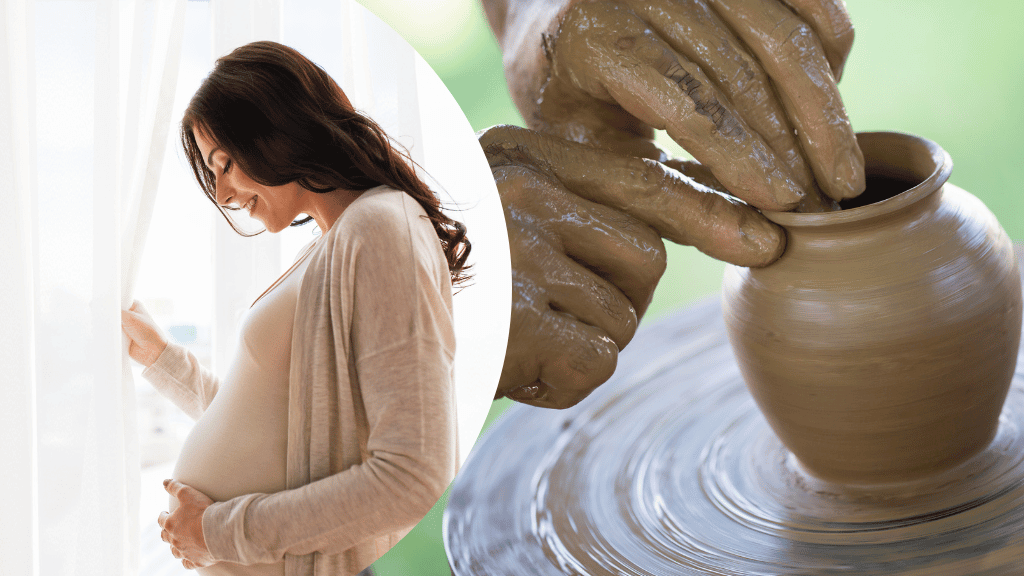
The main risks of pottery making during pregnancy are silica dust from dry clay, toxic glaze ingredients (lead, cadmium, barium, and some metallic colorants), kiln fumes, heavy lifting, and repetitive strain at the wheel.
None of these makes pottery off-limits. With lead-free glazes, wet cleaning instead of sweeping, good ventilation, and someone else handling 25 lb (11 kg) clay boxes and kiln duty, most potters work safely right through pregnancy. Here’s how each risk works and exactly what I’d change in your routine.
Is Making Pottery Safe During Pregnancy?
Yes, for most people, as long as you control the exposures rather than the hobby. Working with moist clay itself is low risk. Wet clay doesn’t put silica into the air, and touching it doesn’t push anything dangerous through your skin.
The hazards come from specific, avoidable situations: dried clay scraps getting crushed into dust, mixing powdered glazes, handling raw glaze chemicals without gloves, and being in the room while a kiln fires. Cut those out, and what’s left (wedging, throwing, handbuilding, trimming, brushing on pre-mixed glaze) is about as risky as any moderate craft.
Talk to your doctor or midwife before continuing, especially if you have a high-risk pregnancy. Bring a list of the glazes and materials you use so the conversation is specific, not hypothetical. I cover the broader question in more depth in can you do pottery while pregnant.
The 5 Main Risks, Ranked
| Risk | Where it comes from | Severity if ignored | Easiest fix |
|---|---|---|---|
| Toxic glaze chemicals | Lead, cadmium, barium, manganese, raw colorant powders | High | Use only pre-mixed, lead-free liquid glazes; wear nitrile gloves |
| Silica dust | Dry clay scraps, trimming dust, sanding bisque, mixing dry clay | High over time | Wet-clean everything; never sweep; skip dry mixing entirely |
| Kiln fumes | Sulfur compounds, carbon monoxide, metal vapors during firing | Moderate–high | Have someone else load and fire; stay out of the kiln room |
| Heavy lifting | 25 lb (11 kg) clay boxes, kiln shelves, ware boards, buckets | Moderate | Buy smaller bags, use a cart, delegate |
| Repetitive strain | Wedging, centering, long wheel sessions | Low–moderate | Shorter sessions, breaks every 30–45 minutes, smaller pieces |
Toxic Chemicals in Glazes and Stains
This is the risk worth taking most seriously, because lead and cadmium can affect a developing baby at exposures that wouldn’t visibly bother an adult.
What to do:
- Use only commercial liquid glazes labeled lead-free and, ideally, marked AP Non-Toxic by ACMI. Most major hobby glaze lines sold for classroom use qualify.
- Skip mixing glazes from raw powders for the duration. Dry oxides and carbonates (manganese, cobalt, chrome, nickel) are the most hazardous form they come in.
- Wear nitrile gloves when glazing, and wash hands before eating, drinking, or touching your face.
- Don’t eat or drink in the studio, ever. Hand-to-mouth transfer is the main route these chemicals get into you.
- Avoid luster glazes, raku, and anything involving solvents or overglaze enamels — those are the techniques I’d shelve until after delivery.
I go through specific ingredients and label reading in pottery glazes and pregnancy safety.
Silica Dust: The Invisible Risk
All clay bodies contain crystalline silica. Wet, it’s harmless. Once clay dries and gets crushed underfoot or sanded, it becomes fine respirable dust that hangs in the air for hours.
Pregnancy doesn’t make silica more toxic, but it’s a cumulative lung hazard you don’t want regardless, and pregnant women breathe faster and deeper, which increases what you inhale per hour in a dusty room.
Dust control habits that work:
- Wipe tables, wheels, and floors with a wet sponge or mop. Never sweep or dry-brush.
- Keep a bucket of water at your station and drop scraps in before they dry.
- Trim over a damp surface and wipe up trimmings the same session.
- Don’t sand bone-dry greenware or bisque while pregnant. If a piece needs smoothing, use a damp sponge at the leather-hard stage instead.
- If you must be around dust, wear a properly fitted N95. Check the fit with your doctor later in pregnancy, though, since respirators feel more restrictive as breathing room shrinks.
Kiln Firing: Hand It Off
Firing releases fumes: sulfur dioxide from many clay bodies, carbon monoxide during reduction, and metal vapors from glazes. Most of it comes off between about 300°F and 1,200°F (150–650°C) as organics and sulfides burn out, and it keeps coming right up to a glaze firing’s peak around cone 6, 2,232°F (1,222°C).
My rule for pregnant potters is simple: don’t load, fire, or unload the kiln, and don’t work in the kiln room while it’s firing. If you fire at home, the kiln should already be vented to the outside (a downdraft vent is the standard setup); pregnancy is a good reason to finally install one if you’ve been putting it off.
At a community studio this is easy, since staff fire the kilns anyway. At home, recruit your partner or a pottery friend for kiln duty for a few months.
Lifting, Posture, and Wheel Ergonomics
A standard box of clay is 50 lb (23 kg); even single bags are 25 lb (11 kg). Glaze buckets, ware boards full of pots, and kiln shelves add up too. Most doctors suggest scaling back heavy lifting as pregnancy progresses, particularly after the first trimester.
- Buy clay in smaller quantities or have the studio split a box.
- Use a rolling cart for anything heavier than a ware board.
- Wedge smaller amounts: two or three 1–2 lb (0.5–1 kg) balls instead of one big lump. Or use the slam-and-cut method, which uses body weight instead of shoulder force.
- At the wheel, raise your seat or use a wedge cushion so you’re not folding over your belly; many potters switch to standing at an elevated wheel in the third trimester.
- Take a break every 30–45 minutes. Centering for an hour straight is hard on a pregnant lower back.
Handbuilding (slabs, coils, pinch pots) is gentler than wheel work and keeps you making when throwing gets uncomfortable. For setup ideas, see essential pottery tools for pregnant women.
Taking Pottery Classes While Pregnant
If you’re searching for pottery making near you, a community studio is honestly one of the safer ways to do pottery while pregnant: someone else fires the kilns, glazes are usually pre-mixed classroom-safe products, and you’re not managing chemical storage yourself.
Questions to ask before you sign up:
- Are your glazes lead-free and AP Non-Toxic certified?
- How is the studio cleaned, wet mopping or sweeping? (Sweeping is a red flag.)
- Is the kiln in a separate, ventilated room?
- Can staff help me move clay and ware boards?
Tell the instructor you’re pregnant; any decent teacher will adjust without making it a thing. Group classes typically run $150–$400 (about €140–€370) for a 6–8 week session. I break down pricing in how much do pottery classes cost, and where can I take a pottery class covers how to find studios locally.
At-Home Pottery Kits During Pregnancy
Home pottery making kits are popular with pregnant makers because they skip the riskiest steps entirely. Most kits ($30–$150, roughly €28–€140) use air-dry clay: no kiln, no firing fumes, no glaze chemistry.
A few cautions still apply:
- Check that the clay and any included paints are labeled non-toxic (look for the ACMI AP seal).
- Air-dry clay still produces dust if you sand it dry, so smooth with a damp sponge instead.
- Acrylic sealers in some kits have strong fumes; apply them outdoors or by an open window, or ask someone else to do the sealing coat.
- Skip kits that include solvent-based finishes or epoxy resins.
Air-dry pieces aren’t food-safe or waterproof, so treat kit projects as decorative. If you want to keep working with real fired stoneware, types of pottery safe for pregnancy compares your options.
Trimester-by-Trimester Adjustments
- First trimester: Organ development makes this the most chemically sensitive window. Be strictest about glazes, dust, and kiln fumes now, even though you feel physically normal. Nausea may also make studio smells harder to tolerate.
- Second trimester: Usually the most comfortable stretch for studio time. Adjust wheel height as your center of gravity shifts, and start delegating lifting.
- Third trimester: Switch toward handbuilding and decorating, keep sessions under an hour or two, and keep a stable chair with back support at your station. Balance changes make wet, slippery studio floors a real fall hazard, so wear shoes with grip.
For a complete checklist you can print and pin up in your studio, see pottery safety precautions during pregnancy.
FAQ
Is making pottery safe during pregnancy?
Yes, for most healthy pregnancies, provided you use lead-free pre-mixed glazes, control dust with wet cleaning, stay away from the kiln while it fires, and avoid heavy lifting. Confirm with your doctor, especially if your pregnancy is high-risk.
Can I take a pottery class while pregnant?
Yes. Community studios are often safer than home setups because staff handle firing and stock classroom-safe glazes. Tell your instructor you’re pregnant and ask whether the studio wet-mops and keeps its kiln in a ventilated separate room.
Are at-home pottery making kits safe during pregnancy?
Air-dry clay kits are one of the lowest-risk options since there’s no kiln or glaze chemistry. Choose kits with non-toxic (AP-certified) clay and paints, smooth pieces with a damp sponge instead of sanding, and apply any sealer in fresh air.
What pottery materials should I completely avoid while pregnant?
Lead-based or unlabeled glazes, raw glaze powders and dry colorants (manganese, cadmium, barium compounds), luster glazes, solvent-based products, and raku firing. Stick to commercial liquid glazes marked lead-free and non-toxic.
Can I sit at the pottery wheel in the third trimester?
You can, but most potters find it awkward past about 30 weeks. Raise the seat, angle it so you lean beside your belly rather than over it, keep sessions short, or switch to a standing wheel or handbuilding.
Is clay dust dangerous to my baby?
Silica dust is mainly a hazard to your own lungs rather than directly to the baby, but control it strictly either way. Wet-clean instead of sweeping, keep scraps in water, and don’t sand dry clay while pregnant.