
Pottery Safety Precautions During Pregnancy
By Linda · · 8 min read
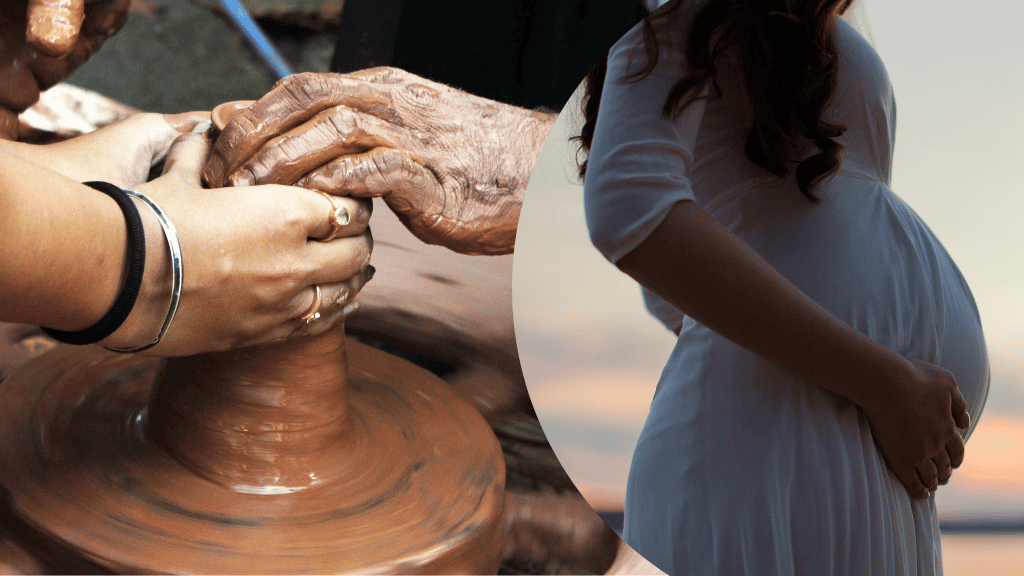
Pottery during pregnancy is generally safe if you control three things: dust, glaze chemicals, and kiln fumes. Work with wet clay instead of dry materials, use only lead-free commercial glazes, stay out of the room while the kiln fires, and clean with water rather than a broom.
Add a few physical adjustments (no heavy lifting of clay bags or shelves, frequent breaks at the wheel, a seat that fits) and most potters can keep working comfortably through all three trimesters. Clear it with your healthcare provider first, especially if your pregnancy is high-risk.
What Poses a Real Risk in the Studio
Before you can take sensible precautions, you need to know what you’re protecting against. I find most worry is aimed at the wrong things — wet clay on your hands is not the problem.
The real hazards, roughly in order of importance:
- Silica dust. Dry clay contains crystalline silica. Sanding greenware, mixing dry clay, scraping dried slip off tables, and dry-sweeping all put fine dust in the air. This is the number one studio hazard for everyone, pregnant or not.
- Heavy metals in glazes. Lead, cadmium, barium, and some colorants (like manganese and chrome compounds) can be absorbed through ingestion or inhaled as dry glaze dust. Lead exposure is especially serious during pregnancy because it crosses the placenta.
- Kiln emissions. Firing releases fumes: sulfur compounds, carbon monoxide during certain stages, and metal vapors from glazes. Wood, salt, and raku firings produce far more smoke and fumes than electric firing.
- Physical strain. A 25 lb (11 kg) bag of clay, hours hunched at the wheel, and standing at a wedging table all get harder as pregnancy progresses.
For a deeper breakdown of each hazard, see my full guide to the risks of pottery making during pregnancy.
Which Pottery Tasks Are Safe, Which Need Changes
Here’s how I’d sort common studio activities while pregnant:
| Activity | Status | What to do |
|---|---|---|
| Throwing with wet clay | Safe | Adjust seating; take breaks every 30–45 minutes |
| Handbuilding (pinch, coil, slab) | Safe | Best low-strain option; work seated |
| Trimming leather-hard pots | Safe | Wipe tools and surfaces wet afterward |
| Glazing with premixed liquid glaze | Safe with care | Lead-free only; gloves; no spraying |
| Sanding bone-dry greenware | Avoid | Smooth pieces at leather-hard stage with a damp sponge instead |
| Mixing dry clay or dry glaze | Avoid or delegate | Highest dust exposure in the studio |
| Loading/unloading the kiln | Modify | Have someone else lift shelves and large pieces |
| Sitting near a firing kiln | Avoid | Leave the room; rely on kiln vent and a sitter or controller |
| Raku, salt, soda, wood firing | Skip | Heavy smoke and fumes; wait until after pregnancy |
Handbuilding deserves a special mention. It’s the gentlest way to keep making work in the third trimester. I cover the best options in types of pottery safe for pregnancy.
Choosing Safe Clay and Materials
Stick with moist, pre-pugged commercial clay. Wet clay doesn’t generate airborne silica, which removes the biggest hazard before you even start.
What I recommend:
- Buy clay ready-to-use rather than mixing from dry powder.
- Skip recycling scraps for now, since reclaiming clay means handling bone-dry material and slaking dust.
- If a piece needs smoothing, do it at the leather-hard stage with a rib or damp sponge, never by sanding dry greenware.
- Low-fire earthenware and mid-range stoneware bodies are both fine; the clay type matters far less than whether you’re handling it wet or dry.
If you want to avoid the kiln entirely for a few months, air-dry clay and polymer clay (cured in a well-ventilated kitchen, never burned) are reasonable stand-ins for sketching ideas.
Glaze Safety: The Rules I Follow
Glazes are where ingestion and dust risks concentrate, so this is worth being strict about:
- Use only commercial, premixed liquid glazes labeled lead-free. In the US, look for glazes that conform to ASTM D-4236 with no chronic-hazard warnings on the label.
- Don’t mix glazes from raw powdered materials while pregnant. Weighing out silica, feldspar, and colorant oxides is a dust-heavy job. Delegate it or buy premixed.
- Brush or dip; don’t spray. Spray glazing creates a fine airborne mist that even a good respirator handles imperfectly.
- Wear nitrile gloves when glazing, and never eat, drink, or touch your face mid-session.
- Avoid glazes containing cadmium, barium, or manganese colorants for the duration. Plenty of beautiful lead-free, food-safe glazes don’t use them.
I go through specific ingredients and label-reading in detail in pottery glazes and pregnancy safety.
Protective Gear and Ventilation
For everyday wet work (throwing, handbuilding, trimming) you don’t need a respirator. You need one anywhere dry materials or glaze powders are handled.
- Respirator: A NIOSH-approved N95 (or better, a P100 half-mask) for any dusty task you can’t avoid. A loose cloth or surgical mask does not stop silica.
- Gloves: Nitrile gloves for glazing and cleanup. Bare hands are fine for wet clay itself.
- Apron: A dedicated studio apron that stays in the studio. Don’t wear clay-dusted clothes home, and rinse them before they go in with the family laundry.
- Ventilation: Cross-ventilation with an open window and a fan exhausting outward is the minimum. If your studio has a glaze-mixing area, that’s where mechanical ventilation matters most.
A few inexpensive additions make a real comfort difference too: a lighter banding wheel, a taller stool, long-handled tools. I list my picks in essential pottery tools for pregnant women.
Kiln Firing Precautions
Electric kilns are the safest option during pregnancy, but even electric firing releases fumes as organics burn out of the clay, typically between about 300°F and 1,300°F (150°C and 700°C) early in the firing.
My rules for firing while pregnant:
- Vent the kiln properly. A downdraft vent system or a strong exhaust fan ducted outdoors, ideally with the kiln in a separate room or garage.
- Don’t sit with the kiln. Load it (with help lifting), start it, and leave. Use a digital controller or have someone else check cones. A typical bisque firing to cone 06 (about 1,828°F / 998°C) runs 8 to 10 hours, and a glaze firing to cone 6 (about 2,232°F / 1,222°C) is similar. There’s no reason to breathe that room’s air all day.
- Let someone else unload anything heavy, and never reach deep into a kiln late in pregnancy. Bending plus lifting is a back injury waiting to happen.
- Postpone atmospheric firings. Raku, salt, soda, pit, and wood firing all involve standing in smoke and fumes by design. They’ll still be there next year.
Cleaning Without Raising Dust
How you clean matters as much as what you make. Dry clay on floors and tables becomes airborne silica the moment it’s disturbed.
- Never dry-sweep or use a regular shop vac. Both launch fine dust into the air for hours. Wet-mop floors and sponge tables instead.
- Wipe surfaces while clay residue is still damp. It takes seconds; scraping it dry later takes effort and makes dust.
- If you must vacuum, only use one with a true HEPA filter.
- Wash hands and forearms thoroughly after every session and before eating. Keep food and drinks out of the studio entirely.
Managing Physical Strain Trimester by Trimester
- First trimester: Fatigue and nausea are the main issues. Shorten sessions and skip the studio on rough days. Clay keeps.
- Second trimester: Your center of gravity shifts. Raise your wheel or use a higher stool so you’re not folding over your belly, and stop lifting full clay bags. Cut blocks into 5–10 lb (2–4.5 kg) chunks instead.
- Third trimester: Favor handbuilding at a comfortable table height. Avoid prolonged standing at the wedging table; slam-wedging smaller amounts or having a studio mate wedge for you works fine. Take a break and walk around every 30 minutes.
Loose ligaments (thanks, relaxin) mean your wrists and back are easier to strain than usual. If wedging hurts, stop.
Working in a Shared or Community Studio
Shared studios cut both ways: someone else handles kiln firing and heavy lifting, but you can’t control everyone’s dust habits.
Tell the studio manager you’re pregnant and ask specifically: Is the kiln room vented and separated? Are floors wet-mopped? Is glaze mixing done in a ventilated area? Can you schedule sessions when nobody is mixing dry materials or spraying glaze? Most community studios are happy to accommodate, and a well-run one is often cleaner than a home setup.
If the studio dry-sweeps nightly or mixes glazes in the open workspace, work somewhere else until after the baby arrives. For the bigger picture on whether to keep going at all, start with can you do pottery while pregnant.
FAQ
Is it safe to do pottery during pregnancy?
Yes, for most people, with precautions: wet clay only, lead-free premixed glazes, no dry sanding or glaze mixing, proper kiln ventilation, and no heavy lifting. Confirm with your healthcare provider, particularly for high-risk pregnancies.
Can clay dust harm my baby?
Airborne silica dust primarily harms your lungs, and anything that stresses your respiratory health affects your pregnancy. The fix is simple: keep clay wet, never sand dry greenware, and wet-mop instead of sweeping. Wet clay on your skin is not a hazard.
What glazes should I avoid while pregnant?
Avoid anything containing lead, cadmium, or barium, and skip mixing glazes from raw powders. Use commercial premixed liquid glazes labeled lead-free and non-toxic, apply by brushing or dipping rather than spraying, and wear nitrile gloves.
Can I be around a kiln while it’s firing?
Briefly, yes. But don’t work in the same room for the duration of a firing. Kilns emit fumes as organic material burns out of the clay. Use a vented electric kiln, start the firing, and leave the room. Skip raku, salt, and wood firings until after pregnancy.
Can I throw on the wheel in the third trimester?
Usually, if you’re comfortable. Raise the wheel or your stool so you aren’t hunching over your belly, throw smaller amounts of clay, and take breaks every 30 minutes. Many potters switch mostly to handbuilding in the final weeks because it’s easier on the back.
Do I need a mask for pottery while pregnant?
Not for wet work like throwing and handbuilding. You need a NIOSH-approved N95 or P100 respirator for any dusty task. Honestly, though, the better answer is to avoid dusty tasks altogether until after the baby arrives.