
Can You Take Pottery On A Plane?
By Linda · · 8 min read
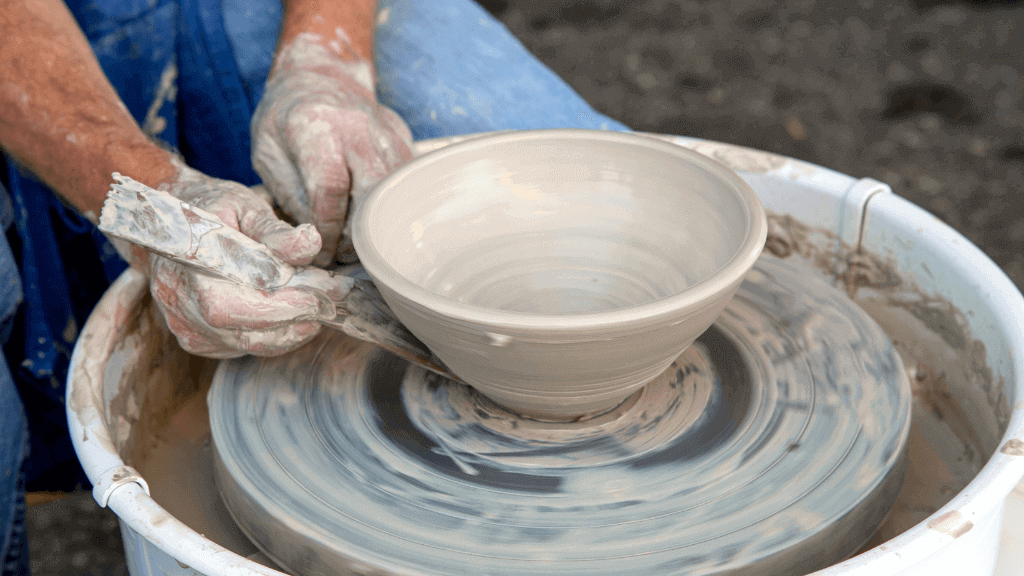
Yes, you can take pottery on a plane. The TSA allows ceramics in both carry-on and checked baggage (plates, mugs, bowls, vases, sculptures, tiles, all of it), and most security agencies around the world follow the same approach. Pottery isn’t a restricted item. It’s just fragile cargo that you have to pack well.
My short advice: put pottery in your carry-on whenever it fits. The overhead bin is gentle. Checked baggage handlers are not.
TSA rules for ceramics and pottery
The TSA’s official guidance lists ceramics as allowed in both carry-on and checked bags. There’s no quantity limit, no special permit, and nothing to declare at the security checkpoint on a domestic flight.
A few practical points from the screening side:
- TSA officers have the final say. If a piece has a sharp edge or a point (a broken rim, say, or a sculpture with a spike), an officer can decide it looks like a potential weapon and make you check it.
- Dense ceramics show up as opaque blobs on the X-ray. A heavy, thick-walled piece sometimes gets pulled for a hand inspection. Pack so it’s easy to unwrap and rewrap at the checkpoint, and don’t tape every seam shut.
- Sealed liquids inside pottery count as liquids. An empty mug is fine in carry-on; a mug of honey or a jug of olive oil over 3.4 oz (100 ml) is not. The container material doesn’t exempt the contents.
- Cast iron is the cookware exception. Ceramic pans are fine in carry-on, but cast iron skillets are carry-on prohibited and must go in checked baggage. People mix these rules up, which is where a lot of the confusion about “dishes on planes” comes from.
Carry-on vs. checked baggage: which is safer for pottery?
Carry-on, every time it’s practical. Checked bags get thrown, stacked, and dropped, and a soft-sided suitcase offers almost no protection against a 50-pound bag landing on top of it.
| Carry-on | Checked baggage | |
|---|---|---|
| Allowed by TSA? | Yes | Yes |
| Handling | You control it the whole way | Thrown and stacked by machines and handlers |
| Breakage risk | Low if wrapped | High without rigid packing |
| Size limit | Roughly 22 x 14 x 9 in. on most US airlines | Usually 62 linear inches, 50 lb |
| Best for | Mugs, plates, bowls, small sculptures | Nothing fragile, honestly, but large pieces may force it |
| If it breaks | Your fault, your lesson | Airlines routinely deny claims for fragile items |
That last row matters more than people realize. Most airline contracts of carriage exclude liability for fragile items in checked baggage, even when the handling caused the break. If a checked vase arrives in shards, you usually have no recourse.
If a piece is too big for carry-on, seriously consider shipping it instead. I walk through double-boxing and cushioning in my guide on how to ship pottery. A well-packed shipped box almost always beats a checked suitcase.
How to pack pottery for a flight
One mug or a dozen plates, the method is the same: immobilize each piece, then cushion the group.
- Stuff hollow forms. Fill mugs, bowls, and vases with crumpled paper or socks so the walls can’t flex inward.
- Wrap each piece in 2–3 layers of bubble wrap, with extra padding on handles, spouts, rims, and feet. Those are the parts that snap first.
- Wrap plates individually, then stack them on edge, not flat. Plates standing vertically (like records in a crate) survive impacts far better than a flat stack, which concentrates force on the bottom plate.
- Pad between pieces. No two ceramic surfaces should ever touch. Clothes work fine as filler.
- Center the bundle in the bag with at least 2 inches of soft buffer on every side, never against the suitcase shell.
- In carry-on, keep it accessible. If TSA wants a look, you want to unwrap one piece, not excavate your whole bag at the conveyor.
For checked baggage, go further: use a hard-sided suitcase, double the bubble wrap, and accept that you’re still gambling. The cold cargo hold itself isn’t the danger. Fired, glazed ware handles temperature swings fine, as I cover in will pottery break in the cold. It’s the impacts that kill pieces.
Can you bring a ceramic mug or plates on a plane?
Yes, and these are the easiest cases. A ceramic mug is allowed in carry-on with no restrictions. Wrap it, stuff the inside, and protect the handle, which is the weakest point on any mug. Same goes for a travel tumbler or a teapot (pad the spout heavily).
Ceramic plates are also fine in carry-on. The only friction you might hit is an officer taking a second look at a large, heavy plate, since dense flat objects screen poorly. A short “it’s a ceramic plate, souvenir from my trip” sorts it out in seconds.
If you’re buying tableware abroad to eat from, check that it’s safe before it goes into rotation. Older or tourist-market glazes can leach lead. My post on how to tell if pottery is food safe covers the quick checks and test kits.
Can you take clay on a plane?
Yes. Unfired clay (moist pottery clay, polymer clay, air-dry clay) is allowed in both carry-on and checked bags. A few things smooth the trip:
- A 25 lb bag of moist clay is heavy and dense. It will almost certainly trigger a hand check in carry-on because solid dense blocks look suspicious on X-ray. Expect a swab test; it’s routine.
- Keep it in original labeled packaging if you can. “Stoneware clay, 25 lb” on the bag answers most questions before they’re asked.
- Moist clay is not a liquid under TSA rules, so the 3.4 oz limit doesn’t apply. Glazes and slips, however, are liquids and gels. Bottles over 3.4 oz (100 ml) must go in checked baggage.
- Watch your weight allowance. Clay eats a 50 lb checked-bag limit fast. Past one or two bags, having clay delivered to your destination is cheaper than overweight fees.
Greenware (unfired, dried pots) is the one thing I’d never fly with. Bone-dry clay is dramatically more fragile than fired ware — it can crumble from vibration alone. Fire it first or accept the loss.
Flying internationally with pottery
Security screening abroad treats ceramics about the same as the TSA does, but two extra layers come into play:
- Customs on arrival. Pottery you bought abroad counts toward your duty-free personal exemption coming back into the US (commonly $800 per person). Declare it on your customs form; ordinary souvenir purchases under the exemption clear without duty. Commercial quantities or very high-value pieces are a different process. If you’re importing inventory to sell, that crosses into business territory, which I touch on in can you make money selling pottery.
- Antiques and cultural property. Some countries (Mexico, Peru, Turkey, Greece, Egypt, and others) restrict the export of pre-Columbian or ancient ceramics. A market-stall talavera mug is fine; anything sold as “ancient” or excavated can be seized and can get you fined. Buy from reputable shops and keep your receipt.
- Airline variation. Carry-on size and weight limits differ a lot internationally. Many European and Asian carriers cap carry-ons at 15–22 lb (7–10 kg), which a bag of plates exceeds quickly. Check your specific airline before you assume US-style allowances.
What can go wrong, and how to avoid it
- Handle snapped off a mug: the handle wasn’t individually padded. Wrap handles as their own zone, then wrap the whole piece.
- Plate cracked in half in a checked bag: plates packed flat at the bottom of a soft suitcase. Pack on edge, center of the bag, hard shell.
- Held up at security for 15 minutes: dense piece taped into a mummy of bubble wrap that had to be cut open. Wrap so it can be opened and re-closed.
- Glaze bottles confiscated at carry-on screening: glaze is a liquid. Checked bag or ship it.
- Hairline crack discovered weeks later: stress crack from impact. Check pieces carefully on arrival. A hairline can grow with heating, so test gently before the piece goes in the microwave or oven.
FAQ
Can you take ceramics on a plane in your carry-on?
Yes. The TSA allows ceramics in carry-on bags with no quantity limit. The only caveats: pieces with sharp edges or points can be refused at the officer’s discretion, and the piece has to fit within your airline’s carry-on size limits.
Can I bring a ceramic mug on a plane?
Yes, an empty ceramic mug is allowed in both carry-on and checked bags. Stuff the inside with paper or a sock, wrap the handle separately, and carry it on rather than checking it.
Can you bring ceramic plates on a plane?
Yes. Wrap each plate individually, stack them vertically on edge rather than flat, and keep them in your carry-on. Large heavy plates may get a quick hand inspection because dense flat items screen poorly on X-ray.
Can I take clay on a plane?
Yes, unfired clay is allowed in carry-on and checked baggage. Moist clay isn’t treated as a liquid, but expect a hand check for dense blocks. Liquid glazes over 3.4 oz (100 ml) must go in checked bags.
Do I have to declare pottery at the airport?
Not at security on a domestic flight. On international trips, pottery you purchased abroad must be declared on your customs form when returning to the US, where it counts toward your personal duty-free exemption (commonly $800).
Is it better to check pottery or ship it?
Ship it, if it doesn’t fit in your carry-on. Airlines generally exclude fragile items from baggage damage claims, so a broken checked piece is your loss. A properly double-boxed shipment with insurance is safer and claimable.