
How To Make Pottery Clay
By Linda · · 9 min read
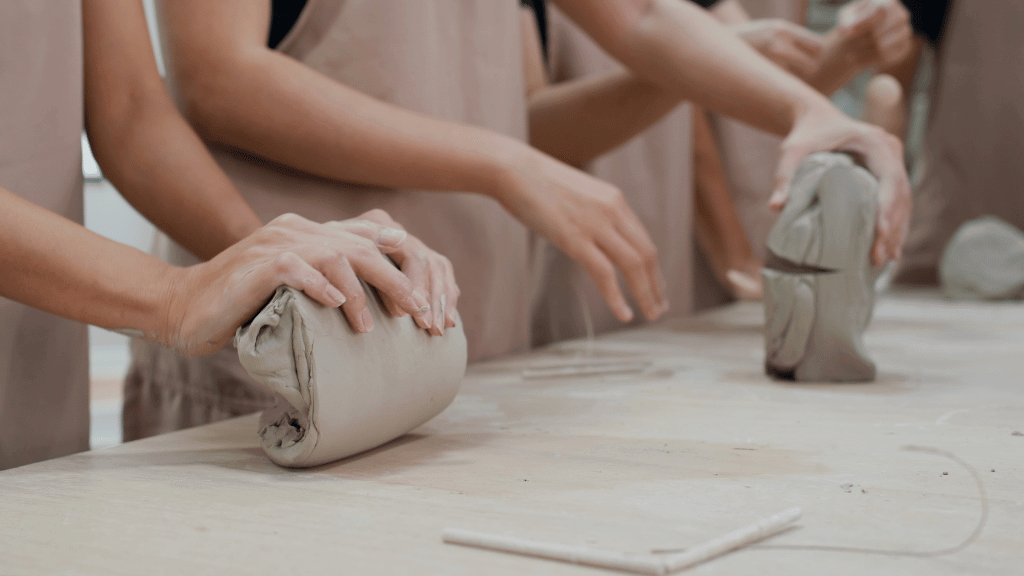
To make pottery clay, dig clay-rich soil, mix it with water into a thin slip, sieve out rocks and roots, let it settle for 24 hours, pour off the excess water, then dry the slip on cloth until it reaches a workable consistency. Finish by wedging the clay to remove air bubbles.
The whole process takes 2–5 days depending on weather, costs almost nothing beyond your time, and gives you genuinely usable pottery clay. Here is exactly how I do it, step by step.
What You Need Before You Start
You don’t need special equipment to make clay for pottery. Most of this is already in your garage or kitchen:
- A shovel or trowel for digging
- Two 5-gallon buckets (around $5–10 each at a hardware store)
- A stirring stick or an old drill with a paint-mixing attachment
- A kitchen sieve or window-screen mesh (roughly 30–80 mesh works fine)
- An old bedsheet, pillowcase, or canvas for de-watering
- A plaster slab or plywood board for the final drying stage
If you’d rather skip the digging entirely, buying clay from a pottery supplier is the faster route. A 25 lb bag of stoneware typically runs $15–30. But making your own teaches you more about clay than any bag ever will.
Step 1: Find and Dig Raw Clay
Look for clay deposits at riverbanks, creek beds, road cuts, construction sites, or even your own yard a foot or two below the topsoil. Always get permission before digging on land that isn’t yours.
Good signs you’ve found clay:
- The soil is sticky and dense, not crumbly
- It holds a fingerprint when you press it
- Water pools on top of it instead of soaking in
- The color is often gray, red, tan, or yellowish rather than dark brown
Quick field test: wet a golf-ball-sized lump, roll it into a coil about the thickness of a pencil, and bend it around your finger. If it bends without major cracking, you’ve got workable clay. If it crumbles, keep looking, or plan to blend it with purchased clay. I cover this in more depth in my post on using clay from the ground for pottery.
Dig up at least a full bucket’s worth. You’ll lose a surprising amount of volume to rocks, sand, and organic debris during processing, often a third or more.
Step 2: Make a Clay Slip
Break the dug clay into small chunks and let them dry completely first if you can. Bone-dry clay slakes down in water far faster than damp clay.
Drop the chunks into a bucket and cover them with water. Let them soak for several hours or overnight, then stir until you have a smooth, creamy liquid about the consistency of a milkshake. This liquid clay is called slip.
The thinner you make the slip, the better the next step works, because rocks and sand sink while fine clay particles stay suspended.
Step 3: Settle, Decant, and Sieve
Let the bucket sit undisturbed for 24 hours. The heavy junk (gravel, coarse sand) sinks to the bottom fast, while clay settles slowly into a layer above it.
Then:
- Gently pour or siphon the mostly clear water off the top.
- Pour the clay layer through your sieve into the second bucket, stopping before you disturb the gravel at the very bottom.
- Discard the rocks, roots, and coarse sand left in the sieve and at the bottom of the first bucket.
If the slip gets too thick to pour through the mesh, add a little water. For an even smoother clay body, repeat the settle-and-decant cycle a second time.
Step 4: De-Water the Clay
Now you need to turn that liquid slip back into plastic, workable clay. Spread an old sheet or canvas over a flat surface (or line a laundry basket with it), pour in the slip, and let the water evaporate and wick away.
Timing depends entirely on conditions:
- Hot, dry, breezy weather: 1–2 days
- Cool or humid weather: 3–5 days or more
- On a plaster bat indoors: often under 24 hours, since plaster pulls water out from below
Check it daily and flip the clay mass once the top firms up so it dries evenly. You’re done when the clay feels like firm cookie dough — holding its shape without sticking heavily to your hands. Don’t let it go past that point. Over-dried clay means extra work rehydrating it, and I’ve made that mistake more than once.
Step 5: Wedge the Clay
Wedging is kneading for clay. It removes air bubbles and evens out moisture so you end up with a uniform texture. Trapped air pockets are one of the reasons pottery explodes in the kiln, so don’t skip this.
On a clean, sturdy surface, push the clay down and away with the heels of your hands, fold it back over itself, rotate a quarter turn, and repeat. Aim for 50–100 repetitions, or cut the ball in half with a wire and check the cross-section. No visible air holes means you’re done.
Step 6: Store Your Clay Properly
Wrap the wedged clay tightly in two layers of plastic (grocery bags work) and keep it in a lidded bucket or airtight container in a cool spot out of direct sun.
Stored this way, homemade clay keeps for months or years. Aged clay is usually more plastic and nicer to work with than fresh clay, so don’t worry about it sitting. If yours dries out or grows a little surface mold, it’s still salvageable; see my post on whether pottery clay goes bad.
Homemade vs. Powdered vs. Pre-Mixed Clay
There are really three ways to “make” pottery clay, and the right one depends on your time and budget:
| Method | Cost | Time | Best for |
|---|---|---|---|
| Dig and process wild clay | Nearly free | 2–5 days | Learning, local character, earthenware work |
| Mix from dry powdered clay | $10–25 per 25 lb of powder | 1–2 days (mix, then let it rest) | Controlling your own clay body recipe |
| Buy pre-mixed moist clay | $15–30 per 25 lb | None | Wheel throwing, consistent results, beginners |
Mixing from powder is simple: add powder to water (not water to powder, it slakes better), let it sit until fully wet, then de-water on plaster and wedge as above. Wear a NIOSH-rated dust mask whenever you handle dry clay powder. Clay dust contains silica and should never be breathed routinely.
Most wild clay you’ll dig in North America is earthenware that matures around cone 06–04, roughly 1,828–1,945°F (998–1,063°C). Commercial stoneware bodies fire higher, typically cone 5–10, about 2,167–2,381°F (1,186–1,305°C). And remember that earthenware fired at cone 04 is still porous; it won’t hold water reliably until it’s glazed. If you’re not sure what category your clay falls into, my guide to what type of clay is used for pottery breaks down the differences.
Test Your Clay Before Committing to a Big Project
Homemade clay is an unknown until you fire it. Before building anything you care about:
- Plasticity test: roll a pencil-thick coil and wrap it around your finger. Minor surface cracks are fine; deep cracks mean the clay is too “short” and needs more plastic clay blended in.
- Shrinkage test: roll a slab, cut a bar, and scratch two marks exactly 10 cm apart. Measure again after firing. Most clays shrink 8–15% total from wet to fired.
- Fire a test piece low and slow. Start at cone 06 (about 1,828°F / 998°C). If the test piece slumps, blisters, or melts, your clay matures at a lower temperature; if it stays soft and chalky, try a cone or two higher.
One thing a test piece will tell you fast: most red wild clays melt into a puddle at stoneware temperatures. That’s normal. Red earthenware just fires low, and I get into the details in can you use red clay for pottery.
Improve Your Clay with Additives
Wild clay rarely behaves perfectly straight out of the ground. A few standard fixes:
- Grog (crushed fired clay) or coarse sand, 10–20% by volume: reduces shrinkage, cracking, and warping. Essential if your clay cracks badly while drying.
- Ball clay or bentonite, a few percent: boosts plasticity in crumbly, short clay.
- Colorants: iron oxide deepens reds and browns; small amounts of manganese dioxide or copper carbonate shift the fired color. Add sparingly and test.
- Blending with commercial clay: mixing wild clay 50/50 with a bagged body is the easiest way to get reliable results while keeping local character.
Knead additives in during wedging and always fire a fresh test bar after changing the recipe.
Reclaim Every Scrap
Unfired clay is endlessly recyclable. Let trimmings and failed pots dry bone-dry, break them into chunks, soak them in water until they slake into slip, and run them through the same settle-sieve-dewater routine. Nothing goes to waste, which is part of why making and reclaiming your own clay is so much cheaper than constantly buying bags.
Common Mistakes to Avoid
- Skipping the sieve. One pebble can crack a pot during drying or firing.
- De-watering too long. Check daily; rock-hard clay means starting the soak over.
- Not wedging enough. Air bubbles hide until the kiln finds them.
- Firing wild clay too hot the first time. Always test low (cone 06) before going higher.
- Working with dry clay dust without a mask. Wet clay is safe to handle; dry dust is the hazard.
- Trying to “fire” homemade clay in a kitchen oven. A home oven tops out around 500°F (260°C), nowhere near the 1,800°F+ needed to turn clay into ceramic. I explain the limits in can pottery clay be baked in a regular oven.
Frequently Asked Questions (FAQ)
How do you make pottery clay from dirt?
Mix clay-rich soil with water into a thin slip, let it settle for 24 hours, pour off the clear water, sieve out debris, then dry the remaining slip on cloth or plaster until it’s firm enough to wedge. The key is starting with true clay, the sticky, dense stuff that holds a coil shape, not ordinary topsoil.
Can I make pottery clay without digging it up myself?
Yes. Buy dry powdered clay from a pottery supplier and mix it with water, or buy pre-mixed moist clay and use it straight from the bag. Powder gives you control over the recipe; pre-mixed is the most convenient and consistent option for beginners.
How long does it take to make clay for pottery?
Plan on 2–5 days from digging to wedged clay: a few hours to overnight for soaking, 24 hours for settling, and 1–3 days for de-watering depending on weather. Using a plaster slab indoors can cut the de-watering stage to under a day.
How do I know if my homemade clay is good quality?
Roll a pencil-thick coil and bend it around your finger. Flexible with minimal cracking means good plasticity. Then fire a small test bar at cone 06 (about 1,828°F / 998°C) to check that it hardens properly without slumping or blistering before you commit to a real project.
How do I keep homemade pottery clay from cracking as it dries?
Dry pieces slowly and evenly: keep them away from sun, heaters, and drafts, and loosely cover them with plastic for the first day or two. Wedging thoroughly and adding 10–20% grog or sand to the clay body also dramatically reduces drying cracks.
Can I mix different clays together?
Yes, and it’s one of the best tricks for fixing difficult wild clay. Blending it 50/50 with a commercial body improves workability while keeping the local character. Just wedge the blend thoroughly and fire a test bar, since the mixture’s maturing temperature will sit somewhere between the two parent clays.