
Can Pottery Clay Be Baked In A Regular Oven?
By Linda · · 8 min read
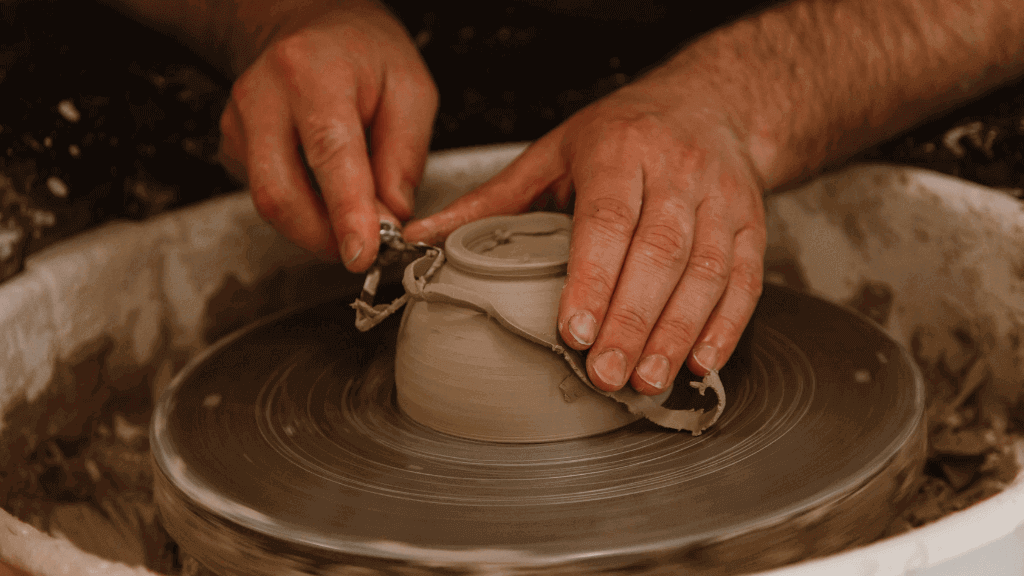
No, true pottery clay (earthenware, stoneware, or porcelain) cannot be fired in a regular kitchen oven. Home ovens top out around 500–550°F (260–290°C), while real clay needs at least 1,800°F (982°C) to vitrify into ceramic. Baking pottery clay in your oven only dries it out. The piece will still crumble, scratch easily, and dissolve if it gets wet.
What you can bake in a regular oven is polymer clay (Sculpey, Fimo, Premo) and clays specifically labeled “oven-bake.” Those cure at 230–325°F (110–163°C), well within a home oven’s range. Below I’ll explain why the difference matters, what to do with each type of clay, and what your options are if you have real pottery clay but no kiln.
Why a Kitchen Oven Can’t Fire Pottery Clay
Firing clay isn’t just drying it. It’s a permanent chemical change. Around 1,000–1,100°F (538–593°C), clay passes through “quartz inversion” and loses its chemically bonded water. Above that, the clay particles begin to sinter and fuse into a hard, permanent ceramic.
Here’s the temperature gap in plain numbers:
- A home oven maxes out around 500–550°F (260–290°C), or roughly 900°F (482°C) on a self-clean cycle (which locks the door, so it’s no use here anyway).
- Low-fire earthenware matures around cone 04, about 1,945°F (1,063°C).
- Mid-range stoneware matures around cone 6, about 2,232°F (1,222°C).
- High-fire stoneware and porcelain reach cone 10, about 2,345°F (1,285°C).
So even at its absolute hottest, your oven reaches barely a quarter of the temperature real clay needs. If you want the full picture of those firing ranges, I cover them in how hot a kiln needs to be for pottery.
What Really Happens If You Bake Pottery Clay in the Oven
If you put a piece made from standard pottery clay in a 350°F oven, here’s what you get:
- The piece dries out completely (it becomes “bone dry” in pottery terms).
- It stays fragile. Bone-dry clay snaps and chips with very little force.
- It is still water-soluble. Set a “baked” clay mug in the sink and it will soften and eventually turn back into mud.
- It is not food safe, not waterproof, and cannot be glazed.
The one real risk: if your piece is thick or still damp inside, trapped moisture can turn to steam and crack or even pop the piece apart in the oven. Heating wet clay too fast is the same reason pottery explodes in the kiln. I’ve lost a piece that way and it’s not a mistake you make twice.
Bottom line: oven-baking real pottery clay gives you a dried piece, not a fired one. There’s no oven trick that changes this. It’s chemistry, not technique.
Clays You CAN Bake in a Normal Oven
If your goal is “make something with clay and harden it in my kitchen oven,” you want oven-bake clay. The most common types:
- Polymer clay (Sculpey, Super Sculpey, Premo, Fimo, Cernit). A PVC-based modeling material that cures permanently at low oven temperatures. It suits jewelry, figurines, and decorative pieces.
- Oven-bake “ceramic-style” clays. Some brands sell clays formulated to mimic the look of ceramic but cure in a home oven. Read the package; they behave like polymer clay, not real pottery clay.
- Air-dry clay. This one doesn’t need the oven at all; it hardens at room temperature over 24–72 hours. A low oven (around 200°F / 93°C) can speed drying, but it cures by drying, not baking.
How to bake polymer clay correctly
- Check the package. Every brand specifies its own temperature, usually 230–325°F (110–163°C).
- Preheat the oven and verify with a separate oven thermometer. Most home ovens run 10–25°F off their dial, and polymer clay scorches easily.
- Place the piece on a ceramic tile, glass dish, or parchment-lined baking sheet, never directly on a metal pan. Bare metal conducts heat unevenly and can shine the bottom of the piece.
- Bake roughly 15–30 minutes per 1/4 inch (6 mm) of thickness. A 1/2-inch-thick piece needs 30–60 minutes depending on the brand.
- Let it cool in the oven with the door cracked. Polymer clay keeps hardening as it cools, and a piece that feels flexible while hot is often fully cured.
Longer, lower baking gives stronger results than short, hot baking. Under-baked polymer clay is brittle; scorched polymer clay turns brown and can release irritating fumes. If you ever smell burning plastic, turn the oven off and ventilate the kitchen.
Pottery Clay vs. Oven-Bake Clay vs. Air-Dry Clay
| Pottery clay (earthenware/stoneware) | Polymer / oven-bake clay | Air-dry clay | |
|---|---|---|---|
| Hardens in a home oven? | No, dries only | Yes, 230–325°F (110–163°C) | Doesn’t need an oven |
| Real firing temperature | 1,800–2,350°F (982–1,288°C) in a kiln | N/A | N/A |
| Waterproof when finished | Yes, once fired and glazed | Water-resistant | No, needs sealing |
| Food safe | Yes, with food-safe glaze, properly fired | No | No |
| Can be glazed | Yes | No (use acrylic finishes) | No (paint/seal only) |
| Typical cost | $15–$30 per 25 lb bag | $2–$5 per 2 oz block | $8–$20 per 5 lb tub |
| Best for | Functional ware: mugs, bowls, planters | Jewelry, miniatures, figurines | Kids’ projects, decorative pieces |
The cost difference matters: pottery clay is far cheaper per pound, but it’s only worth buying if you have a way to fire it. I cover sourcing options in where to buy clay for pottery.
The One Good Use for Your Oven: Pre-Drying Greenware
Your kitchen oven does have a legitimate place in a pottery workflow: drying, not firing. Potters call slow pre-heating “candling,” and you can do a version of it at home:
- Let your piece air-dry as long as you can, ideally until it no longer feels cool against your cheek.
- Set the oven to its lowest setting, around 170–200°F (77–93°C). Stay below 212°F (100°C) so any remaining moisture leaves as gentle evaporation instead of steam.
- Warm the piece for 1–3 hours, longer for thick work.
- Cool it slowly inside the oven before handling.
This drives out residual moisture before kiln firing and reduces the chance of cracks and blowups. Just don’t rush it. Clay that dries unevenly warps and cracks.
What to Do With Pottery Clay If You Don’t Have a Kiln
You have better options than the oven:
- Rent kiln space. Most community studios, art centers, and some ceramic supply shops fire pieces for a small fee, commonly $0.03–$0.06 per cubic inch or a flat few dollars per piece. I list places to look in where can I fire my pottery.
- Pit firing or barrel firing. A wood-fueled pit can reach 1,400–1,800°F (760–982°C), hot enough to harden earthenware into low-fired ceramic, though it stays porous and unglazed. My full walkthrough is in how to fire pottery without a kiln.
- A raku or homemade kiln. Small propane and brick setups are more achievable than most people think.
- Buy a small kiln. Compact tabletop kilns start around $300–$700, and full-size used electric kilns often sell for $400–$1,200. That’s less than many people assume.
If you only want occasional hardened pieces and don’t care about functional ware, switching to polymer or air-dry clay is the honest answer. Fighting the chemistry of real clay without a kiln leads to disappointment.
Common Mistakes I See People Make
- Believing “oven-fired” claims. No oven setting turns pottery clay into ceramic. Anyone telling you to bake stoneware at 350°F is describing drying, not firing.
- Trusting the oven dial with polymer clay. A $10 oven thermometer prevents most scorched and under-cured pieces.
- Baking thick, solid pieces. Whether polymer or pottery clay, thick solid sections heat unevenly. Keep walls under about 1 inch, or hollow the piece out.
- Putting the piece too close to the heating element. Center rack only; the broiler element will scorch polymer clay in minutes.
- Using glaze in a home oven. Glazes are ground glass that melts above 1,800°F (982°C). They do nothing in a kitchen oven except waste money. If you’re kiln-less, read can you glaze pottery without a kiln for the workarounds that do exist.
- Treating oven-dried clay as food safe. It isn’t, and neither is polymer clay. Keep both away from food, drink, and candles.
FAQ
Can you bake pottery clay in the oven to harden it?
You can dry it, but not harden it permanently. Oven heat (max ~550°F / 288°C) removes water from the clay but never reaches the 1,800°F+ (982°C+) needed to fuse clay particles into ceramic. The piece will stay fragile and will soften again if it gets wet.
What temperature do you bake ceramic or oven-bake clay at?
Polymer and oven-bake clays cure at 230–325°F (110–163°C). Always follow the exact temperature printed on the package for your brand. Bake roughly 15–30 minutes per 1/4 inch of thickness, and verify the temperature with an oven thermometer.
Can you fire clay in a kitchen oven instead of a kiln?
No. Firing requires sustained temperatures of 1,800–2,350°F (982–1,288°C), which only a kiln, pit fire, or similar setup can reach. A kitchen oven can pre-dry greenware at 170–200°F (77–93°C), but the actual firing still has to happen in a kiln or open-fire method.
Can you bake clay in a normal oven safely?
Polymer clay, yes. It’s designed for it. Keep it at or below the package temperature, ventilate the kitchen, and never let it scorch (burnt polymer clay releases irritating fumes). Real pottery clay is safe to put in the oven too, but pointless beyond drying, and thick or damp pieces can crack or pop from steam.
Will oven-baked pottery clay hold water?
No. Unfired clay remains porous and water-soluble no matter how long you bake it at oven temperatures. Holding liquids takes proper kiln firing. Even then, low-fired earthenware stays porous and needs a glaze firing to be watertight; only fully vitrified stoneware or porcelain holds water unglazed.
Is oven-baked clay food safe?
No. Neither oven-dried pottery clay nor cured polymer clay should be used for plates, mugs, or anything that touches food. Food-safe pottery requires proper kiln firing plus a food-safe glaze.