
How Should You Price Your Pottery Work?
By Linda · · 8 min read
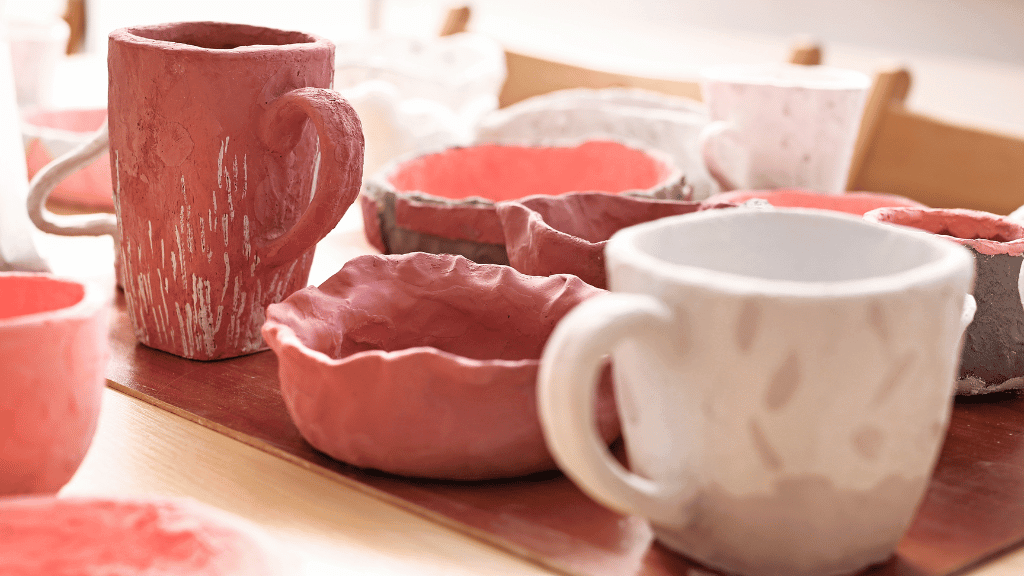 Price your pottery using this formula: (materials + labor + overhead) x 2 = wholesale price, then wholesale x 2 = retail price. A mug that costs $4 in materials, takes 30 minutes of labor at $20/hour, and carries $2 of overhead per piece would wholesale around $32 and retail around $64.
That formula is a starting point, not a law. Below I’ll walk through how to calculate each piece of it, what handmade pottery really sells for, and how to adjust when your numbers feel too high or too low.
The Pottery Pricing Formula
The most common method potters use looks like this:
Cost of goods (materials + labor + overhead) x 2 = wholesale price
Wholesale price x 2 = retail price
Doubling your cost of goods builds in profit and a cushion for the pieces that crack, warp, or come out of the glaze fire looking nothing like you planned. Doubling again for retail leaves room for galleries and shops, which typically take 40-50% of the sale price.
If you only sell direct (craft fairs, your own website), you don’t have to charge full retail. I recommend you do anyway. Pricing below your own wholesale-stocked retailers undercuts them, and they will notice.
Calculating Your Cost Per Piece
Before you can use any formula, you need honest numbers for three things: materials, labor, and overhead.
Materials and Supplies
Track what you really spend on clay, glaze, and consumables, then divide it down to a per-piece cost.
- A 25 lb (11.3 kg) bag of stoneware typically runs $15-$30 and yields roughly 15-20 mugs, so clay cost per mug is often under $2. See my full breakdown of pottery clay costs for current ranges.
- Glaze adds anywhere from $0.50 to several dollars per piece depending on whether you buy commercial pints or mix your own from dry materials. I cover the math in how much pottery glazes cost.
- Don’t forget the small stuff: underglaze, wax resist, sandpaper, sponges, and packaging materials all add up.
Labor
Time every stage honestly: wedging, throwing or handbuilding, trimming, handle-pulling, glazing, loading and unloading the kiln, and sanding kiln grit off the bottoms.
Then assign yourself a real hourly wage. I suggest a minimum of $15-$25/hour for newer potters and $30-$50+/hour for experienced potters with a developed style. If you wouldn’t work for someone else at the rate you’re paying yourself, raise it.
One trick that helps: price by the batch, not the piece. If a kiln load of 40 mugs takes you 12 hours of total hands-on time, that’s 18 minutes per mug, which is far more accurate than guessing how long “a mug” takes.
Overhead Costs
Overhead is everything you pay whether or not you make a single pot: studio rent, electricity for firing, kiln element replacement, equipment wear, insurance, website fees, and booth fees.
Add up a typical month of these expenses, then divide by the number of finished, sellable pieces you produce in a month. If studio space costs you $300/month and utilities, equipment maintenance, and fees add another $150, and you finish 100 pieces a month, your overhead is $4.50 per piece.
A firing note: a typical electric kiln firing to cone 6 (about 2,232°F / 1,222°C) costs a few dollars to $15+ in electricity depending on kiln size and local rates. Spread across a full load, it’s small per piece. But only if you fire full loads.
A Worked Example: Pricing a Mug
Here’s the full calculation for a wheel-thrown stoneware mug:
| Cost component | Amount |
|---|---|
| Clay (about 1.25 lb / 0.6 kg) | $1.50 |
| Glaze and underglaze | $1.00 |
| Labor (30 min at $24/hour) | $12.00 |
| Overhead per piece | $4.50 |
| Total cost of goods | $19.00 |
| Wholesale (x2) | $38.00 |
| Retail (x2 again) | $76.00 |
If $76 made you flinch, you’re not alone. That retail number is realistic for an established potter with a following, but steep for someone just starting out. That’s your signal to work on efficiency (more on that below), not to pay yourself $5/hour.
What Handmade Pottery Really Sells For
Market reality matters as much as your spreadsheet. These are typical retail ranges I see at craft fairs, galleries, and online shops in the US:
| Item | Typical retail range |
|---|---|
| Mug | $25-$60 |
| Small bowl | $20-$45 |
| Serving bowl | $50-$120 |
| Dinner plate | $30-$70 |
| Vase | $40-$150+ |
| Large platter | $80-$250+ |
| Teapot | $90-$250+ |
Established potters with a recognizable style and a waiting list sell well above these ranges. Beginners at a community sale often land at or below the bottom of them. Check local art fairs, galleries, and online marketplaces to see where comparable work in your area sells.
When Your Calculated Price Is Higher Than the Market
This is the most common pricing problem, and there are only three honest fixes:
- Get faster. Throw in series, batch your glazing, fire full kiln loads. A mug that takes 30 minutes today might take 15 in a year, which cuts your labor cost in half.
- Cut material and overhead costs. Buying clay by the half-ton, mixing your own glazes, and sharing studio space all lower cost per piece. My pottery costs overview covers where the savings hide.
- Move upmarket. Develop work distinctive enough to justify higher prices: better surfaces, a cohesive body of work, professional photos.
What you should not do is quietly pay yourself nothing. That’s how potters burn out, and it drags down prices for everyone selling handmade work. If you’re weighing whether the numbers can ever work, read can you make money selling pottery before you commit.
Wholesale vs. Retail Pricing
Decide early whether wholesale is part of your plan, because it changes your math.
- Wholesale: shops buy at roughly 50% of retail, in quantity. You earn less per piece but sell in volume with no booth fees or shipping individual orders.
- Retail (direct): you keep the full price, but you pay for the booth, the website, the credit card fees, and the hours spent selling instead of making.
The rule that keeps both channels healthy: your direct retail price should match or exceed what your wholesale accounts charge. Never undercut the shops that carry your work.
Pricing for Where You Sell
The same mug can carry different effective prices depending on the venue, because each one takes a different bite:
- Craft fairs and markets: booth fees of $50-$500+ per event, plus travel and your weekend. Build those into overhead.
- Galleries and consignment: typically 40-50% commission. Your retail price must absorb that.
- Etsy and online marketplaces: transaction, listing, and payment fees commonly total 10-15% of the sale, plus your time photographing and shipping.
- Your own website: lowest fees, but you supply all the traffic.
If your work sells through several channels, set one retail price that survives the worst commission, and let the better-margin channels be your reward.
Shipping and Packaging
Pottery is heavy and fragile, and customers underestimate what safe shipping costs. Budget $1-$4 per piece for boxes, bubble wrap, and padding, and weigh your packed box before quoting shipping.
Decide whether to charge shipping separately or build it into a “free shipping” price. Free shipping converts better online, but only if the price genuinely covers it. Double-boxing a large platter across the country can easily cost $20-$40.
Testing and Adjusting Your Prices
Your first prices are a hypothesis. Watch what happens:
- Everything sells out fast: you’re underpriced. Raise prices 10-20% on your best sellers and see if demand holds. It usually does.
- Nothing sells: before cutting prices, look at presentation first (photography, display, descriptions). Buyers pay for perceived value, and a $40 mug on a nice shelf with good lighting outsells a $30 mug in a jumble.
- Some forms sell, others don’t: stop making the slow movers at that price point rather than discounting your whole line.
Raise prices on new work or new seasons rather than reprinting every tag mid-show. And keep your pricing consistent across venues. Collectors compare, and arbitrary pricing erodes trust faster than high pricing does.
Discounts Without Devaluing Your Work
Plan discounts in advance so they come out of margin you built in, not out of your wages. Multi-piece discounts (“4 mugs for the price of 3.5”), seconds sales for pieces with minor flaws, and loyalty offers for repeat collectors all work without signaling that your regular prices are inflated.
Avoid across-the-board percentage-off sales as a habit. Once customers learn to wait for the sale, your real price becomes the discounted one. If the business side interests you beyond pricing, I dig into margins and revenue streams in is a pottery business profitable.
FAQ Section
How do you price pottery for beginners?
Use the same formula, (materials + labor + overhead) x 2 for wholesale and x2 again for retail, but with a modest hourly wage of $15-$20 while you build speed and consistency. Resist pricing at materials-only; even at a first sale, a beginner’s mug should be $20-$30, not $8.
What is a fair hourly wage for pottery labor?
Most working potters pay themselves $20-$50 per hour depending on experience and local cost of living. Research what similar artisans in your area charge and pick a rate you could live on if pottery were your full-time job.
How do I calculate the cost of materials per piece?
Divide the total cost of a bag of clay and a batch of glaze by the number of finished pieces they produce. A 25 lb (11.3 kg) bag of clay making 18 mugs at $25 per bag works out to about $1.40 of clay per mug.
What if my overhead costs fluctuate monthly?
Average your overhead over three to six months, then divide by your typical monthly output of sellable pieces. Re-run the average once or twice a year, or whenever something big changes like rent or a new kiln.
Should I price my pottery by size or by time?
Both, indirectly. Larger pieces use more clay and glaze (materials) and take longer to make, trim, and fire (labor), so the formula naturally prices them higher. Just don’t price purely by inches. A small, intricate piece can be worth more than a big simple one.
Should I offer free shipping for my pottery work?
Only if the price covers it. Add your real average shipping cost (often $10-$20 for a single mug, more for large work) into the listed price, or set a free-shipping threshold that nudges customers toward multi-piece orders.