
Can Pottery Be Frozen?
By Linda · · 7 min read
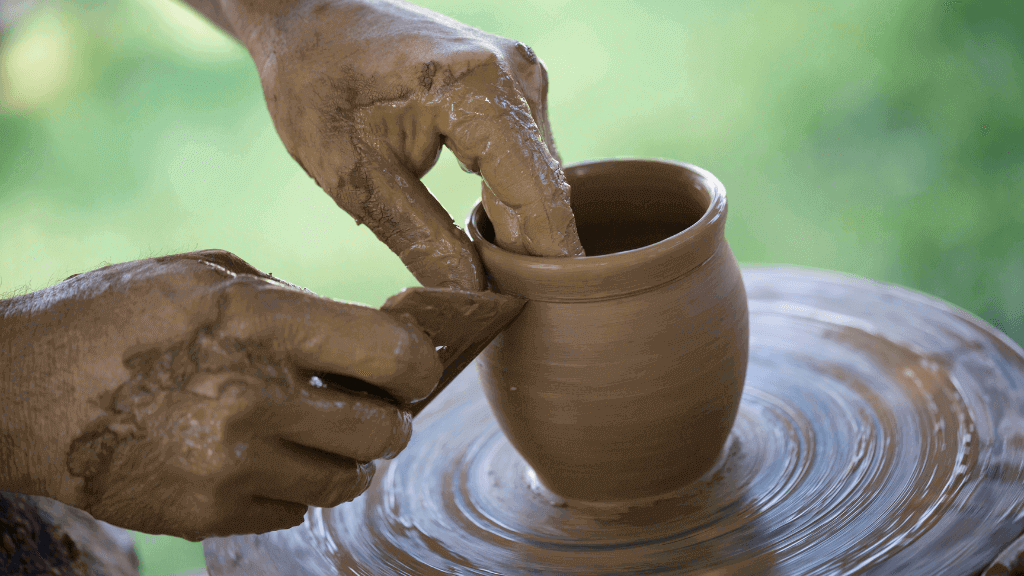
Yes, most fired pottery can be frozen safely. Vitrified stoneware and porcelain are fired around cone 6 to cone 10 (2,232–2,345°F / 1,222–1,285°C), hot enough to make the clay dense and glassy. They absorb almost no water, so there’s nothing inside them to expand and crack the piece in the freezer. Earthenware and other porous, low-fired pottery are the risky ones: they soak up moisture, and when that trapped water freezes and expands, the pot can crack or the glaze can flake off.
Unfired clay is a different story. A bag of working clay that freezes solid isn’t ruined, but it comes out lumpy and “short” (crumbly and hard to throw) until you thaw it completely and wedge it back together. I’ll cover both situations below, because people usually mean one or the other when they ask this question.
Putting Finished Pottery in the Freezer
Whether a pot survives the freezer comes down to one thing: how much water the clay body can absorb. Dense, high-fired pottery is essentially freezer-proof. Porous pottery is not.
Here’s how the common types compare:
| Pottery type | Typical firing range | Water absorption | Freezer safe? |
|---|---|---|---|
| Porcelain | Cone 8–12 (2,280–2,420°F / 1,249–1,326°C) | Under 0.5% | Yes |
| Vitrified stoneware | Cone 5–10 (2,167–2,345°F / 1,186–1,285°C) | 1–3% | Yes, generally |
| Earthenware (glazed) | Cone 06–04 (1,828–1,945°F / 998–1,063°C) | 5–15% | Risky |
| Earthenware (unglazed, e.g. terracotta) | Cone 06–04 | 10%+ | No |
| Raku | Low-fire, rapid cooled | High, heavily crazed | No |
A few practical rules I follow in my own kitchen:
- Stoneware and porcelain dishes, mugs, and storage containers go in the freezer without a second thought.
- Anything with visible crazing (a fine network of cracks in the glaze) stays out. Water works into those cracks, freezes, expands, and makes the crazing worse with every cycle.
- Handmade pieces with unglazed bottoms get dried thoroughly first. A damp foot ring on a porous pot is exactly where freeze damage starts.
If you’re not sure what your piece is made of, the absorption test from my guide on how to tell if pottery is food safe helps here too: an unglazed area that darkens quickly when wet means porous clay, and porous clay doesn’t belong in the freezer.
The Real Danger: Thermal Shock, Not Cold
Cold itself rarely breaks dense pottery. What breaks pottery is a fast temperature swing: pulling a dish from a 0°F (-18°C) freezer and putting it straight into a 400°F (204°C) oven, or running hot tap water over a frozen mug. One part of the piece expands while the other is still contracted, and the stress cracks it. I lost a favorite baking dish that way before I learned to slow down.
To avoid thermal shock:
- Move frozen pottery to the refrigerator first, or let it sit at room temperature for 30–60 minutes before heating it.
- Never put a freezer-cold dish into a preheated oven. Start it in a cold oven if the maker says the piece is oven safe. It’s the same caution I explain in can Polish pottery go in the oven.
- Don’t pour boiling liquid into a cold pot, and don’t set a frozen dish on a hot burner or under a broiler. Ever.
The same logic applies in reverse. A hot casserole dish shouldn’t go straight into the freezer; let it cool to room temperature first. Gradual changes are what handmade pottery tolerates well. The same principle decides whether you can microwave pottery safely.
Frozen Clay: What Happens When Working Clay Freezes
If you store clay in a garage, shed, or studio that drops below 32°F (0°C), the water in the clay freezes. Ice crystals push the clay platelets apart, and when it thaws you get clay that feels spongy and layered, wet in some spots and stiff in others. Potters call this “short” clay: it cracks at the edges and tears instead of stretching.
The good news: frozen clay is almost never a loss. Here’s how I bring it back:
- Thaw it completely. Leave the bag sealed at room temperature for 2–4 days depending on size. Don’t rush it with heat. You’ll dry the outside while the core is still frozen.
- Check the moisture. Thawed clay often weeps water inside the bag. Pour off any standing water and let the clay sit open for a few hours if it feels too soft.
- Wedge thoroughly. This is the step that fixes frozen clay. Spiral or ram’s-head wedge until the texture is uniform again, usually 50–100 wedges for a standard 25 lb bag’s worth, worked in smaller lumps.
- Test before committing. Roll a coil and bend it around your finger. If it bends without cracking, the clay is workable. If it still cracks, wedge more or let it rest sealed for another week.
Repeated freeze-thaw cycles are harder on clay than a single freeze, so if your storage area freezes regularly, move the clay indoors or insulate it. Slips and liquid glazes are worse off: freezing can break the suspension and clump the materials. They can often be salvaged by re-mixing and sieving, but pourable casting slip may never behave quite the same.
Pottery Left Outside in Winter
Garden pots, birdbaths, and outdoor sculpture face dozens of freeze-thaw cycles every winter, which is far more punishing than one stint in a kitchen freezer. Unglazed terracotta is the classic casualty. It absorbs rain and soil moisture, freezes overnight, and flakes or splits by spring.
If you want pottery to survive outdoors:
- Choose vitrified stoneware (absorption under about 3%) rather than terracotta.
- Empty and dry planters before the first hard freeze, then store them upside down off the ground.
- Lift pots onto feet or bricks so they drain. A pot sitting in a frozen puddle wicks water all winter.
I go deeper into this in will pottery break in the cold, including which clay bodies are rated frost-resistant.
Freezing Food in Pottery Dishes
Vitrified stoneware makes good freezer storage. It doesn’t stain or hold odors, and it goes from freezer to refrigerator to table. A few tips that keep both food and pottery in good shape:
- Leave headspace. Liquids expand roughly 9% when they freeze, and a brim-full lidded jar can crack from the inside.
- Cool food before filling the dish, and cool the filled dish before freezing it.
- Make sure the piece is genuinely food safe with a stable glaze. Crazed or unglazed pottery traps moisture and food particles, which is both a hygiene problem and a freeze-damage problem.
- Wash and dry the piece fully before it goes back in the freezer. Dishwashers are fine for most vitrified ware (see can pottery go in the dishwasher), but a piece put away damp is a piece that can crack next time it freezes.
FAQ
Can clay still be used after it’s been frozen?
Yes. Thaw it completely at room temperature (2–4 days for a sealed bag), pour off excess water, and wedge it until the texture is uniform. The freeze doesn’t change the clay chemistry. It just separates the water from the clay particles, and wedging recombines them.
Will pottery crack in the freezer?
Vitrified stoneware and porcelain almost never crack from freezing alone. Porous earthenware, crazed glazes, and raku can crack because absorbed water expands about 9% when it freezes. The most common failure isn’t the freezer at all — it’s the thermal shock of heating a piece too fast afterward.
Can I put a pottery mug or bowl in the freezer?
If it’s high-fired stoneware or porcelain with an intact glaze, yes. Let it return toward room temperature before adding hot liquid. Skip the freezer for low-fired, hand-painted earthenware souvenirs and anything with visible glaze cracks.
Does freezing damage glaze?
A stable glaze on a vitrified body isn’t harmed by cold. Glaze problems show up when water gets under or into the glaze, through crazing or a porous body, and pops the glaze off as it freezes. Liquid glaze in the bucket is more vulnerable: freezing can wreck the suspension, though re-mixing and sieving usually saves it.
How cold is too cold for pottery storage?
Fired, vitrified, bone-dry pottery can be stored at any temperature it will encounter on Earth. For working clay, slips, and liquid glazes, keep storage above 32°F (0°C). For porous pottery stored outdoors, the danger zone is repeated cycling across the freezing point, not the low temperature itself.