
How To Clean Pottery
By Linda · · 9 min read
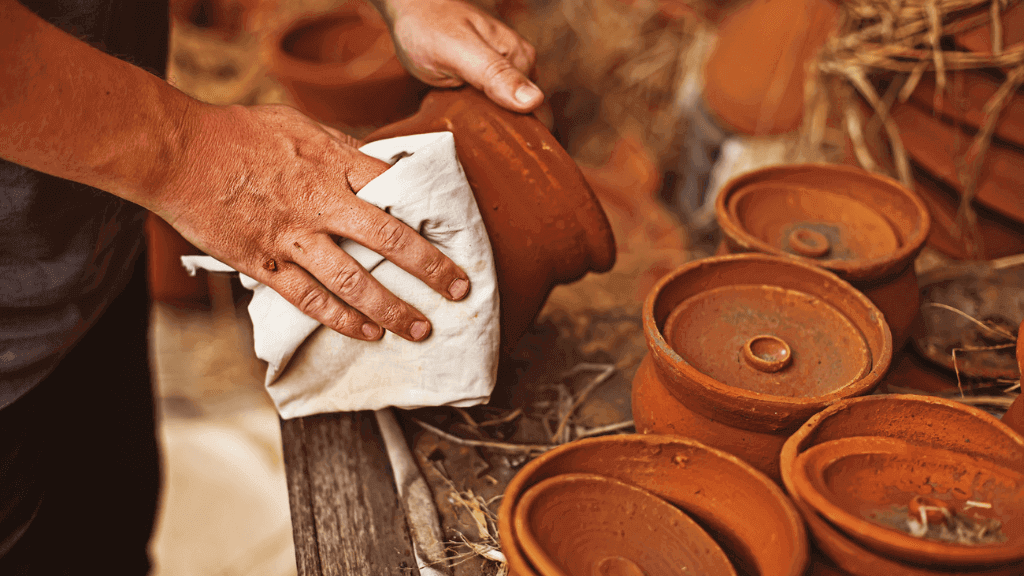
To clean pottery, follow these steps: 1) gently remove loose dirt using a soft brush or cloth, 2) use a mixture of mild soap and warm water to dampen a soft cloth, 3) gently clean the pottery surface by wiping with the damp cloth, 4) rinse the cloth, and 5) pat dry the pottery using a clean, dry cloth or air dry completely. Avoid scrubbing or soaking pottery, as it may damage fragile pieces or finishes.
That method is safe for nearly every glazed ceramic piece. Unglazed and antique pottery need a gentler approach, and I cover both below. The wrong cleaning method (soaking, dishwashers, bleach, abrasive pads) damages more pottery than ordinary dust ever will.
Know What You’re Cleaning First
Before you touch a piece with water, figure out what it is. The right cleaning method depends on whether the surface is glazed or unglazed, and how old and valuable the piece is.
- Glazed pottery has a glassy, sealed surface. It tolerates damp cleaning well.
- Unglazed pottery (terracotta, bisque, raw stoneware) is porous like a sponge. Water and soap soak in and can cause stains, salt blooms, or even cracks.
- Antique or collectible pottery may have hairline cracks, old repairs, overglaze decoration, or gilding that modern cleaners will strip.
Run a fingertip over the surface. Glossy and smooth means glazed; chalky, matte, and slightly rough usually means unglazed. Hold the piece up to a bright light and look for hairline cracks, crazing (a fine network of cracks in the glaze), chips, and old glue lines from past repairs. Water wicks into all of these, so treat any piece with them as fragile. If you’re not sure how old a piece is, my guide on how to tell if pottery is antique walks through marks, weight, and wear patterns.
Supplies You Need
You probably own everything already:
- Soft-bristle brush (a clean paintbrush or makeup brush works)
- Two lint-free cloths or microfiber towels
- A few drops of mild dish soap in warm water (not hot)
- Cotton swabs for crevices and carved detail
- A folded towel to pad your work surface
Skip bleach, ammonia, abrasive powders, magic erasers, and scouring pads. All of them can dull glaze, lift overglaze paint, or scratch the surface.
How to Clean Glazed Pottery and Ceramics: Step by Step
This is the standard method for glazed ceramics: vases, bowls, figurines, decorative plates.
Step 1: Dry Dust First
Brush off loose dust and dirt with a soft brush or dry cloth. Most pieces only need this step. Never wet-wipe a dusty piece; you’ll grind grit across the glaze.
Step 2: Mix a Mild Soap Solution
A few drops of mild dish soap in a bowl of warm water. Avoid harsh chemicals or strong detergents that could damage glazes, paint, or finishes.
Step 3: Wipe With a Damp Cloth
Dip a lint-free cloth in the solution and wring it out until it’s damp, not dripping. Wipe the surface in gentle, overlapping strokes. Use a cotton swab dipped in the same solution for handles, rims, and carved detail.
Step 4: Avoid Scrubbing or Soaking
Work over a towel-padded surface and support the piece from its base, not the handle or rim. Do not submerge anything with cracks, crazing, repairs, or unglazed areas. Water gets in and is very hard to get back out.
Step 5: Rinse and Dry
Wipe again with a clean cloth dampened in plain water to remove soap residue, then pat dry. Let the piece air dry completely, ideally overnight, before returning it to a shelf or cabinet.
The whole job takes 10 to 15 minutes per piece. If you find a chip or crack while cleaning, deal with it before it spreads; I explain the repair options in how to fix broken pottery.
How to Clean Unglazed Pottery
Unglazed pottery (terracotta planters, bisque figurines, raw stoneware) is porous and absorbs whatever you put on it. The rules change:
- Dry cleaning first, always. A soft brush removes most dirt. For ground-in dust, a slightly stiffer natural-bristle brush used dry works better than water.
- Use as little water as possible. If you must wet-clean, use a barely damp cloth with plain water and no soap. Soap soaks into the clay body and leaves residue you can’t rinse out.
- Never soak decorative unglazed pieces. Trapped moisture can take weeks to fully evaporate and may cause efflorescence, the white, crusty salt deposits that migrate to the surface as the piece dries.
- Terracotta garden pots are the exception. Empty utilitarian planters can be scrubbed with water and a stiff brush, then dried for several days before reuse. White mineral crust on garden terracotta can be brushed off dry once the pot is fully dried out.
- Dry slowly and completely. Air dry at room temperature, away from sunlight and heat vents. A piece that feels dry on the surface can still hold moisture inside.
If a piece smells musty afterward, it’s still damp inside. Give it more time in a dry, ventilated spot rather than forcing it with a hair dryer, which can stress the clay.
How to Clean Antique Pottery
With antique pottery, the goal shifts from “make it spotless” to “don’t reduce its value.” Over-cleaning is one of the most common ways collectors damage pieces.
Follow these rules:
- Start with dry dusting only. For many antiques, that’s where cleaning should stop.
- Test an inconspicuous spot. Before any damp cleaning, wipe a small hidden area (the base, inside a foot ring) and check that no color lifts onto the cloth. Hand-painted overglaze decoration, lusters, and gilding can sit on top of the glaze and wipe off.
- Never soak an antique. Old pieces often have hairline cracks, stapled or glued repairs, and porous bodies. Soaking loosens old adhesives and drives dirty water into cracks, creating permanent dark lines.
- Leave crazing alone. Fine craze lines are common in old glazes and water wicked into them carries dirt that stains from underneath. If a piece has heavy crazing, keep cleaning strictly dry. Crazing itself usually isn’t a dealbreaker; I cover that in does crazing affect the value of pottery.
- Don’t “improve” the patina. Stable age-related toning is expected on antiques. Aggressive whitening with bleach or peroxide can leave a piece looking stripped and can chemically damage the body. To a collector, it can lower the value too.
- When in doubt, stop. For valuable pieces with stains, old repairs, or flaking decoration, a professional ceramics conservator is worth the cost. Restoration isn’t cheap, but it’s cheap insurance on a piece worth more than the bill.
If an antique already has old glue repairs, resist the urge to re-clean or re-glue them yourself. See can broken pottery be glued for what’s safe to do at home and what isn’t.
Cleaning Methods Compared
| Pottery type | Safe method | Never do this |
|---|---|---|
| Glazed, modern | Damp cloth + mild soap | Dishwasher for hand-painted or metallic-trimmed pieces |
| Glazed, crazed | Dry dust; barely damp cloth if needed | Soaking (water stains craze lines from underneath) |
| Unglazed (terracotta, bisque) | Dry brushing; plain damp cloth sparingly | Soap, soaking, or sealing in moisture |
| Antique / collectible | Dry dust; spot-test before any moisture | Bleach, abrasives, scrubbing decoration |
| Garden terracotta (empty) | Scrub with water and stiff brush, dry several days | Re-potting while still wet in freezing weather |
Removing Stubborn Stains and Marks
Try the gentlest option first and escalate slowly:
- Surface scuffs and pencil-like metal marks on glazed ware sometimes lift with a damp cloth and a tiny amount of mild soap, rubbed gently.
- Grease film (kitchen pieces) responds to warm soapy water and patience. Repeat wipes, not harder scrubbing.
- Dark lines in cracks and deep stains in crazed or porous pieces are usually inside the body, not on the surface. No amount of wiping reaches them, and home remedies like prolonged bleach soaks weaken the piece.
For anything valuable with embedded stains, consult a professional pottery restorer or a conservator who specializes in ceramics. They can assess whether a stain is treatable and do it without harming glaze or decoration.
Handling, Storage, and Display
Most pottery damage happens between cleanings, not during them.
Handling: Use clean, dry hands or lint-free gloves. Lift pieces by the body or base — never by handles, spouts, or rims, which are the weakest points. Remove lids and carry them separately.
Storage: Keep pottery in a clean, dry, stable environment away from temperature swings, humidity, and direct sunlight. If stacking, put felt pads or soft cloth between pieces, and make sure shelves can carry the weight. Sudden temperature changes are a real risk for old or crazed pieces. The same thermal stress that makes pottery crack in the kiln can open hairline cracks in a finished piece.
Display: Keep displayed pottery out of high-traffic areas and direct sun, which fades some overglaze colors. A pea-sized dab of museum wax or earthquake putty under the base keeps top-heavy pieces from walking off a shelf. If you ever need to move or mail a piece, pack it properly; my guide on how to ship pottery covers double-boxing and cushioning.
How Often Should You Clean Pottery?
A light dry dusting every 1 to 2 months is plenty for displayed pieces; pottery in closed cabinets can go 6 months or more. Damp cleaning is only needed when a piece is visibly grimy, which means once or twice a year at most for display pieces, and less often than that for antiques. Excessive cleaning causes more cumulative wear than dust does, especially on delicate or antique pieces.
Frequently Asked Questions
How do you clean ceramics without damaging them?
Dry dust with a soft brush first, then wipe glazed ceramics with a cloth dampened in warm water and a drop of mild dish soap. Rinse-wipe with plain water, pat dry, and air dry fully. Never soak pieces with cracks, crazing, repairs, or unglazed areas, and never use bleach, abrasives, or scouring pads.
How do you clean antique pottery?
Stick to dry dusting whenever possible. If damp cleaning is necessary, spot-test a hidden area first to make sure no decoration lifts, use plain water on a barely damp cloth, and never submerge the piece. For stains, old repairs, or flaking decoration, use a professional ceramics conservator rather than risking the piece’s value.
How do you clean unglazed pottery?
Use a dry, soft-bristle brush. Unglazed clay is porous, so water and soap soak in and can cause stains or salt deposits. If you must wet-clean, use a barely damp cloth with plain water, then let the piece air dry completely, which can take days. Empty terracotta garden pots are the exception and can be scrubbed with water and dried thoroughly.
Can I clean pottery with vinegar or baking soda?
Avoid both on anything decorative or old. Vinegar is acidic and can etch some glazes and damage gilding; baking soda is a mild abrasive that can dull surfaces and lodge in crazing. Mild soap and warm water is safer and handles almost everything vinegar would.
Can pottery go in the dishwasher?
Only sturdy, fully glazed modern dinnerware that’s labeled dishwasher safe. Hand-painted pieces, metallic trim, crazed glazes, unglazed surfaces, repaired pieces, and anything antique should always be washed (or just dusted) by hand. Dishwasher heat and detergent dull decoration and stress hairline cracks.
What should I do if my pottery has stubborn stains or marks?
Try gentle repeat cleaning with mild soap first. Stains inside cracks or porous clay can’t be wiped away from the surface, so for valuable pieces, consult a professional pottery restorer. Aggressive home treatments like bleach soaks often make staining worse and can permanently weaken the piece.